
LFP Battery Storage Container for Grid Stability: Safety, Cost & Compliance in US/EU
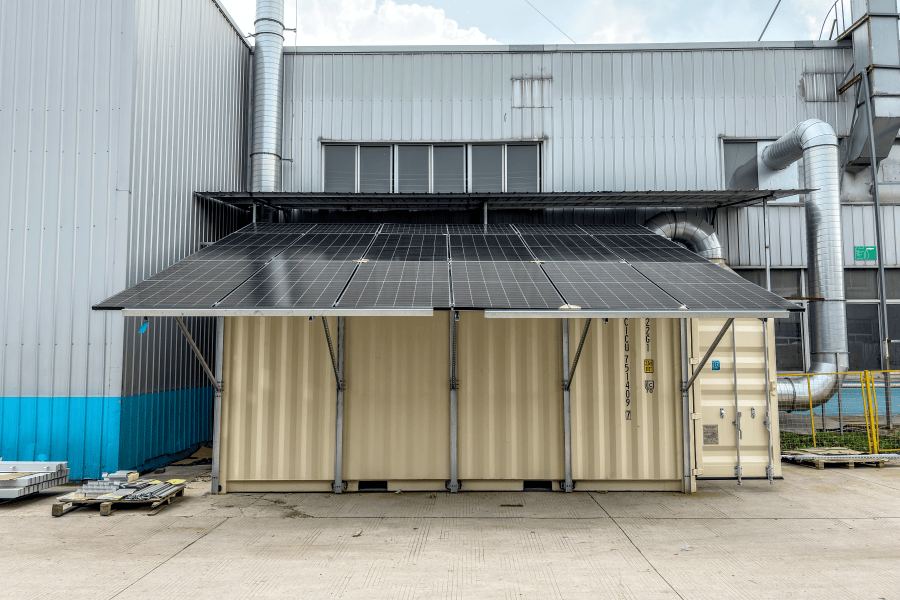
Table of Contents
- The Grid's New Diet: Why Bigger Isn't Always Better
- Beyond the Hype: The Real Cost of "Fast and Cheap" Storage
- The LFP Container Blueprint: More Than Just a Box of Batteries
- A Tale of Two Sites: Seeing Specs in Action
- Decoding the Spec Sheet for Non-Engineers
The Grid's New Diet: Why Bigger Isn't Always Better
Let's be honest. If you're managing a utility-scale portfolio in the US or Europe right now, you're under pressure to integrate massive amounts of renewables while keeping the lights on, literally. The mandate is clear: deploy storage, and deploy it fast. But here's the thing I've seen firsthand on site C rushing to meet a capacity target with the first available technology can create a whole new set of problems down the line. We're not just plugging in a bigger battery; we're performing open-heart surgery on the grid.
The industry is moving at a breakneck pace. According to the International Energy Agency (IEA), global grid-scale battery storage capacity is set to multiply by over 15 times by 2030. But this exponential growth brings growing pains. Everyone talks about megawatt-hours, but are we asking the right questions about the technical specification of LFP (LiFePO4) lithium battery storage container for public utility grids? The container is the workhorse, the interface between your delicate grid and thousands of individual battery cells. Its specs aren't just a procurement checklist; they're the foundation of your project's lifetime safety, profitability, and reliability.
Beyond the Hype: The Real Cost of "Fast and Cheap" Storage
Early in my career, the focus was overwhelmingly on energy density and upfront capital cost. We pushed C-rates (the speed of charge/discharge) higher and packed more cells into tighter spaces. It worked on paper, until you had to manage the heat, or worse, until a safety incident forced a costly shutdown. I've stood in front of a container after a thermal event C the financial loss is one thing, but the reputational damage and regulatory scrutiny can set a project back years.
The true cost isn't the price per kWh on the purchase order. It's the Levelized Cost of Storage (LCOS) C the all-in cost over the system's entire life, including degradation, maintenance, and eventual decommissioning. A container with poor thermal management will cause cells to degrade faster, slashing your usable capacity years ahead of schedule. A design that doesn't account for local seismic codes or extreme weather? That's a retrofit waiting to happen. And in markets like California or Germany, where NREL studies show frequency regulation and capacity services are key revenue streams, a system that can't respond reliably and quickly due to thermal throttling is leaving money on the table every single day.
The Compliance Maze: UL, IEC, and What They Really Mean for You
Here's where it gets real for decision-makers. "Compliant" is not a binary checkbox. There's a world of difference between a container that's been tested to UL 9540 (the standard for Energy Storage Systems) as a complete, integrated unit, and one that uses components that are individually certified but never validated as a system. For public utility grids, this system-level certification is non-negotiable. It's your insurance policy. At Highjoule, we've built our container philosophy around this from day one. It's not about just meeting UL 9540 or IEC 62933; it's about designing for the certification process, ensuring every busbar, sensor, and vent is part of a proven safety architecture.
The LFP Container Blueprint: More Than Just a Box of Batteries
So, what does a well-considered technical specification of LFP (LiFePO4) lithium battery storage container for public utility grids actually address? It moves beyond the cell chemistry (though LFP's inherent stability is a fantastic starting point) and focuses on the system.
Think of it as a self-contained ecosystem. The spec sheet should tell you the story of how this ecosystem survives and thrives for 20+ years:
- Thermal Management: Is it passive air, forced air, or liquid cooling? For grid applications with frequent, high-power cycles, liquid cooling is often the answer. It maintains even cell temperature, which is critical for preventing hotspots and extending life. Honestly, I've seen air-cooled systems in Arizona struggle to maintain output on a hot afternoon, while a liquid-cooled system next door hums along at peak efficiency.
- Structural & Environmental Design: This is about the "container" part. Is the frame rated for seismic Zone 4? What's the IP rating for dust and moisture ingress? Can it handle -30C to +50C ambient swings with its internal climate control? These aren't academic questions; they're based on the actual deployment environments from Texas to Norway.
- Grid Intelligence & Safety Buffers: The BMS (Battery Management System) is the brain, but the container specs should detail the nervous system. How many layers of protection are there between a cell anomaly and a grid disturbance? We design with redundant isolation and protection devices that go beyond the standard, because on the public grid, failure is not an option.

A Tale of Two Sites: Seeing Specs in Action
Let me give you a concrete example from a project we supported in Germany's North Rhine-Westphalia region. The utility needed storage for primary frequency response. The initial bids varied wildly in price. One offered a very low-cost container with basic air cooling. Our solution, based on a liquid-cooled, UL/IEC-compliant LFP container, had a higher upfront cost.
Fast forward two years. Our system maintains a consistent 1C discharge rate for the required duration without derating, even during a rare European heatwave. It's earning its full revenue potential. We heard through the grapevine that the competing air-cooled system at a similar site had to derate its output by 40% during peak summer temperatures to avoid overheating, missing out on critical grid service payments. The lifetime LCOS calculation flipped completely. The initial "savings" were erased in under 18 months. This is the difference a robust container specification makes.
Decoding the Spec Sheet for Non-Engineers
You don't need an engineering degree to ask the right questions. When you're evaluating that technical specification of LFP (LiFePO4) lithium battery storage container for public utility grids, here's my advice from the field:
At Highjoule, we build our containers with this holistic view. It's why we obsess over weld quality on the frame, the algorithmic control of our liquid cooling loops, and the ease of access for maintenance. Because when you're deploying for the public grid, you're not just buying a product; you're entering a 20-year partnership for grid resilience.

The conversation needs to shift from "how many MWh can we get for this budget?" to "how do we ensure these MWh are delivered safely, reliably, and profitably for decades?" What's the one grid stability challenge in your region that keeps you up at night, and how are you evaluating if a storage system's technical specs are truly up to the task?
Tags: UL Standard BESS LCOE Europe US Market Thermal Management Renewable Energy LFP Battery Grid-Scale Storage
Author
James Zhang
20+ years agricultural energy storage engineer / Highjoule CTO