
Modular BESS Solutions: Scaling Grid Resilience from Rural Philippines to Global Markets
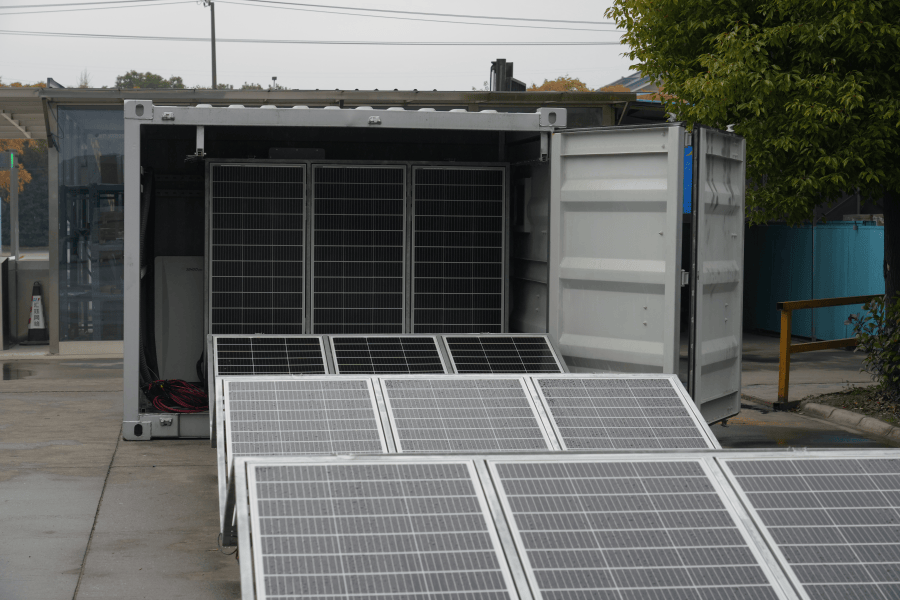
Table of Contents
- The Scaling Paradox: Why Bigger Isn't Always Better in Energy Storage
- Costs Beyond Capital: The Hidden Drag on Your BESS Project The Modular Mindset: Lessons from Off-Grid Frontiers
- Engineering for Real Worlds: Safety, Simplicity, and Serviceability
- Your Next Step: From Specification to Operational Reality
The Scaling Paradox: Why Bigger Isn't Always Better in Energy Storage
Honestly, I've seen this firsthand on site from California to North Rhine-Westphalia. There's a prevailing mindset: to solve a big energy problem, you need a big, monolithic battery storage solution. You've seen the projects C massive, multi-megawatt-hour containers that are engineered like a Swiss watch but sometimes deployed in environments more demanding than a lab. The logic seems sound, right? Achieve economies of scale, simplify interconnection. But here's the agitating truth many of us in the field have learned: that approach often introduces a single point of failure, creates logistical nightmares, and locks you into a rigid system that's terrified of future change.
Let's talk data for a second. The International Renewable Energy Agency (IRENA) highlights that system flexibility is a cornerstone of the energy transition. Yet, a National Renewable Energy Laboratory (NREL) analysis on system degradation often points to thermal management inconsistencies and uneven cell aging in large, tightly packed systems as a key factor impacting long-term Levelized Cost of Storage (LCOS). That's not just a number on a spreadsheet; it's a direct hit to your project's ROI and resilience.
Costs Beyond Capital: The Hidden Drag on Your BESS Project
When we evaluate a BESS project, the CapEx number gets all the attention. But the real story, the one that determines success over a 15-year lifespan, is written in OpEx. I'm talking about maintenance complexity, the cost of downtime, and the sheer difficulty of upgrading or expanding a system that wasn't designed for it. Imagine a scenario where a single fault in a complex, integrated system takes the entire 2 MWh unit offline. The service call, the diagnostics, the potential revenue loss during peak shaving or frequency regulation events C it adds up fast.
This is where specifications from demanding, real-world deployments become incredibly insightful. Take, for instance, the rigorous requirements outlined in projects like the Technical Specification of Scalable Modular Off-grid Solar Generator for Rural Electrification in Philippines. The core challenges there C remote locations with minimal service infrastructure, extreme humidity and heat, and a critical need for reliability C force a design philosophy that is directly applicable to solving headaches for commercial and industrial sites in Ohio or manufacturing plants in Poland.
A Case in Point: The California Microgrid Pivot
I recall a project for a winery in Sonoma County. The initial plan was a single, large BESS for backup and tariff management. But zoning, site layout, and future expansion plans kept changing. We pivoted to a modular, containerized approach much like what you'd see in those off-grid specifications. We deployed four independent 250 kWh units. When they later added a new processing facility, integrating a fifth module was straightforward. When one unit needed software updates, the others kept running. That operational flexibility, born from modularity, turned a potential constraint into a strategic asset.

The Modular Mindset: Lessons from Off-Grid Frontiers
So, what can we learn from a spec designed for rural electrification? Everything. It forces a focus on three pillars that matter just as much in Berlin or Boston:
- True Scalability: Not just adding capacity, but doing it without re-engineering the entire system. Plug-and-play expansion.
- Ruggedized Serviceability: Components are accessible. Modules can be isolated and replaced. Think hot-swappable battery racks, not welded-shut enclosures.
- Standards-Based Interoperability: A clear adherence to global safety and communication standards (like UL 9540, IEC 62619, IEEE 1547) isn't a nice-to-have; it's the bedrock. It ensures that whether a unit is in a Philippine village or a Texas data center, the fundamental safety and grid-interface protocols are consistent and certified.
Engineering for Real Worlds: Safety, Simplicity, and Serviceability
Let's get a bit technical, but I'll keep it in plain English. A key takeaway from robust modular specs is the emphasis on thermal management at the module level. Instead of one giant cooling system trying (and often struggling) to manage a massive block of cells, each modular unit manages its own climate. This prevents thermal runaway from propagating and dramatically improves overall system efficiency and lifespan. It directly lowers your LCOE by reducing degradation.
Then there's the C-rate. In simple terms, it's how fast you charge or discharge the battery. Monolithic systems often have to be optimized for a single, average C-rate. Modular systems allow you to configure or even dispatch different modules at different rates based on real-time needs. One module can handle a fast, high-power demand response event while another trickle-charges from solar. This granular control reduces stress on the batteries and, you guessed it, improves longevity.
At Highjoule, this philosophy is core to our design. Our platform is built around this certified, modular building block. It means your first deployment is low-risk and your hundredth is just as straightforward. Our service teams love it because they can diagnose and resolve 95% of issues at the module level, often with a spare part swap that takes hours, not days. That's operational peace of mind you can bank on.

Your Next Step: From Specification to Operational Reality
The conversation around energy storage is shifting from "how much capacity" to "how much flexibility and resilience." The engineering principles proven in the most challenging off-grid environments provide a blueprint for smarter, more adaptable, and ultimately more profitable storage solutions everywhere.
So, here's my question for you: as you look at your next commercial or industrial storage project, what's the bigger risk C adopting a proven, flexible modular approach, or committing to a monolithic system that might struggle to adapt to the changes the next decade will surely bring?
The best projects start with a coffee and a detailed look at the specs. Let's chat about how to translate these principles into your specific site, load profile, and financial goals.
Tags: UL Standard BESS LCOE Europe US Market Modular Energy Storage Renewable Energy
Author
James Zhang
20+ years agricultural energy storage engineer / Highjoule CTO