
Smart BMS & Off-Grid Solar: Lessons for US & EU Grid Stability
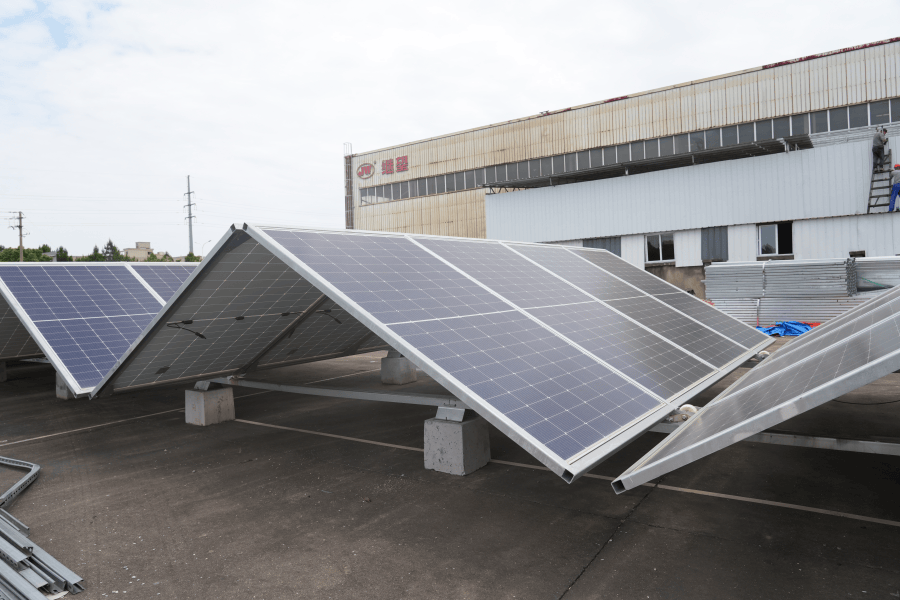
What Remote Villages Teach Us About Grid Resilience: A Tech Perspective
Honestly, some of the most demanding engineering lessons I've learned in two decades didn't come from a state-of-the-art lab in Silicon Valley or a massive utility project in Germany. They came from places where the grid simply ends. I'm talking about deploying off-grid solar and battery systems for rural electrification, like the projects we see in the Philippines. The technical specifications for these systems - especially the Smart BMS (Battery Management System) monitored off-grid solar generators - are forged in fire. They have to be utterly reliable, safe, and cost-optimized in the harshest conditions. And what's fascinating is that these same specs are answering the most pressing headaches for commercial and industrial energy storage right here in the US and Europe.
Quick Navigation
- The Core Problem: It's More Than Just Backup Power
- Why "Good Enough" BMS Isn't Good Enough Anymore
- The Remote-Grid Blueprint: Smart BMS as the Cornerstone
- From Island to Grid: A California Microgrid Case Study
- Decoding the Specs: What C-rate and Thermal Management Really Mean for You
The Core Problem: It's More Than Just Backup Power
In the US and EU, the conversation around Battery Energy Storage Systems (BESS) has shifted. It's no longer just about backup for a data center or time-of-use arbitrage. It's about grid stability, integrating volatile renewables, and providing critical grid services. The National Renewable Energy Lab (NREL) highlights that to achieve high renewable penetration, we need storage that's not just a passive container but an active, intelligent grid asset. The problem? Many legacy BESS solutions are struggling with this role. They lack the granular visibility, adaptive control, and ruggedized design to handle frequent, deep cycling and provide real-time grid support reliably - and safely.
Why "Good Enough" BMS Isn't Good Enough Anymore
I've seen this firsthand on site. A standard BMS might tell you the pack voltage and temperature. But when you're trying to squeeze out every kilowatt-hour to lower your Levelized Cost of Energy (LCOE), or when you need to respond to a grid frequency event in milliseconds, that basic data is useless. The agitation point is threefold:
- Safety & Compliance: Thermal runaway isn't a theoretical risk. Without cell-level monitoring and proactive thermal management, you're sitting on a liability. Meeting UL 9540 and IEC 62619 standards is the baseline, not the finish line.
- Economic Viability: A battery that degrades 30% faster because of poor charge/discharge management destroys your ROI. The International Renewable Energy Agency (IRENA) notes that system lifetime and cycling capability are key to competitive LCOE.
- Operational Failure: When a BESS fails in a remote location, the village goes dark. When it fails in an industrial park, production stops. The cost of downtime is astronomical in both scenarios.
The Remote-Grid Blueprint: Smart BMS as the Cornerstone
This is where the engineering rigor from off-grid solar specifications becomes directly relevant. The technical spec for a Smart BMS Monitored Off-grid Solar Generator designed for harsh, remote duty is a blueprint for resilience. It forces a design philosophy that we at Highjoule Technologies have embedded into our commercial systems: autonomy, intelligence, and durability. The solution isn't just a better battery cell; it's a system-level brain - the Smart BMS - that manages every aspect of performance and health.
For our clients in Europe and North America, this translates to a BESS that doesn't just store energy but understands it. It means predictive maintenance alerts instead of surprise outages. It means safely pushing the C-rate when the grid needs power, without compromising battery life. It's about having the confidence that your asset is protected by the same grade of monitoring that keeps a remote hospital powered 24/7.

From Island to Grid: A California Microgrid Case Study
Let's make this concrete. We worked with a food processing plant in California's Central Valley. Their challenges: crippling demand charges, unreliable grid power during fire season, and a goal to go carbon-neutral. They needed a BESS for peak shaving and backup, but the local utility also wanted them to participate in a demand response program.
The challenge was the cycling profile: frequent, partial charges and discharges during peak shaving, coupled with occasional deep discharges during grid outages. A standard system would have degraded quickly. We deployed a solution centered on a Smart BMS with specs inspired by those off-grid principles. This BMS provides cell-level voltage, temperature, and impedance tracking. It dynamically adjusts charge/discharge rates (C-rate) based on real-time cell conditions and ambient temperature, not just a fixed schedule.
The result? The system seamlessly switches between economic and resilience modes. It gave the utility the fast, reliable response they needed, and it gave the plant manager a dashboard showing precise battery health and projected lifespan. The LCOE of their stored energy dropped significantly because we're maximizing cycle life. Honestly, it's this kind of dual-purpose, intelligent operation that separates a modern grid asset from a simple battery box.
Decoding the Specs: What C-rate and Thermal Management Really Mean for You
Let's break down two jargon terms you'll see in any spec sheet, through the lens of an engineer who's been on the commissioning side.
C-rate Isn't Just a Speed Limit
Think of C-rate as how hard you're breathing during exercise. A 1C rate means fully charging or discharging the battery in one hour - a steady jog. A 2C rate is a sprint, doing it in 30 minutes. High C-rates are great for grid services but create more heat and stress. The magic of a Smart BMS is like having a brilliant coach. It doesn't just let the battery sprint until it collapses. It monitors each cell's "vital signs" and can say, "Okay, we can handle a 2C discharge for 2 minutes, but now we need to throttle back to 0.8C to cool down." This adaptive control is what extends life and maintains safety.
Thermal Management: The Silent Guardian
Heat is the enemy. I've opened enclosures where poor airflow caused a 15C (59F) difference between the top and bottom cells - that's a huge imbalance that accelerates degradation. A spec that mandates active liquid cooling or a smart forced-air system with sensors at every cell module isn't over-engineering; it's essential for commercial duty. Our approach at Highjoule is to design thermal systems that are proactive. The BMS doesn't just react to high temperature; it models heat buildup based on current flow and ambient data, and adjusts the cooling before a hot spot forms. This is non-negotiable for meeting safety standards and hitting that 10+ year lifespan.
So, when you look at a technical specification, don't just see a list of numbers. See a system philosophy. The rigorous demands of off-grid solar have given us a proven template for building BESS that can truly support and stabilize our modern grids. The question isn't whether you need storage, but whether the intelligence behind your storage is built for the mission.
What's the one operational risk in your energy profile that keeps you up at night? Is it unplanned downtime, or escalating energy costs? Let's talk about how making the battery the smartest component in your chain can change that.
Tags: UL Standard BESS LCOE Europe US Market Renewable Energy Off-grid Solar Smart BMS
Author
James Zhang
20+ years agricultural energy storage engineer / Highjoule CTO