
Tier 1 Battery Cell BESS for EV Charging: Solve Grid & Cost Challenges
Beyond the Spec Sheet: What Tier 1 Battery Cell BESS Really Means for Your EV Charging Business
Hey there. If you're reading this, you're probably knee-deep in planning an EV fast charging hub or maybe you're staring at a utility bill that just spiked because of demand charges. I've been there, on-site, with clients from California to North Rhine-Westphalia, watching the same "aha" moment - or sometimes, the moment of panic - when the grid's limitations meet ambitious EV rollout plans. Honestly, the technical specifications for a Battery Energy Storage System (BESS) can feel like alphabet soup: UL, IEC, C-rate, LCOE. But let's talk about what it all means over a (virtual) coffee. The real question isn't just about the specs; it's about how a Tier 1 Battery Cell BESS translates into a reliable, profitable, and safe charging station on the ground.
Quick Navigation
- The Real Grid Bottleneck for EV Chargers
- Where Your Profits Are Really Leaking
- Decoding the "Tier 1" Advantage
- A Real-World Fix in California
- The Engineer's Perspective: Safety & Longevity
The Real Grid Bottleneck for EV Chargers
Phenomenon first. Across the US and Europe, the race to install high-power DC fast chargers (DCFC) is hitting a wall. It's not a lack of ambition; it's the physical and financial capacity of the local grid. I've seen this firsthand on site. A commercial property owner wants to install a bank of 350 kW chargers. The utility comes back with a quote for a multi-million dollar grid infrastructure upgrade and a timeline measured in years, not months. Or worse, they're told the capacity simply isn't available. According to a National Renewable Energy Laboratory (NREL) study, uncontrolled high-power EV charging can increase peak demand at a substation by up to 30%, a stressor the aging grid in many regions wasn't designed for.
This isn't just an inconvenience. It's a direct blocker to business models and sustainability goals.
Where Your Profits Are Really Leaking
Let's agitate that pain point a bit more. Even if you can get the grid connection, the operational costs can eat your margin. Demand charges - fees based on your highest 15-30 minute power draw in a billing cycle - are the silent killer for DCFC stations. A few simultaneous fast-charging sessions can create a massive power spike, resulting in a demand charge that makes that month unprofitable. It's a volatile, unpredictable cost.
Then there's the missed opportunity. Pairing EV chargers with on-site solar is a no-brainer for branding and cost savings. But solar generation is intermittent. Without storage, you're either exporting that cheap, green power back to the grid when your chargers are idle, or you're pulling expensive, potentially dirty grid power when the sun isn't shining. The system isn't optimized. You're leaving money and carbon savings on the table.
Decoding the "Tier 1" Advantage for Your BESS
So, what's the solution? A well-specified BESS acts as a shock absorber and a profit center. But not all batteries are created equal. When we talk about the Technical Specification of a Tier 1 Battery Cell BESS for EV Charging Stations, we're moving beyond marketing fluff. We're talking about a system built for a brutal, cyclical, high-power mission.
Here's what that specification sheet should guarantee in practice:
- High, Sustained C-Rate: This isn't just a number. A true 1C or higher continuous rating means the battery can discharge its entire capacity in an hour to support back-to-back fast charging sessions without throttling. I've seen systems that claim high power but can't sustain it; they overheat and derate, failing when you need them most.
- Military-Grade Thermal Management: This is non-negotiable. Passive cooling often isn't enough for DCFC duty cycles. An active liquid cooling system, like the one we design into our Highjoule systems, keeps every cell within a tight optimal temperature range. This is the single biggest factor in preventing premature degradation and, critically, in maintaining safety.
- Compliance as a Foundation, Not a Feature: UL 9540, IEC 62619, IEEE 1547 - these aren't just stickers. They are the result of thousands of hours of third-party safety testing. In the US and EU, having a UL or IEC-certified system isn't just about best practice; it's about insurance, permitting, and fire department approval. It's the baseline for responsible deployment.
At Highjoule, our engineering focus is on translating these specs into a lower Levelized Cost of Storage (LCOS). A cheaper battery that degrades in 5 years is far more expensive than a Tier 1-based system that delivers reliable performance for 15+ years. We calculate the total cost of ownership with you, because that's the number that matters.
A Real-World Fix: The California Truck Stop Case
Let me give you a concrete example from our project log. We deployed a 2 MWh BESS at a truck stop along a major California freight corridor. The challenge was classic: the site wanted to add four 360 kW chargers for electric trucks, but the grid interconnection cost was prohibitive.

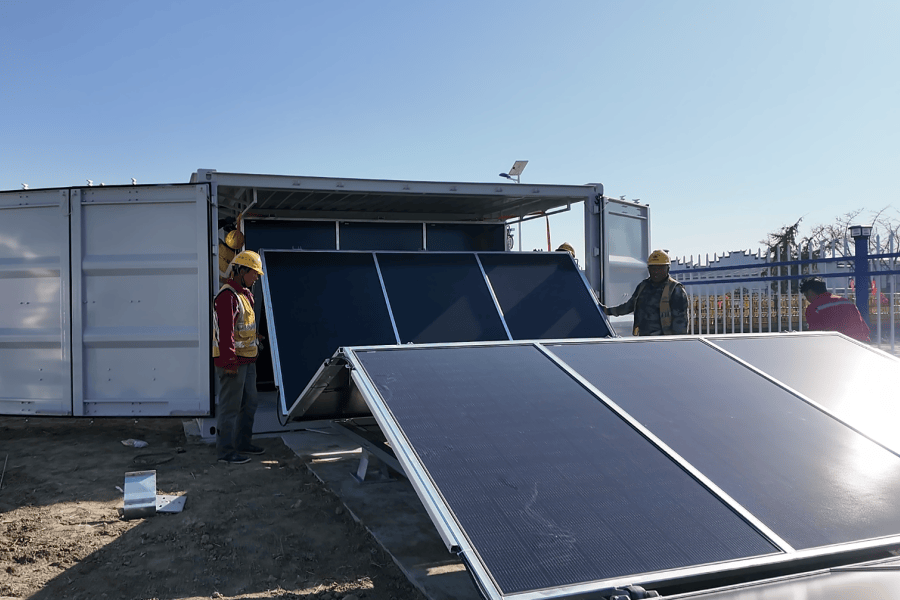
Our solution was a containerized BESS built with Tier 1 cells, featuring a 1C continuous discharge rating and full UL 9540 certification. The system does three things seamlessly:
- Peak Shaving: It caps the site's power draw from the grid, completely eliminating demand charges.
- Time-Shift Solar: The site has a large solar canopy. The BESS stores excess midday solar to power charging sessions overnight.
- Grid Buffer: It provides the instantaneous power for the chargers, allowing the site to avoid a $800k grid upgrade. The grid connection now acts as a slow trickle-charge for the BESS itself.
The outcome? The charging hub opened 18 months sooner than the grid upgrade would have allowed. The owner's operational costs are predictable, and the ROI on the BESS is clear from the saved demand charges and avoided infrastructure costs. That's the spec sheet come to life.
The Engineer's Perspective: It's About Safety and Longevity
From my two decades in the field, here's the core insight: the difference between a good and a great BESS for EV charging comes down to cell selection and system integration.
Tier 1 cells (think the manufacturers supplying global automotive OEMs) come with a proven track record of quality, consistency, and safety data. They have lower failure rates (measured in parts per million). When you pack thousands of cells together, that statistical reliability is everything. A single weak cell can become a thermal runaway risk or simply drag down the entire system's performance.
Furthermore, the Battery Management System (BMS) must be intelligent enough to not just monitor voltage and temperature, but to understand the unique stress profile of EV charging - rapid discharge, partial state-of-charge cycling, and long idle periods. Our BMS algorithms are tuned specifically for this, proactively balancing cells and managing health to extend lifespan. This isn't an off-the-shelf solution; it's specialized engineering.
So, when you're evaluating a Technical Specification of Tier 1 Battery Cell BESS for EV Charging Stations, look past the headline energy and power numbers. Drill into the cell OEM data, the thermal management design, the certification documents, and the warranty structure that backs the promised cycle life. Ask for the LCOS model.
What's the one grid constraint keeping your next EV charging project stuck on the drawing board? Let's talk about how a storage-first approach might be the key to unlocking it.
Tags: UL Standard BESS LCOE Renewable Integration Tier 1 Battery Grid Stability EV Charging
Author
James Zhang
20+ years agricultural energy storage engineer / Highjoule CTO