
Environmental Impact of High-voltage DC Pre-integrated PV Container for EV Charging Stations
Beyond the Hype: The Real Environmental Math of Pre-Integrated Solar & Storage for EV Charging
Honestly, if I had a dollar for every time someone asked me, "Aren't solar-powered EV chargers just... greenwashing?" I'd probably be retired on a beach somewhere. I get it. The industry is full of shiny brochures and bold claims. But after 20+ years on site, from commissioning massive utility-scale BESS to troubleshooting residential setups, I've learned one thing: the real environmental story isn't in the marketing copy. It's in the gritty details of the hardware, the system integration, and frankly, the math. Let's talk about the Environmental Impact of High-voltage DC Pre-integrated PV Container for EV Charging Stations C not as a buzzword, but as a practical engineering solution we're deploying right now.
Quick Navigation
- The Real Problem: More Than Just Carbon Footprint
- The Hidden Environmental Cost of "Frankenstein" Systems
- The Solution: Why High-Voltage DC & Pre-Integration Changes the Game
- Case in Point: A Logistics Hub in North Rhine-Westphalia
- Expert Insight: LCOE, Thermal Management & The 20-Year View
- Making It Real: What This Means for Your Project
The Real Problem: More Than Just Carbon Footprint
The goal is clear: decarbonize transport. But the path to get there? It's creating a whole new set of challenges. The International Energy Agency (IEA) points out that global EV stock surpassed 40 million in 2023, driving a massive demand for new charging infrastructure. The immediate thought is to plug these chargers into the grid and call it a day. But here's the on-site reality I've seen: that approach often just shifts the emissions upstream to the power plant. Worse, it strains local grids, leading to costly and resource-intensive grid upgrades C think new substations, miles of copper cable, and transformers. That's a huge embedded carbon cost we rarely talk about.
The Hidden Environmental Cost of "Frankenstein" Systems
To avoid grid strain, many operators are trying to pair solar canopies with battery storage and DC fast chargers. The typical approach? A piecemeal system. You source PV panels from one vendor, a BESS from another, power conversion systems (PCS) from a third, and then hire a team to wire it all together on a concrete slab you just poured. This is what we jokingly call a "Frankenstein" system on site.
The environmental impact here is multifaceted:
- Land & Resource Use: You're consuming more land for the same energy output. Separate components need more space, more cabling (copper/aluminum), and more foundational work (concrete has a significant carbon footprint).
- Efficiency Losses: Every unnecessary power conversion bleeds energy. In a typical AC-coupled system, you have DC (solar) to AC, then AC back to DC for battery storage, then DC to AC to the grid, and finally AC to DC for the EV battery. That's multiple conversion steps, each with losses. The NREL has shown that system-level efficiency losses can erode the financial and environmental returns of a project.
- Longevity & Waste: Mismatched components from different vendors age differently. Thermal stress isn't managed holistically. The weakest link fails first, potentially leading to premature replacement of entire subsystems C an environmental cost in manufacturing and waste.

The Solution: Why High-Voltage DC & Pre-Integration Changes the Game
This is where the concept of a High-voltage DC Pre-integrated PV Container shifts the paradigm. It's not just a box; it's a systems-level approach to minimizing environmental impact from the ground up.
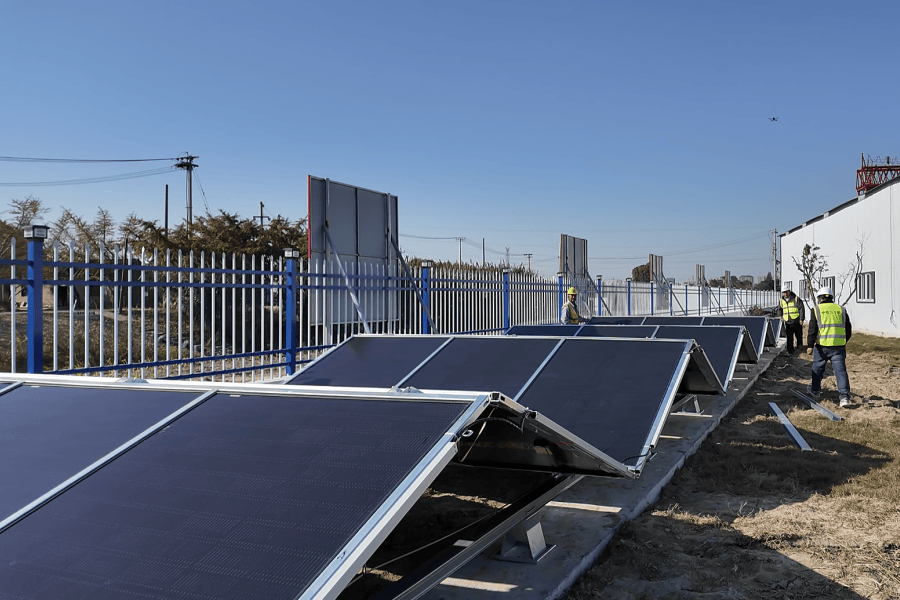
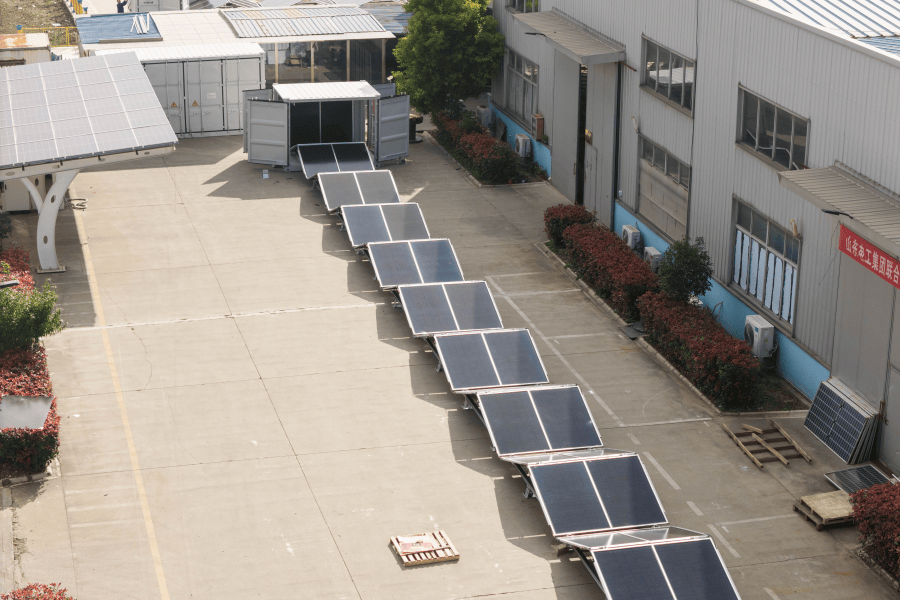
Think of it as a "energy plant in a box." The solar PV, the battery storage (BESS), the high-voltage DC bus, the power conversion, and the advanced thermal management are all designed, tested, and assembled in a controlled factory environment. Then it's shipped to site as a single, UL 9540/ IEC 62933-compliant unit. Here's the environmental payoff:
- Radically Reduced Footprint: Pre-integration can cut the physical footprint by up to 40% compared to a field-assembled system. Less land disturbed, less concrete poured.
- High-Voltage DC Efficiency: By keeping as much of the energy flow as possible on a high-voltage DC bus, we minimize those wasteful AC-DC conversions. Solar DC goes directly to charge the batteries or, with minimal conversion, to the EV charger. This can boost round-trip efficiency by 5-8% or more. That's free, clean energy you're no longer throwing away.
- Holistic Thermal Management: A single, unified cooling system designed for the entire container is far more efficient than three separate ones fighting each other. It extends component life, reducing replacement cycles and waste. At Highjoule, our liquid-cooled thermal design is something I'm particularly proud of C it's what lets us safely push the C-rates when needed without cooking the cells.
Case in Point: A Logistics Hub in North Rhine-Westphalia
Let me give you a real example. We deployed one of our pre-integrated containers for a major logistics company in Germany. Their challenge: power 12 new 150kW DC fast chargers for their electric truck fleet without a multi-million euro grid upgrade, and they had a hard sustainability target to meet.
The traditional "solar canopy + separate storage" design would have taken 6 months of civil work and still relied on the grid at night. We installed a pre-integrated HV DC container on a pre-existing gravel area in 8 weeks. Because of the high system efficiency and dense energy footprint, it meets over 85% of their daily charging demand with onsite solar, slashing their Scope 2 emissions. The grid connection is now just a backup, not the primary source. The client's project manager told me the simplicity was the biggest surprise C "It was more like plugging in a large appliance than building a power station."
Expert Insight: LCOE, Thermal Management & The 20-Year View
This brings me to a crucial point: the true Environmental Impact is inextricably linked to economics, specifically the Levelized Cost of Energy (LCOE). A cheaper, less efficient system might have a lower upfront cost, but its LCOE over 20 years is higher because it wastes more energy. A pre-integrated system, with its higher efficiency and lower maintenance needs (trust me, I've done the service calls), delivers a lower LCOE. A lower LCOE for clean energy means it gets deployed faster and more widely C that's the systemic environmental win.
And about thermal management C it's the unsung hero. Batteries degrade with heat. Our factory-integrated system uses the battery's thermal system to help manage the heat from the power electronics, and vice versa. This synergy means we can use a smaller, less energy-intensive cooling system overall. It's these kinds of integrated design choices that compound over decades to reduce total energy consumption and material stress.
Making It Real: What This Means for Your Project
So, what's the takeaway for a fleet manager, a commercial developer, or a municipality looking at EV charging? When you evaluate a solar-and-storage solution, look beyond the kilowatt-hour ratings. Ask about the system-level round-trip efficiency. Ask about the footprint. Ask how the thermal management is designed for a 15-year lifespan. Request the safety certifications (UL 9540, IEC 62477-1 for power conversion).
The environmental advantage of the pre-integrated approach isn't a vague promise. It's a measurable outcome of reduced material use, higher energy efficiency, longer system life, and ultimately, a lower LCOE for your clean electrons. It turns a complex, on-site construction project with a variable environmental toll into a predictable, optimized product. That's the kind of innovation that scales.
What's the biggest site constraint you're facing in your next EV charging project? Is it space, grid capacity, or that aggressive sustainability mandate? Let's talk specifics.
Tags: UL Standard BESS LCOE Energy Storage Environmental Impact EV Charging Photovoltaic Container
Author
James Zhang
20+ years agricultural energy storage engineer / Highjoule CTO