
IP54 Outdoor BESS for Construction Sites: Benefits, Drawbacks & Real-World Insights
IP54 Outdoor BESS for Construction Sites: An Honest, Boots-on-the-Ground Look
Hey there. If you're managing a construction project in the US or Europe right now, you're probably dealing with two big headaches: unpredictable grid power and the soaring cost - and noise - of diesel generators. Honestly, I've lost count of the sites I've visited where the temporary power setup feels like an afterthought, chewing through budget and adding complexity nobody needs.
Over my 20-plus years deploying battery storage globally, I've seen a clear shift. More project managers are asking if a rugged, outdoor Battery Energy Storage System (BESS) can be their primary site power source. Specifically, the IP54-rated outdoor units. It's a smart question, but the answer isn't a simple yes or no. It's about understanding the fit. Let's grab a coffee and talk through the real benefits, the not-so-obvious drawbacks, and what I've learned from seeing these systems in the mud and dust.
Quick Navigation
- The Real Power Problem on Modern Construction Sites
- What Does "IP54 Outdoor BESS" Actually Mean for You?
- The Compelling Benefits of an IP54 BESS on Site
- The Drawbacks & Considerations You Must Plan For
- A Real-World Case: How It Played Out in Germany
- Making the Decision: Is an IP54 BESS Right for Your Site?
The Real Power Problem on Modern Construction Sites
Let's start with the pain. Construction sites are energy-intensive, but they're often in areas with weak grid connections or no grid at all. Relying on the local utility can mean expensive demand charges and vulnerability to outages that bring your entire schedule to a halt. The traditional fallback - diesel gensets - solves one problem but creates others: fuel logistics, emissions regulations (especially tight in the EU and California), noise complaints from neighbors, and frankly, operational costs that are through the roof.
The International Energy Agency (IEA) has highlighted that decarbonizing construction sites is a major challenge, with temporary power being a significant contributor to a project's carbon footprint. This isn't just about being green; it's about future-proofing your operations against tightening regulations and volatile fuel prices.
Agitation: The financial impact is real. I've seen projects where 20-30% of the temporary facilities budget gets swallowed by diesel. And it's not just cost. A delayed concrete pour because a generator failed at 3 AM? That's a ripple effect of delays and contractual penalties. The need for reliable, clean, and quiet power isn't a luxury anymore; it's a critical path item.
What Does "IP54 Outdoor BESS" Actually Mean for You?
Before we dive in, let's demystify the "IP54" label. It's an Ingress Protection rating from the IEC standard 60529. In plain English:
- "5" against solids: It's dust-protected. Not fully dust-tight, but ingress of dust won't harm operation. On a windy construction site, this is huge.
- "4" against liquids: It can handle water splashed from any direction. Think driving rain, not submersion or high-pressure jets.
So, an IP54 Outdoor BESS is a self-contained battery storage unit designed to sit outside, withstand typical weather, and resist a lot of the dust and debris common on site. It's a product of robust engineering, with gaskets, sealed cabinets, and corrosion-resistant materials. For us at Highjoule, building to this standard is the baseline, but we always push further - like using marine-grade coatings for coastal sites, because I've seen firsthand how salt air can eat through standard finishes in months.
The Compelling Benefits of an IP54 BESS on Site
When it's the right fit, the advantages are transformative.
1. Rapid Deployment & Flexibility
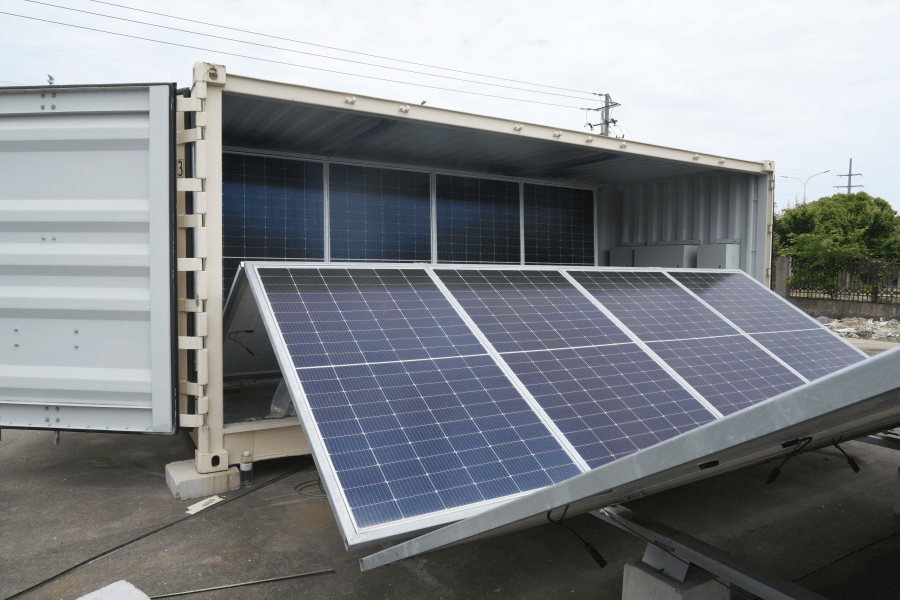
These are typically containerized or skid-mounted systems. They get delivered, placed on a simple concrete pad or even compacted gravel (check local codes!), and you're connecting power within days, not weeks. Need to shift it for Phase 2? A heavy-duty truck can relocate it. This modularity is a game-changer compared to building permanent infrastructure.
2. Significant Operational Cost Savings (Lower LCOE)
Here's where the financials get exciting. The Levelized Cost of Energy (LCOE) - the total lifetime cost divided by energy output - for solar-plus-storage or even grid-charged storage is now beating diesel in many regions. You charge the BESS from the grid during off-peak, cheap rates, or pair it with temporary solar panels, and use that stored energy during expensive peak hours. You slash fuel costs and demand charges. I've seen projects achieve a 40-50% reduction in temporary power costs, which directly boosts your bottom line.

3. Silent, Emission-Free Operation
This is a bigger deal than it sounds. Getting permits for 24/7 work near residential areas is easier when you're not running a loud generator all night. It's better for your crew's health and community relations. It's a straightforward benefit with complex, positive ripple effects.
4. Built-in Resilience & Power Quality
A high-quality BESS provides ultra-reliable power. No voltage sags or frequency fluctuations that can damage sensitive equipment like laser cutters or PLCs. If the grid flickers, the BESS seamlessly takes over, keeping critical tools and site safety systems online. It's not just backup; it's premium power.
The Drawbacks & Considerations You Must Plan For
Now, the honest truth from the field. Ignoring these is where projects run into trouble.
1. The Upfront Capital Cost Hurdle
Yes, the CapEx is higher than renting a diesel generator. This is the single biggest barrier. You're buying an asset, not just renting fuel consumption. The business case hinges on total cost of ownership over the project life (or the asset's reuse on future sites). Financing models like Energy-as-a-Service (EaaS) can help, but you need to run the numbers.
2. It's Not "Set and Forget"
While low-touch, an outdoor BESS requires basic oversight. You need to ensure air vents aren't blocked by piled-up materials (a common site issue!), and that the area is kept reasonably clear. Its thermal management system works hard in direct sun or freezing temps, which leads to the next point...
3. Environmental Limits & Energy Density
IP54 is good, but it's not indestructible. In extreme environments - think Arizona desert heat or Norwegian winter cold - the system will use some of its own energy to cool or heat the batteries. This "parasitic load" reduces the net energy available to your site. Also, the energy density (kWh per square foot) is lower than an indoor, climate-controlled system because of the needed robustness and spacing. You need to right-size with these deratings in mind.
4. Logistics and Site Planning
You need a suitable, accessible location. These units are heavy. You must plan for crane access and proper foundation. It also needs to be positioned for safe connection to your site distribution panel and, if applicable, solar or wind sources. This requires early integration into your site plan, not a last-minute add-on.
A Real-World Case: How It Played Out in Germany
Let me give you a concrete example. We worked with a contractor on a large logistics center development in North Rhine-Westphalia. The challenge: strict local noise ordinances, a tight grid connection with limited capacity, and a sustainability mandate from the client.
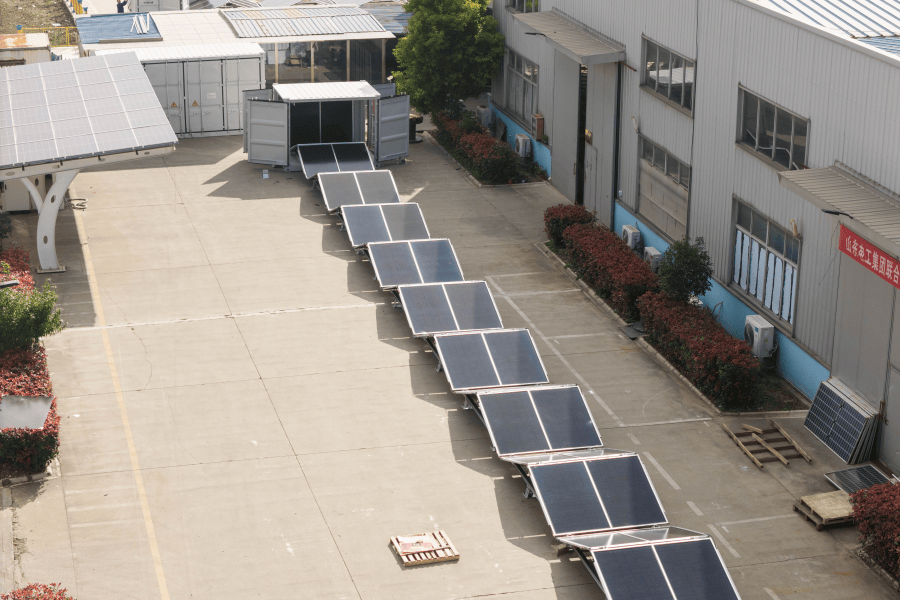
The Solution: We deployed a 500 kWh / 250 kW IP54 BESS, coupled with a temporary array of solar canopies over the site offices. The BESS was charged overnight on a low-cost grid tariff and by solar during the day.
The Outcome: Diesel use was eliminated for base load power (they kept a small gen-set for emergency backup only). The site achieved 75% renewable power usage for its temporary needs. The project manager told me the smoothest part was the silence - no generator roar meant better communication and a perceived increase in site safety. The CapEx was higher, but the total energy cost was 35% lower than the diesel-only forecast, and they met all environmental compliance targets effortlessly.
Making the Decision: Is an IP54 BESS Right for Your Site?
So, how do you decide? Ask these questions:
- Project Duration: Is your site active for 12+ months? The longer the duration, the better the payback.
- Energy Profile: Do you have predictable, high daily energy usage? That's ideal for BESS economics.
- Site Constraints: Do you have the physical space and a suitable location that's not in a flood zone or a dumping ground for materials?
- Regulatory & Community Drivers: Are there emissions, noise, or green mandates that make diesel a liability?
From a technical standpoint, look for a provider that doesn't just sell a box. Look for UL 9540 and UL 9540A certification for safety (non-negotiable in the US), IEC 62619 compliance, and a partner with real deployment experience. At Highjoule, for instance, our focus is on designing systems with conservative C-rates (the speed of charge/discharge) and advanced liquid cooling for thermal management. This isn't just tech jargon - it's what extends battery life from 5 years to 15+ years, making your investment solid.
The bottom line? An IP54 Outdoor BESS isn't a magic bullet for every construction site. But for the right project - one with duration, scale, and a focus on total cost and sustainability - it's arguably the most intelligent temporary power solution available today. It turns a cost center into a manageable, even strategic, asset.
What's the biggest temporary power challenge you're facing on your next project? Is it cost, reliability, or the push to go green? I'd love to hear what's keeping you up at night.
Tags: Construction Site Power UL Standard BESS Microgrid Outdoor Energy Storage IP54
Author
James Zhang
20+ years agricultural energy storage engineer / Highjoule CTO