
The Ultimate Guide to 20ft High Cube Industrial ESS Container for Public Utility Grids
Contents
- The Scalability Puzzle: Why Bigger Isn't Always Simpler
- The Real Cost of Speed and Heat
- The Containerized Answer: More Than Just a Steel Box
- A Tale of Two Grids: A California Case Study
- Expert Corner: The Nitty-Gritty Your Procurement Team Needs to Know
- Beyond the Box: What Truly Matters for Your Grid Project
The Scalability Puzzle: Why Bigger Isn't Always Simpler
Honestly, if I had a nickel for every time a utility planner told me, "We need massive storage, and we need it yesterday," I'd probably be retired on a beach somewhere. The pressure is immense. The International Energy Agency (IEA) states that to meet net-zero goals, global grid-scale battery storage capacity needs to expand 35-fold by 2030. That's a staggering number. But here's the catch I've seen firsthand on site: scaling from a pilot 2-MW system to a 100-MW behemoth isn't just about adding more battery racks. It's a logistical, financial, and engineering maze.
The traditional approach - custom-building a battery building or deploying hundreds of scattered cabinet systems - often leads to ballooning balance-of-system costs, nightmarish commissioning timelines, and real headaches around future expansion. You're not just procuring batteries; you're managing a construction project. And in today's market, with interconnection queues growing longer by the day, time spent pouring concrete is time you're not generating revenue or providing grid stability.
The Real Cost of Speed and Heat
Let's agitate that pain point a bit more. Two silent project killers often get underestimated in the boardroom: C-rate and thermal management.
Everyone wants a fast-responding system (high C-rate) to chase energy arbitrage or provide rapid frequency regulation. But pushing cells to consistently discharge at high speeds generates immense heat. Inadequate thermal management doesn't just degrade your battery's lifespan - it's a direct hit to your Levelized Cost of Storage (LCOS). I've walked into sites where poor airflow design created 15C temperature differentials within a single module stack. That hotspot? It's the weakest cell failing years ahead of schedule, dragging the entire string down with it. It's like running a marathon in a sauna; performance plummets, and the risk of a costly shutdown soars.
Then there's the standards maze. A project in Texas needs UL 9540 and IEEE 1547. Your counterpart in Germany is looking at IEC 62933 and VDE-AR-E 2510-50. Navigating this isn't just paperwork; it's about fundamental design differences in safety protocols and grid interfaces. A "one-size-fits-all" container from a non-specialized vendor can become an anchor, delaying commissioning by months as you scramble for local certification.
The Containerized Answer: More Than Just a Steel Box
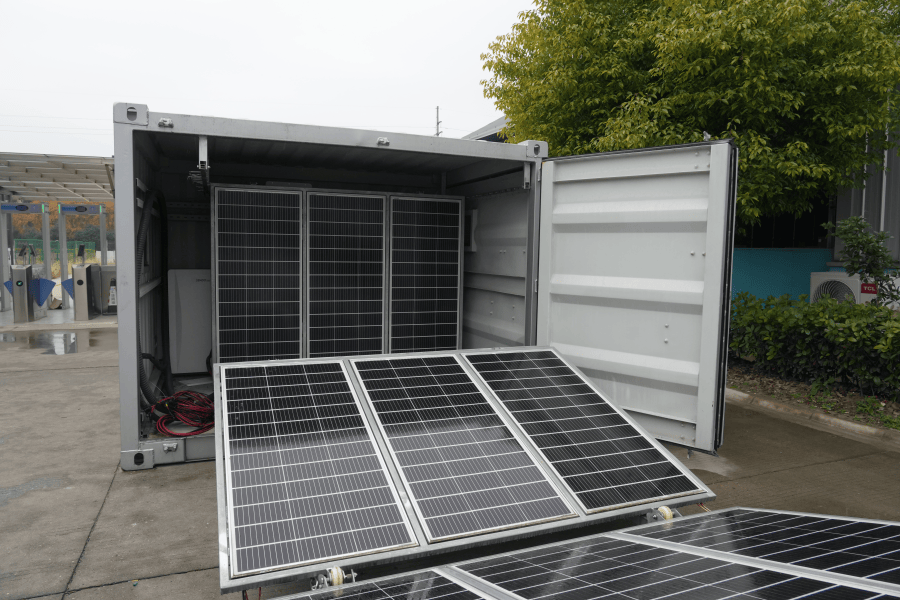
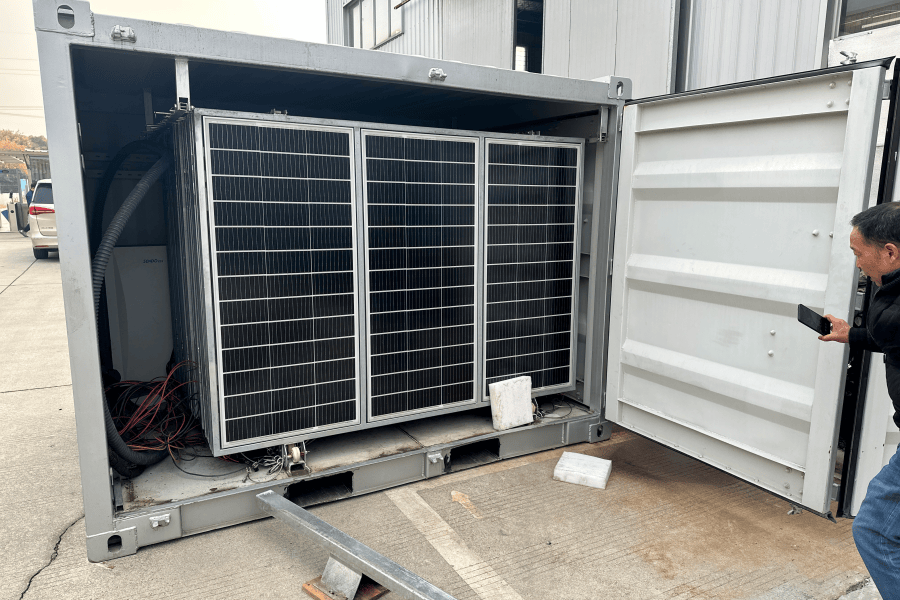
So, what's the solution that balances speed, scale, and smarts? For an increasing number of my clients in the U.S. and Europe, it's the pre-engineered, factory-integrated 20ft High Cube Industrial ESS Container. But let's be clear: we're not talking about a glorified shipping crate. This is a fully realized, grid-ready power plant on the inside, with the mobility and predictability of a container on the outside.
The genius of this approach is its "power block" mentality. Think of each 20ft High Cube unit as a standardized, self-contained building block. Need 50 MW/100 MWh? That's a known quantity of containers, with predictable footprint, cable runs, and interconnection points. It transforms a complex construction project into a more manageable logistics and assembly operation. At Highjoule, our GridMax HC20 platform is built around this exact philosophy. We do the heavy integration lifting - battery racks, HVAC, fire suppression, power conversion, controls - in our controlled factory environment. This isn't just about efficiency; it's about quality. It's far easier to achieve consistent UL 9540A test validation on a complete, sealed system in a factory than on a site-built structure in the rain.
A Tale of Two Grids: A California Case Study
Let me give you a real example. We recently partnered with a community choice aggregator in Northern California. Their challenge was classic: secure 40 MW of 4-hour storage to integrate a new solar farm, but the substation site was constrained, and the regulatory window for incentives was tight. A traditional build was out of the question.
We deployed a farm of our GridMax HC20 containers. Because they're pre-certified, we bypassed months of on-site inspection loops. The containers arrived with everything inside already talking to each other. Our team focused on the civil work (the simple pad) and the medium-voltage hookup. Honestly, the "plug-and-play" analogy is overused, but in this case, it was closer to "position-and-power." We cut the commissioning timeline by an estimated 40%, which directly translated into the client capturing a full season of summer peak pricing they would have otherwise missed. The scalability is baked in; when phase two comes, adding capacity is a matter of dropping more known-quantity blocks.
Expert Corner: The Nitty-Gritty Your Procurement Team Needs to Know
When you're evaluating a 20ft ESS container, move beyond the spec sheet's headline energy capacity. Here's what to dig into:
- Thermal Management, Decoded: Ask about the cooling strategy. Is it passive, forced air, or liquid cooling? For most utility applications in varied climates, a closed-loop liquid cooling system is the gold standard. It maintains cell temperature within a 3C band uniformly, which is critical for longevity and maintaining rated power output on a hot day. It also keeps the internal environment clean and dry, unlike forced air which can pull in dust.
- C-rate in Context: A 1C rating means the system can discharge fully in one hour. For a 4-hour duration system, you're typically looking at a 0.25C rate. A vendor promising a high C-rate for a long-duration system might be over-engineering (and over-pricing) the power conversion side. Match the C-rate to your primary use case - frequency regulation needs speed (high C), solar shifting needs endurance (lower C).
- The LCOE/LCOS Lever: The biggest lever on Levelized Cost of Energy isn't just the cell price. It's system lifespan and round-trip efficiency. Superior thermal management directly extends lifespan. An integrated, high-efficiency PCS (Power Conversion System) with low auxiliary loads (like efficient cooling) preserves every possible kilowatt-hour. A difference of 2% in round-trip efficiency compounds into massive revenue over 20 years.
Beyond the Box: What Truly Matters for Your Grid Project
Finally, the container is a vessel. The real value is the brain and the support behind it. The energy management system (EMS) needs to be utility-grade, capable of executing complex, stacked value streams autonomously - whether it's responding to a grid operator's dispatch signal or optimizing against a day-ahead market price curve.
And this is where a partner like Highjoule differentiates itself. It's not just about delivering a UL and IEC-compliant box. It's about having the deployment experience to know how to sequence the delivery to match your crane schedule, providing local field service engineers for the first critical months of operation, and having a 24/7 monitoring team that speaks the technical language of your grid operators. We've built our systems to be robust, but we know things happen. The question is, how fast and how well can your vendor respond when you call at 2 AM?
The grid storage journey is complex, but the path to scaling it doesn't have to be reinvented every single time. The right containerized solution provides the foundation - a predictable, safe, and efficient building block. The real question for your team is: what unique grid challenge do you need that building block to solve first?
Tags: UL Standard BESS LCOE Renewable Energy Utility-Scale Energy Storage Grid Modernization 20ft Container ESS
Author
James Zhang
20+ years agricultural energy storage engineer / Highjoule CTO