
Tier 1 Battery Cell Manufacturers: The Critical Choice for Industrial Park BESS
Table of Contents
- The Real Problem: It's Not Just About Capacity
- When the Wrong Choice Gets Expensive (and Risky)
- The Solution: Why Tier 1 Battery Cells Are Non-Negotiable
- The Essentials: What Makes a "Tier 1" Manufacturer?
- A Case from the Field: North Carolina Industrial Microgrid
- Beyond the Cell: System Integration is Everything
- Making the Choice: A Practical Lens for Decision-Makers
The Real Problem: It's Not Just About Capacity
Honestly, when I'm on site with a client looking at deploying a Battery Energy Storage System (BESS) for their industrial park, the first question is rarely about the battery cell manufacturer. It's about peak shaving, backup power, or maybe leveraging time-of-use rates. The core technical choice - the very heart of the system - often gets buried in a spec sheet. And that's where the risk creeps in.
The market is flooded with options. You can find BESS solutions at wildly varying price points. The temptation to focus on upfront cost per kilowatt-hour is enormous, especially for large-scale industrial deployments. But here's the thing I've seen firsthand: the battery cell is the single most critical component determining the long-term Total Cost of Ownership (TCO), safety record, and ultimately, the success of your project. Choosing anything less than a proven, reputable source is a gamble with a 15-20 year asset.
When the Wrong Choice Gets Expensive (and Risky)
Let's agitate that pain point a bit. A lower-cost system built with cells of unverified pedigree might look great on the initial capex line. But what happens in Year 3?
- Degradation Roulette: Promised 80% capacity after 10 years? I've seen systems hit that threshold in 5 or 6 because of poor cell chemistry consistency and manufacturing control. Suddenly, your expected ROI timeline is shattered. According to a NREL analysis, the variability in battery degradation can swing the Levelized Cost of Storage (LCOS) by over 30%.
- The Safety Shadow: Industrial parks have people, expensive equipment, and continuous operations. Thermal runaway isn't a theoretical concept. Inferior cells with unstable chemistries or poor quality control are a significantly higher latent risk. Meeting local fire codes (like NFPA 855 in the US) becomes exponentially harder.
- Warranty Woes: That 10-year warranty is only as good as the company backing it. If a 2nd or 3rd-tier cell provider goes under or simply denies a claim based on questionable usage data, you're left holding a very expensive, underperforming asset.
The Solution: Why Tier 1 Battery Cell Manufacturers Are Non-Negotiable
This is where the conversation turns to the Top 10 Manufacturers of Tier 1 Battery Cell Photovoltaic Storage System for Industrial Parks. It's not just a list of brands; it's a shorthand for a set of rigorous standards and proven performance that de-risks your investment.
In our industry, "Tier 1" refers to cell manufacturers that are bankable. They have:
- Mass-scale, automated production for consistency.
- Publicly available, long-term cycle life data from independent labs.
- Cells that are inherently designed and tested to meet global standards (UL, IEC, UN38.3).
- A financial and operational history that gives banks and insurers confidence.
When you source a BESS built with these cells, you're not just buying batteries. You're buying predictability.
The Essentials: What Makes a "Tier 1" Manufacturer?
Let's get practical. How do you spot them? Look for these markers:
- Transparent Data Sheets: Look for detailed specs on energy density, cycle life (e.g., 6000 cycles at 80% Depth of Discharge), and a clear degradation curve. Vague promises are a red flag.
- Independent Certification: The gold standard is cell-level certification to UL 9540A (test method for thermal runaway fire propagation). This isn't a system test; it's on the cell itself. It tells you the fundamental chemistry and build are sound.
- Global Supply & Track Record: They supply major automotive OEMs or have GWh-scale deployments in the utility field. The IEA notes that global battery demand for stationary storage is soaring, and Tier 1 producers are at the forefront of scaling up responsibly (IEA).
A Case from the Field: North Carolina Industrial Microgrid
Let me give you a real example. We worked with a food processing plant in North Carolina. Their goals: reduce demand charges, provide backup for critical refrigeration, and add future solar. The initial bids were all over the map.
One bid was 20% cheaper, using cells from a new, aggressive manufacturer. Their data sheets looked okay, but they had no UL 9540A report, only a system-level certificate from a less rigorous lab. Their cycle life claims were based on ideal lab temps (25C), not the hot, humid Carolina environment.
We steered them towards a system built with Tier 1 cells (from one of the well-known global leaders). The capex was higher. But the analysis showed:
- Lower LCOE (Levelized Cost of Energy) over 15 years due to slower degradation.
- Easier insurance approval and a lower premium because of the safety certifications.
- A performance guarantee backed by a manufacturer that would clearly be around in 10 years.
The system was deployed 18 months ago. The performance data matches the degradation curve almost exactly. The plant manager sleeps better at night. Honestly, that last point is priceless.
Beyond the Cell: System Integration is Everything
Now, a Tier 1 cell is necessary, but not sufficient. This is where companies like ours at Highjoule Technologies come in. The best cell can be let down by poor thermal management, bad battery management system (BMS) logic, or shoddy integration.
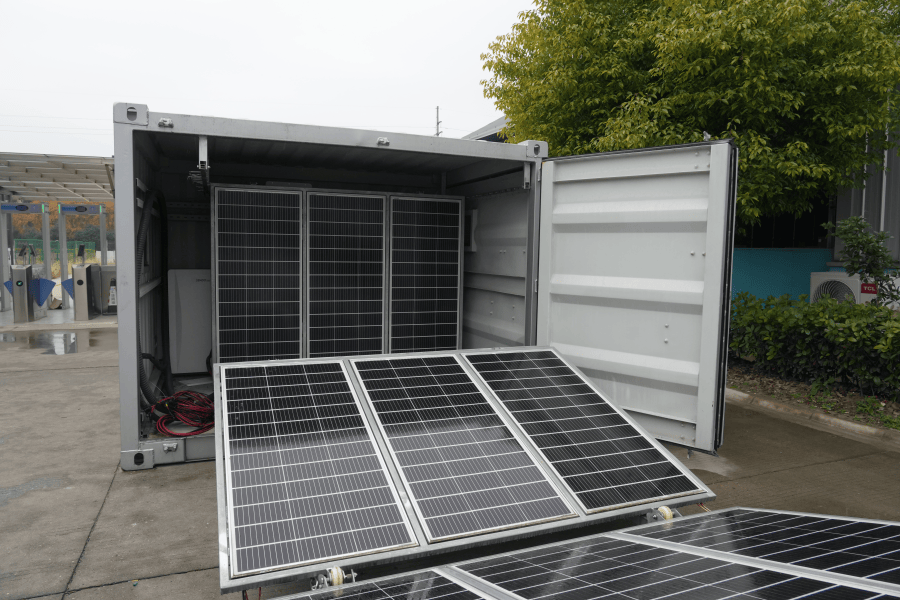
Think of it like a high-performance engine. You need the best internal components (Tier 1 cells), but you also need a brilliant cooling system, a precise fuel injection computer (the BMS), and a chassis that holds it all together securely. Our engineering focus is on that integration. We design our containerized BESS solutions with liquid cooling for precise thermal management, ensuring those premium cells operate in their ideal temperature window, maximizing lifespan. Our BMS doesn't just monitor voltage; it's constantly balancing and optimizing based on the cell's specific chemistry profile from the manufacturer.
And crucially, the entire system - from the cell up - is designed and tested to comply with UL 9540 and IEC 62619, giving you a single, accountable point for all local permitting and interconnection requirements in North America and Europe.
Making the Choice: A Practical Lens for Decision-Makers
So, when you're evaluating proposals for your industrial park, don't just look at the total MWh and the price tag. Dig into the bill of materials. Ask the hard questions:
- "Can I see the UL 9540A test report for the specific cell model you are using?"
- "What is the expected end-of-life capacity, and what is the financial remedy if we fall short?"
- "How does your BMS and cooling system specifically protect and optimize the life of these cells?"
Investing in a system built around Tier 1 battery cells is the closest thing to a guarantee in this business. It transforms your BESS from a cost center into a predictable, high-reliability asset. What's the one question about cell sourcing you wish your vendor would answer more clearly?
Tags: UL Standard BESS LCOE Europe US Market Industrial Energy Storage Renewable Energy Tier 1 Battery
Author
James Zhang
20+ years agricultural energy storage engineer / Highjoule CTO