
Ultimate Guide to 215kWh Cabinet 5MWh BESS for Data Center Backup Power
The Ultimate Guide to Deploying a 5MWh Utility-Scale BESS for Data Center Backup: Why the 215kWh Cabinet is the New Industry Standard
Hey there. If you're reading this, you're likely in the unenviable position of figuring out how to keep a massive data center online when the grid blinks. It's a pressure I know well. I've been on-site in Texas during a freeze, in California during rolling blackouts, and in Germany when a sudden drop in frequency threatened a major industrial park. Honestly, the old way of doing things - relying solely on diesel gensets - isn't just expensive and dirty anymore; in many places, it's becoming a regulatory non-starter. The smart move, the future-proof move, is a utility-scale Battery Energy Storage System (BESS). But not just any BESS. We're talking about a scalable, safe, and standards-compliant build using a modular approach. Let's talk about why the 215kWh cabinet is becoming the go-to building block for a robust 5MWh data center backup solution.
Quick Navigation
- The Real Problem: More Than Just a Power Blip
- Why Modular 215kWh Cabinets Win for Scalability
- Safety: The Non-Negotiable for Data Centers
- Case Study: A 4.8MWh Deployment in Silicon Valley
- Thinking Beyond Backup: The LCOE Advantage
- Getting It Right: Deployment Insights from the Field
The Real Problem: It's Not If, But How Often and For How Long
The problem isn't just that power outages happen. For a data center, the problem is multi-layered. First, the frequency and duration of grid disruptions are rising. The National Renewable Energy Lab (NREL) has documented increasing volatility in many US regions as the generation mix changes. Second, diesel generators have a slow response time (often 10-60 seconds to full load), create emissions headaches, and require constant fuel supply and maintenance - a logistical nightmare during widespread outages. Third, and this is crucial, modern data centers have a power quality sensitivity that old backups can't address. A brief voltage sag can cause as much havoc as a full blackout.
I've seen this firsthand: a facility in Ohio had its gensets ready, but a sub-second grid fluctuation caused a cascade of server reboots before the generators even registered the fault. The financial loss from that 90-second event was staggering. The real pain point is the need for instantaneous, clean, and predictable backup power that can also serve the facility when the grid is stable. That's the gap.
Why the 215kWh Cabinet is the Smart Choice for a 5MWh Build
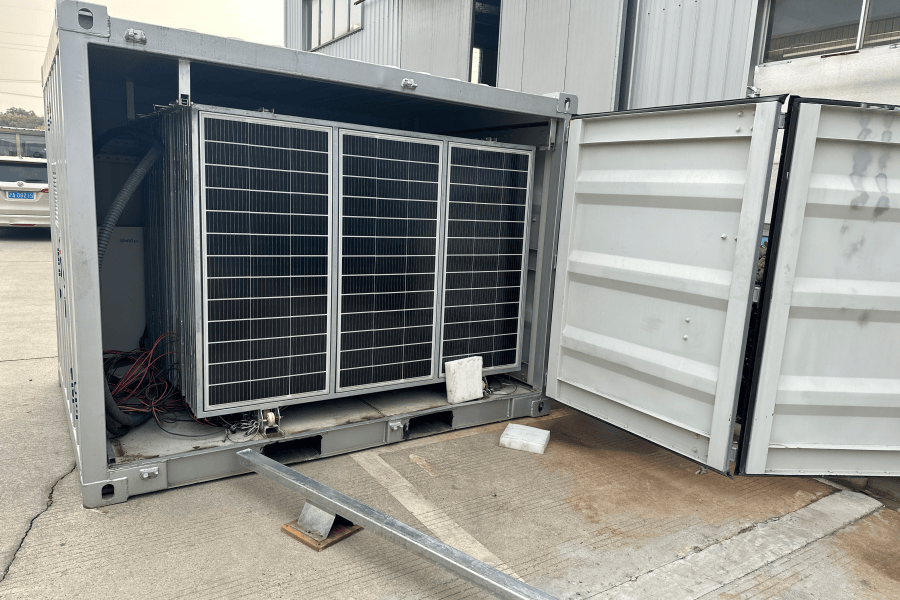
When you target a system like a 5MWh BESS, the temptation is to go for the biggest single container solution. But in the field, flexibility is king. A system built from standardized 215kWh cabinets offers distinct advantages. From a pure deployment view, these cabinets are easier to transport, maneuver into position (especially in tight urban or existing data center yards), and wire up. If one cabinet needs service, you can isolate it without taking the entire 5MWh system offline - a huge plus for uptime.

But let's talk numbers. A 5MWh system needs about 24 of these cabinets. This modularity allows for phased investment. You can start with a 2.5MWh core for critical backup and add cabinets later for peak shaving or additional runtime. It also future-proofs your tech. Battery chemistry is evolving. With a modular cabinet design, you're not locked into one massive, monolithic block. In five years, you could potentially swap out a subset of cabinets for newer, higher-density units if it makes economic sense. This approach dramatically improves the system's overall Levelized Cost of Storage (LCOS) - a fancy term for the total lifetime cost per MWh stored and delivered. You're building in financial flexibility from the start.
Safety: The Non-Negotiable for Any Data Center Deployment
This is where I get most passionate. Putting a high-energy battery system next to a billion-dollar data center isn't something you do on a vendor's brochure promises. It requires ruthless adherence to standards. In the US, UL 9540 (the standard for ESS safety) and UL 9540A (the test method for evaluating thermal runaway fire propagation) aren't just checkboxes; they are your first line of defense. In the EU, IEC 62933 series provides the framework. Any cabinet you use must be certified to these standards as a complete unit - not just have certified cells inside a random box.
The 215kWh cabinet design we use at Highjoule, for instance, is built around this. It's not just a steel shell. It's an integrated system with passive fire suppression, continuous gas detection, and a dedicated thermal management system that's separate from the data center's own HVAC. Why separate? Because if the BESS has a thermal event, you cannot risk circulating that air into your server halls. The cabinet must contain and exhaust any issue internally. This level of compartmentalization is critical and is a core reason why modular cabinets are often safer than a single, large, shared-space container for this application.
Key Technical Terms, Made Simple
- C-rate: Think of this as the "speed" of the battery. A 1C rate means a 215kWh cabinet can discharge 215kW for 1 hour. For backup, you need a C-rate high enough to pick up the data center's load instantly (often 0.5C to 1C is sufficient). Too high a C-rate can stress the battery and increase cost.
- Thermal Management: This is the battery's "climate control." Lithium-ion batteries perform best and live longest in a tight temperature range (usually 15-25C). A proper system doesn't just cool; it heats in winter and ensures even temperature across all cells to prevent weak links.
- LCOE (Levelized Cost of Electricity): This is your true cost of backup power over the system's life. It includes the upfront capex, ongoing O&M, and degradation. A well-designed BESS with a lower LCOE beats diesel on cost alone over a 10-year period, before you even count the reliability and environmental benefits.
Case Study: Silicon Valley's 4.8MWh Answer to PSPS Events
Let's look at a real project. A major colocation provider in Santa Clara, California, faced the threat of Public Safety Power Shutoffs (PSPS). Their diesel gensets were a compliance and community relations issue. They needed a cleaner, faster solution that could also reduce their peak demand charges.
The Challenge: Provide at least 4 hours of backup for a critical 1.2MW load, comply with strict local fire codes (more stringent than state level), and integrate with existing electrical switchgear without disrupting daily operations.
The Solution: A system built from twenty-two 215kWh cabinets, forming a 4.73MWh BESS. The modular cabinets allowed them to fit the system into a constrained yard space between existing buildings. Each cabinet's built-in UL 9540A compliance streamlined the permitting process with the local fire marshal - a huge time-saver.
The Outcome: The system now provides seamless transition to backup during grid outages (sub-20 milliseconds). Furthermore, it's programmed to discharge during daily peak price windows (4-9 PM), cutting their energy bills by thousands per month. That revenue stream directly offsets the system's cost. The client didn't just buy backup; they bought an asset.
Thinking Beyond Backup: The Real Value is in Daily Operations
The most sophisticated data center operators I work with now view a BESS not as an insurance policy, but as a strategic grid asset. When your 5MWh system is not needed for backup, it can be used for:
| Peak Shaving: | Discharge during expensive peak rate periods to slash utility bills. |
| Frequency Regulation: | Provide fast grid services to the local ISO for additional revenue. |
| Renewable Integration: | Smooth the output of on-site solar PV, increasing its usable value. |
This dual-use model completely changes the financial equation. Suddenly, the payback period shrinks from a vague "for resilience" to a clear 5-7 year window with a solid IRR. The key is choosing a BESS platform, like one built with intelligent 215kWh cabinets, that has the cycle life and software sophistication to handle daily cycling without compromising its readiness for a once-a-year outage.
Getting It Right: Insights from 20 Years in the Field
So, you're convinced a modular 5MWh BESS is the way to go. Here's my blunt, from-the-trenches advice to avoid common pitfalls:
1. Don't Skimp on the Integration Study. The BESS doesn't plug into a wall. You need a detailed study of your existing electrical infrastructure - switchgear, transformers, protection relays. A mismatch here can cause costly delays or even unsafe conditions.
2. Plan for Thermal Management Outside the Cabinet. Where will the heat from the cabinets' cooling systems go? In a hot climate, dumping it right back next to the units is a recipe for efficiency loss. You need a plan for heat rejection.
3. Clarify Service and Ownership Models. Does the provider offer remote monitoring and predictive maintenance? With 24 cabinets, you don't want to be manually checking each one. A partner with 24/7 NOC support and local service technicians is worth its weight in gold when you need to ensure 99.999% uptime.
At Highjoule, our entire approach is shaped by these lessons. We design our 215kWh cabinet systems not just as products, but as pre-integrated, compliant building blocks that come with the deployment knowledge and long-term service partnership to make a 5MWh project feel manageable, even for a team doing it for the first time.
The question for you isn't really if you need this level of resilience and operational intelligence - the market and your clients are demanding it. The real question is, how will you build it in a way that's smart, safe, and financially savvy from day one? What's the first operational challenge you'd want a system like this to solve?
Tags: UL Standard BESS LCOE Grid Resilience Data Center Backup Utility-Scale Energy Storage
Author
James Zhang
20+ years agricultural energy storage engineer / Highjoule CTO