
The Ultimate Guide to All-in-one Integrated 5MWh Utility-scale BESS for Telecom Base Stations
Beyond the Grid: A Real-World Guide to 5MWh BESS for Telecom Resilience
Let's be honest. If you're managing telecom infrastructure in the US or Europe, "grid reliability" probably keeps you up at night. I've been on-site after storms, during heatwaves, and in remote locations where a single power blip means dropped calls, lost data, and angry customers. The old model of diesel generators and praying the grid holds is, frankly, a costly gamble. That's where the conversation is shifting to large-scale, integrated battery energy storage systems (BESS). Today, I want to walk you through the real-world value of a specific solution: the all-in-one, utility-scale 5MWh BESS for telecom base stations. This isn't just theory; it's what I see working on the ground.
Quick Navigation
- The Silent Cost of Unreliable Power
- Why Piecemeal Solutions Fall Short
- The All-in-One 5MWh BESS: Built for Telecom's Demands
- A Real-World Blueprint: Deployment in Northern Germany
- Under the Hood: Key Tech for Non-Technical Decision Makers
- Your Next Step Towards Energy Independence
The Silent Cost of Unreliable Power
We all know the obvious pain: outages. But the real problem is more insidious. It's the financial drain from peak demand charges, where utilities slap you with huge fees for your highest 15-minute power draw each month. It's the constant maintenance of backup gensets and the logistics of fuel in remote areas. Most importantly, it's the lost revenue and reputation damage when your network goes down. According to the National Renewable Energy Lab (NREL), commercial and industrial sectors are increasingly turning to storage for resilience and bill management. For a telecom site, a 5MWh system isn't overkill - it's the sweet spot for covering extended outages, shaving those peak loads, and integrating local solar to create a true microgrid.
Why Piecemeal Solutions Fall Short
I've seen this firsthand on site. A company buys batteries from one vendor, power conversion systems (PCS) from another, and tries to stitch it together with a third-party control system. What happens? Integration headaches. Finger-pointing when something fails. Wasted space because the layout isn't optimized. And safety concerns, because ensuring a mixed-vendor system complies fully with UL 9540 (the standard for energy storage systems in the US) or IEC 62933 (the international equivalent) becomes a nightmare. This complexity kills your project's economics, inflating the Levelized Cost of Energy Storage (LCOE) through hidden soft costs and operational inefficiencies.

The All-in-One 5MWh BESS: Built for Telecom's Demands
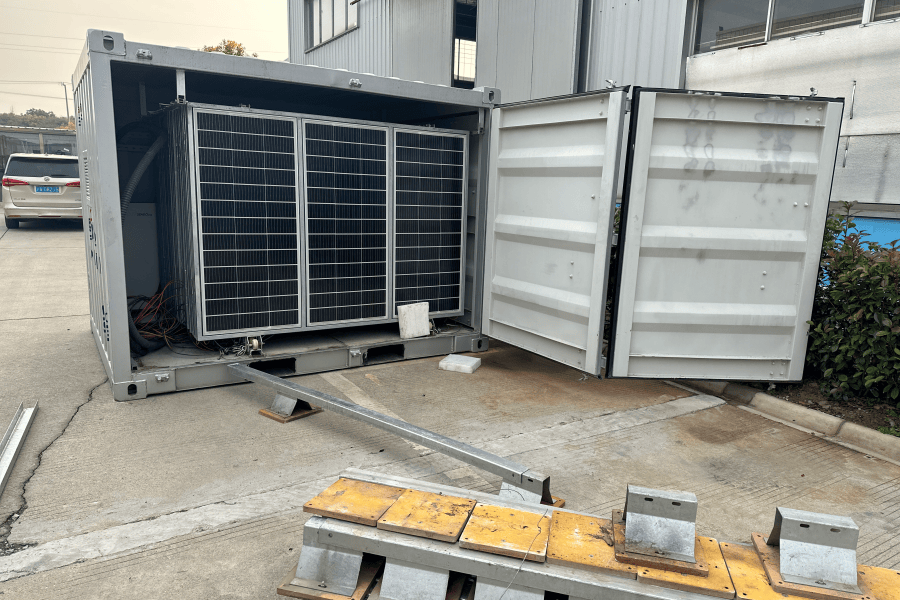
This is where the "all-in-one, integrated" approach changes the game. Imagine a solution that arrives on a standard shipping container footprint. Inside, it's not a collection of parts, but a single, optimized product. The batteries, PCS, thermal management, fire suppression, and controls are designed to work together from day one. For a company like Highjoule, this means we engineer the system to meet UL/IEC/IEEE standards as a complete unit, not as an assembly. The result? Faster permitting (authorities having jurisdiction, or AHJs, love pre-certified systems), dramatically simplified deployment, and predictable performance. You're not buying components; you're buying a guaranteed outcome: resilient, cost-effective power for your critical site.
A Real-World Blueprint: Deployment in Northern Germany
Let me give you a concrete example from our work. A major telecom operator in Germany's windy Schleswig-Holstein region had a cluster of base stations in an area with a high share of volatile renewable energy on the grid. Their challenges were peak shaving, backup for grid congestion events, and leveraging local wind power.
We deployed a pre-integrated 5MWh BESS solution. The key was its grid-forming capability - a technical must-have for true off-grid operation - which allowed the site to seamlessly island during grid disturbances. The system's integrated energy management software automatically dispatches power to avoid peak tariffs and stores excess wind energy. Honestly, the biggest win for the client was the speed: from site delivery to commissioning was under three weeks, precisely because everything was pre-tested and containerized. No on-site integration drama.
Under the Hood: Key Tech for Non-Technical Decision Makers
You don't need to be an engineer to get the core value. Here are the simple explanations for the tech that matters:
- C-rate: Think of this as the "thirst" of the battery. A 1C rate means a 5MWh battery can discharge its full capacity over 1 hour. A 0.5C rate is slower, over 2 hours. For telecom backup, a moderate C-rate (like 0.5C) is often perfect - it's kinder on the battery lifespan (meaning lower long-term costs) and provides plenty of power for hours of backup.
- Thermal Management: This is the battery's climate control system. Batteries hate being too hot or too cold. An advanced liquid cooling system, built into the all-in-one design, keeps every cell at its ideal temperature. This is non-negotiable for safety and for getting the promised 15+ year life out of your investment.
- LCOE (Levelized Cost of Energy Storage): This is the ultimate "cost per useful kWh" metric over the system's life. A lower LCOE means better economics. Integration slashes LCOE by reducing installation costs, improving efficiency, and extending system life. It's the number that proves the all-in-one model isn't just convenient - it's cheaper in the long run.
At Highjoule, we obsess over these details so you don't have to. Our systems are designed to optimize these parameters out of the box, compliant with your local standards, whether that's UL in Texas or IEC in Poland.

Your Next Step Towards Energy Independence
The shift to utility-scale storage for telecom isn't a future trend - it's a present-day solution to very real financial and operational risks. The question isn't really if you should consider a 5MWh-scale BESS, but how to deploy one without the traditional headaches. So, let me ask you: What's the single biggest power-related cost or risk you're facing at your most critical sites right now? Is it peak demand charges, fuel logistics, or the fear of a multi-hour outage? Identifying that is the first step in building a case for a solution that just works.
Tags: UL Standard BESS LCOE Renewable Energy Telecom Energy Storage Utility-scale Battery
Author
James Zhang
20+ years agricultural energy storage engineer / Highjoule CTO