
Black Start BESS for Data Centers: The Ultimate Guide to Reliable Backup Power
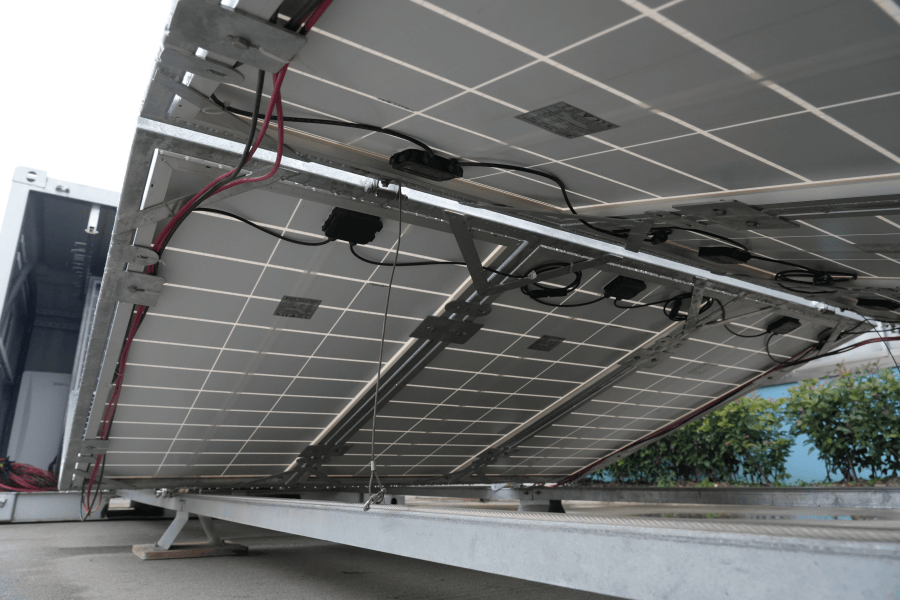
The Ultimate Guide to Black Start Capable BESS for Data Center Backup Power: An Engineer's Perspective
Hey there. If you're reading this, you're probably managing a data center or a critical facility where downtime is not an option. I've been on-site for more BESS deployments than I can count over the last two decades, from California to North Rhine-Westphalia. And honestly, the conversation around backup power is shifting. It's not just about having a generator anymore. It's about having intelligent, resilient, and instantaneous power. Let's talk about why a Black Start Capable Battery Energy Storage System (BESS) is becoming the cornerstone of modern data center design, and what you really need to know beyond the spec sheets.
Table of Contents
- The Silent Problem: Beyond Simple Backup
- The True Cost of Downtime and Grid Dependence
- What Exactly is a Black Start Capable BESS?
- Key Technical Considerations (Without the Jargon)
- A Real-World Case: A German Data Center's Journey
- Making the Right Choice for Your Facility
The Silent Problem: Beyond Simple Backup
Here's the phenomenon I see in the US and Europe: data centers have traditionally relied on a "1-2 punch" of UPS and diesel gensets. This model works... until it doesn't. The grid goes down, the UPS carries the load for a few minutes, and the generators are supposed to kick in. But what if the generators fail to start? I've seen it happen - a cold start issue, a fuel problem, a maintenance oversight. Even a successful start means you're now running on diesel, with all the noise, emissions, fuel logistics, and cost that entails. You're not resilient; you're just on a different, more expensive and fragile, power source.
The True Cost of Downtime and Grid Dependence
Let's agitate that pain point a bit. According to the Uptime Institute, over 60% of data center outages result in at least $100,000 in total losses. That's not just lost revenue; it's reputational damage. Now, layer on grid instability. In the US, the number of weather-related major power outages has doubled over the past two decades. In Europe, managing grid congestion and phase-outs of traditional baseload power is a constant challenge. Your primary power source is becoming less predictable. Your traditional backup is a liability waiting for its moment to fail. This isn't a sustainable model for critical infrastructure.
What Exactly is a Black Start Capable BESS?
This is where the solution comes in. A Black Start Capable BESS isn't just a big battery. It's an integrated power system designed to self-start and re-energize a facility from a completely dead state - zero voltage, zero frequency - without relying on the external grid. Think of it as the heart that can restart itself and then power the rest of the body (your servers, cooling, lighting). It combines high-density lithium-ion batteries (or other chemistries) with advanced power conversion systems (PCS) and sophisticated control software that can orchestrate a safe, sequential revival of your entire electrical infrastructure.
The magic happens in the controls. A true black start system has to manage inrush currents, prevent motor damage, and balance the load as it comes online - tasks that go far beyond simple discharge/charge cycles. This is the core of what we at Highjoule Technologies have been refining for years, ensuring our systems don't just meet but exceed the rigorous UL 9540 and IEC 62933 standards for safety and performance.
Key Technical Considerations (Without the Jargon)
As an engineer, when I evaluate or design a Black Start BESS, I'm looking at a few critical things. Let me break them down simply:
- C-rate (The "Sprint vs. Marathon" Rate): This is how fast the battery can discharge its energy. For black start, you need a high C-rate - it's a sprint to provide a massive surge of power to "crank" your electrical system. But you also need sustained energy for the "marathon" of runtime. A well-designed system balances both. Our Highjoule stacks are engineered for high pulse power without sacrificing cycle life.
- Thermal Management (The "Keeping Cool" Factor): High-power discharges generate heat. Poor thermal management kills battery life and, in worst cases, creates safety risks. I've opened containers where the thermal design was an afterthought. It's not pretty. We insist on liquid cooling for our high-density systems. It's more precise, quieter, and extends the system's life significantly, directly lowering your long-term Levelized Cost of Energy (LCOE) for backup power.
- Grid-Forming Inverters (The "Leader" of the Pack): This is the technical heart of black start. Most inverters are "grid-following"; they need an existing grid signal to sync to. A grid-forming inverter creates that signal. It establishes a stable voltage and frequency waveform from scratch, acting as the new "grid" for your facility. This is non-negotiable technology for a true black start capability.
A Real-World Case: A German Data Center's Journey
Let me give you a concrete example from my notebook. We worked with a hyperscale data center developer in western Germany. Their challenge was twofold: achieve Tier IV redundancy and future-proof against local grid constraints. Diesel gensets were a compliance and PR headache.
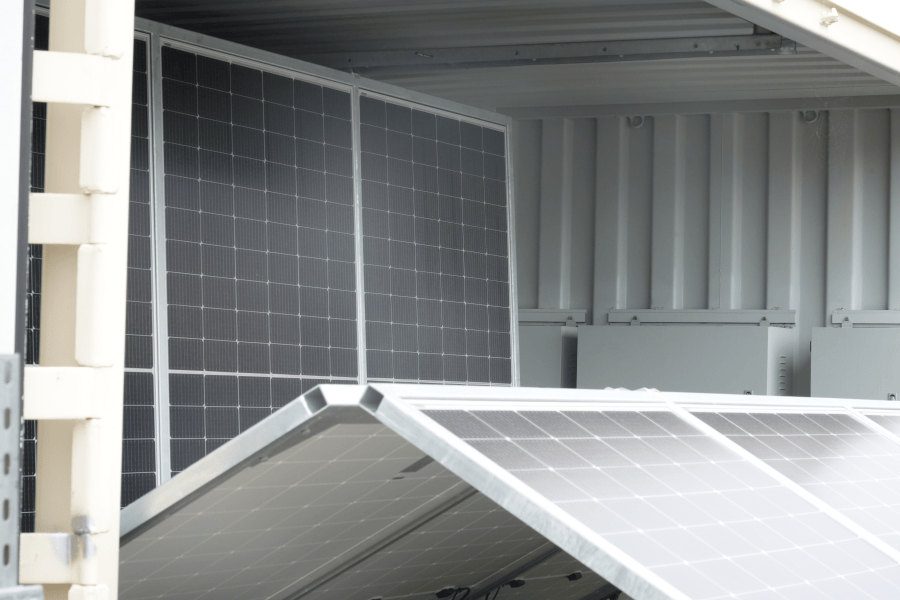
The solution was a 4 MW/16 MWh Black Start BESS from Highjoule, integrated into a microgrid with their on-site PV. The BESS provides the instantaneous black start capability and primary backup for critical loads. The PV and a smaller, optimally sized generator handle longer-duration outages and peak shaving. The result? They reduced their planned diesel generator capacity by 70%, cut carbon emissions for backup operations, and passed their redundancy tests with flying colors. The BESS now also participates in grid-balancing programs when not in backup mode, creating a new revenue stream. The key was designing the system controls from the ground up for black start, not as an add-on feature.
Why Standards Like UL 9540A Matter (A Lot)
In the US market especially, you cannot overlook fire safety. UL 9540A is the test method for evaluating thermal runaway fire propagation. Honestly, it's a tough test. I've witnessed them. It simulates a single cell failing and checks if the failure spreads. Choosing a BESS with a proven 9540A report isn't just about compliance; it's about sleeping soundly knowing your multi-million dollar data center won't be taken down by a cascading battery failure. Our containerized systems are designed with this from cell to system level, incorporating passive and active safety barriers that are validated by these tests.
Making the Right Choice for Your Facility
So, how do you move forward? Don't just buy a battery. Think about the system.
- Define Your "Black Start" Scope: Do you need to restart the entire facility, or just a critical "island" of IT load? This drastically changes the size and specs.
- Demand Third-Party Validation: Ask for the UL/IEC certification documents and specifically the black start functionality test reports from a reputable lab.
- Look at the Total Ecosystem: How does the BESS integrate with your existing switchgear, SCADA, and building management system? At Highjoule, our project teams include engineers who've been on the data center side. We speak your language and ensure the integration is seamless, not a battlefield of change orders.
- Plan for the Long Haul (LCOE): Consider the 15-20 year picture. What are the maintenance costs? How does thermal management affect degradation? A slightly higher upfront cost for a superior thermal system can save you hundreds of thousands in premature replacement costs.
The future of data center resilience is active, intelligent, and multi-functional. A Black Start Capable BESS is more than backup; it's the foundation for a sustainable, efficient, and truly resilient energy ecosystem for your most critical assets.
What's the single biggest concern keeping you up at night regarding your current backup power strategy? Is it fuel security, maintenance complexity, or perhaps upcoming ESG reporting requirements? Let's have that coffee chat.
Tags: UL Standards Data Center Backup Power Battery Energy Storage Black Start BESS Microgrid Critical Infrastructure
Author
James Zhang
20+ years agricultural energy storage engineer / Highjoule CTO