
Grid-forming BESS for Rural Electrification: Lessons for US & EU Microgrids
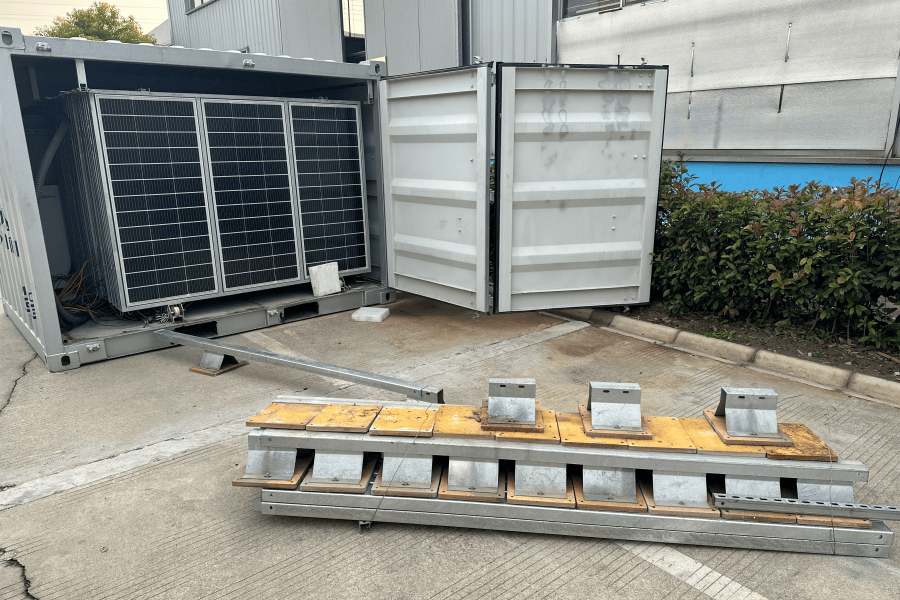
Table of Contents
- The Real Problem Isn't Power, It's Stability
- The Hidden Cost of Instability
- Grid-forming BESS: The Game Changer We Needed
- Case in Point: From Philippine Islands to German Farms
- Beyond the Battery: What Really Matters On-Site
- Your Next Step: Asking the Right Questions
The Real Problem Isn't Power, It's Stability
Honestly, after two decades on sites from Texas to Thailand, I've seen a pattern. When businesses in the US or Europe think about adding solar or wind to their operations, or building an off-grid microgrid, the first question is usually about capacity: "How many kilowatt-hours do I need?" It's a logical start. But the real challenge, the one that keeps engineers and CFOs up at night, isn't just making energy - it's creating a stable, reliable grid from scratch, or integrating seamlessly with a weak one. This is where traditional, grid-following battery systems hit their limit.
They're designed to sync with a big, robust utility grid, like a surfer riding a wave. But take that grid away, or connect to a fragile rural network, and they have nothing to follow. They can't start up a dead system. This is the exact same core challenge faced in rural electrification projects, like those across the Philippines' thousands of islands. The solution developed for those harsh, remote environments? It's directly applicable to the growing microgrid and C&I (Commercial & Industrial) sector in our own backyards.
The Hidden Cost of Instability
Let's agitate that pain point a bit. You invest in a beautiful solar array for your manufacturing plant or remote data center. You pair it with a standard BESS. But during a main grid outage, or if you're operating islanded, your system either fails to "black start" or it struggles with voltage and frequency swings every time a large motor kicks on. The result? Production downtime, data corruption, equipment damage. The International Renewable Energy Agency (IRENA) has highlighted that power quality issues can erode 15-25% of the potential value of distributed renewable energy systems. That's not just lost kilowatt-hours; that's lost revenue, damaged trust, and inflated operational costs.
I've seen this firsthand on site: a food cold storage facility in California that had to throw away product because their legacy storage system couldn't handle the frequent micro-outages and sags, thinking the grid had failed when it was just "weak." The financial loss was staggering, and it all traced back to the inverter's fundamental operating philosophy.
Grid-forming BESS: The Game Changer We Needed
This is where the technology refined in projects like rural electrification becomes our solution. A grid-forming Battery Energy Storage System (BESS) doesn't wait for a grid to follow. It becomes the grid. Using advanced inverter controls, it generates a stable voltage and frequency waveform that other assets - solar panels, wind turbines, even sensitive hospital equipment - can sync to. It's the foundation, not a follower.
For a C&I site in the US or Europe, this means:
- True Black-Start Capability: Your microgrid can boot itself up from a complete shutdown, without a diesel generator (or with a much smaller one).
- Rock-Solid Power Quality: It maintains voltage and frequency within tight tolerances (like the strict IEEE 1547-2018 standard), protecting your critical processes.
- Seamless Integration: It can work in tandem with the main grid, providing ancillary services, and transition smoothly to island mode during an outage without a flicker.

Case in Point: From Philippine Islands to German Farms
The principles are proven. Look at the work being done by organizations like NREL in integrating grid-forming tech into remote communities. But let's bring it home. A project we were involved with in Northern Germany involved a large agricultural cooperative with its own biogas plant and solar roofs. Their challenge was exporting excess power to a rural grid that was often at capacity, while also needing ultra-reliable power for automated feeding and climate control systems.
The solution was a 2 MWh grid-forming BESS, built to IEC 62933 standards. This system does three things: it manages the biogas plant's variable output, creates a stable mini-grid for the farm's own critical loads, and strategically feeds power to the public grid when it's stable enough to accept it. The BESS acts as the buffer and the brain. The key lesson from remote Asian island deployments? Prioritize the control philosophy and the system's ability to handle multiple, fluctuating generation sources in a weak-grid environment. That's exactly what was applied here.
Beyond the Battery: What Really Matters On-Site
Now, as a technical guy who's spent more time in shipping containers (BESS enclosures!) than in offices, let me give some plain-talk insights. When evaluating a grid-forming BESS, don't just get hypnotized by the cell chemistry. Three on-the-ground factors dictate success:
- Thermal Management: This isn't optional. A system running in grid-forming mode, especially in a hot climate or tight enclosure, is under constant electrical stress. Passive cooling often isn't enough. You need an active, redundant thermal management system to prevent premature aging and ensure safety. It directly impacts the system's lifespan and, honestly, prevents scary situations.
- The Right C-rate: You'll hear specs like 1C or 0.5C. Simply put, it's the speed of charge/discharge. For grid-forming, where you need instant response to load changes, a higher C-rate capability is crucial. But there's a trade-off with cycle life. A quality system, like the ones we engineer at Highjoule, is optimized for this balance - providing the necessary "punch" for stability without sacrificing the long-term asset value.
- LCOE - The Real Metric: Levelized Cost of Energy is your true north. A cheaper, less capable system that causes downtime or degrades fast has a terrible LCOE. A robust, grid-forming BESS with superior thermal management and smart controls might have a higher upfront cost but delivers a lower LCOE over 15+ years by ensuring reliability and maximizing renewable utilization. This is where compliance with UL 9540 and IEC 62485 for safety isn't just a checkbox; it's a proxy for robust, bankable engineering that protects your total investment.
Our approach has always been to design from the site up, not the spec sheet down. That means building in the safety margins and serviceability from day one, so when it's 100F outside and a critical load switches on, the system just works - and our local service team can support it with minimal downtime.
Your Next Step: Asking the Right Questions
So, if you're looking at a microgrid or a resilience upgrade, shift the conversation. Don't just ask for "a 500 kWh battery." Start by describing the weakness of your grid connection, the sensitivity of your loads, and your black-start requirements. Then ask potential vendors: "Is your inverter truly grid-forming, and can you show me a test report or case study proving it in an islanded application?" "How does your thermal design ensure performance at my site's peak ambient temperature?" "What's the projected LCOE of your solution versus a conventional one, factoring in reliability?"
The technology to build resilient, renewable-powered microgrids isn't futuristic. It's being deployed today in the most demanding environments imaginable. The question is, are you applying those lessons to secure your own energy future?
Tags: UL Standard LCOE Optimization Grid-forming BESS Microgrid Stability US EU Energy Storage
Author
James Zhang
20+ years agricultural energy storage engineer / Highjoule CTO