
High-Voltage DC BESS Cost for Remote Island Microgrids: A Real-World Breakdown
Let's Talk Real Numbers: The Cost of Powering an Island with High-Voltage DC BESS
Honestly, when a client from a remote island community or a mining operation off the grid first asks me, "How much does a battery system cost?", I completely get it. It's the natural starting point. But after two decades of deploying systems from the Scottish Isles to the Caribbean, I've learned that question is a bit like asking, "How much does a ship cost?" Well, is it a fishing trawler or a container vessel? The answer lies in what you need it to do, how long you need it to last, and the storms it must weather.
For remote island microgrids, the conversation about cost for a High-Voltage DC Battery Energy Storage System (BESS) has to move beyond just the upfront price per kilowatt-hour. We need to talk about value, total cost of ownership, and frankly, survival. Let's grab a virtual coffee and walk through what really drives the numbers.
Quick Navigation
- The Real Problem: It's Not Just "Dollars per kWh"
- What Actually Drives the Cost of Your Island BESS?
- A Peek at the Numbers: A North Atlantic Island Project
- The Expert Bit: C-Rate, Thermal Runaway, and Your Wallet
- Thinking About Your Project? Start Here.
The Real Problem: It's Not Just "Dollars per kWh"
The core pain point I see, especially in the US and European markets, is the disconnect between the initial capital expenditure (CAPEX) quote and the long-term operational reality. A microgrid on a remote island isn't a lab experiment. It's the sole lifeline for power. A cheap, low-quality system that fails in 5 years or requires constant, expensive maintenance isn't a deal - it's a liability.
The aggravation? I've seen this firsthand. A system spec'd without proper attention to thermal management in a tropical climate can see its cycle life halved, effectively doubling its long-term cost. Or a design that doesn't fully integrate with existing diesel gensets, leading to inefficient fuel burn. The Levelized Cost of Energy (LCOE) - the true measure of your cost over the system's life - skyrockets. According to the National Renewable Energy Laboratory (NREL), proper system design and component selection are among the top factors influencing the LCOE for storage, especially in harsh, isolated environments (NREL).
What Actually Drives the Cost of Your Island BESS?
So, let's break down the cost components. The "sticker price" of the battery containers is just one piece.
- System Design & Engineering: This is where the magic (or misery) happens. A design that optimizes for your specific load profile, solar/wind resource, and backup requirements is crucial. This includes the right C-rate (basically, how fast you can charge/discharge the battery safely) and cell chemistry choice.
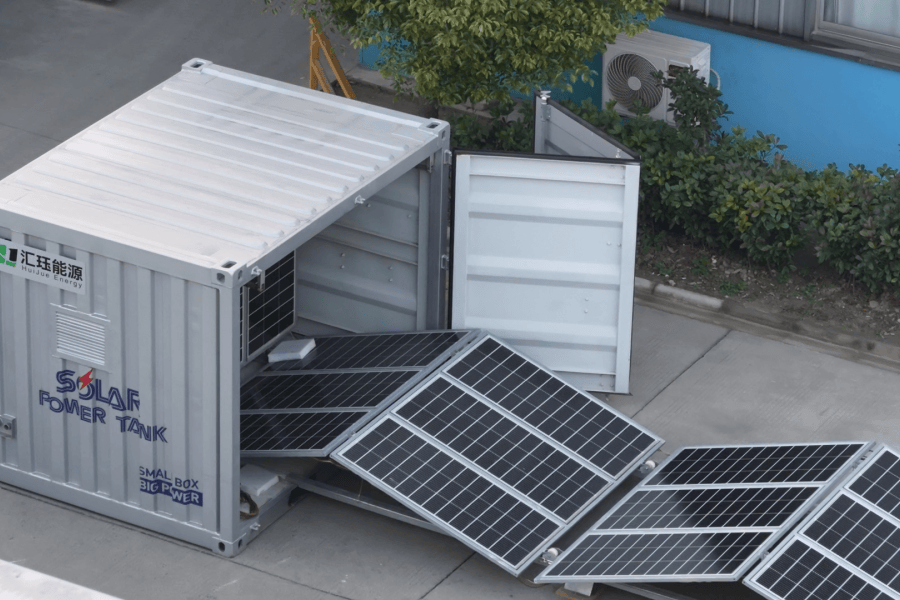
- Hardware (The Obvious Part): Battery racks, high-voltage DC power conversion systems (PCS), HVAC, fire suppression, and the container itself. Quality here is non-negotiable. At Highjoule, for instance, our containers are built to UL 9540 and IEC 62933 standards from the ground up. It costs more initially, but it's insurance.
- Balance of Plant (BoP): The unsung heroes. This includes site preparation, cabling (which can be massive for high-voltage DC), switchgear, grid interconnection hardware, and sometimes even shipping and heavy-lift logistics to get everything to a rocky coast.
- Software & Controls: The brain. This needs to manage energy flow, dispatch, genset synchronization, and black-start capabilities seamlessly. It must comply with local grid codes like IEEE 1547 in the US or similar EU standards.
- Installation, Commissioning & Ongoing Support: You need experienced boots on the ground who speak the local technical and regulatory language. Then, you need a partner for the 15-20 year lifecycle, not just a vendor for day one.

A Peek at the Numbers: A North Atlantic Island Project
Let me share a simplified version of a project we completed for a community in the North Atlantic. They wanted to reduce diesel consumption by over 70% with a hybrid solar-plus-storage system.
- Scenario: 1.5 MW solar PV array + 3 MWh / 1.5 MW High-Voltage DC BESS.
- Key Challenge: Extreme weather (-20C to +30C), salt spray, and no local service technicians.
- Our Approach: We opted for a liquid-cooled battery system for superior thermal management consistency, used marine-grade coatings, and designed for a higher C-rate to handle rapid cloud cover changes. The control system was programmed for predictive genset dispatch.
- Cost Insight: The BESS hardware itself was roughly 40-45% of the total turnkey project cost. Engineering, BoP, and robust commissioning made up the rest. But the LCOE calculation showed a payback under 7 years due to massive fuel savings, and the community now has a more resilient, cleaner grid.
The Expert Bit: C-Rate, Thermal Runaway, and Your Wallet
Let's get technical for a minute, but I'll keep it simple. Two concepts directly hit your budget:
1. C-Rate: Think of it as the "athleticism" of the battery. A 1C rate means a 3 MWh battery can deliver 3 MW for one hour. A 0.5C rate means it can only deliver 1.5 MW for two hours. Specifying a higher C-rate than you need (for those rare, high-power events) adds unnecessary cost. Specifying one that's too low means your system can't capture all the solar peaks or handle a large load surge, forcing the diesel gensets to kick in - wasting your investment.
2. Thermal Management & Safety: This is the big one. In a remote location, a fire is a catastrophe. Preventing thermal runaway (a cascading battery failure) isn't just about safety; it's an economic imperative. A system with advanced, proactive cooling, gas detection, and suppression - designed to UL 9540A test methodology - might have a 10-15% higher upfront cost. But compare that to the total loss of a multi-million dollar asset and the community's power supply. It's the only sane choice.

Thinking About Your Project? Start Here.
Instead of asking for a generic price, start by gathering this info for your site:
- Your average and peak load profiles (for 24 hours, across seasons).
- Your existing generation assets (diesel genset sizes, ages, fuel costs).
- Your renewable resource data (solar irradiation, wind speeds).
- Your core goal: Maximum fuel savings? 24/7 renewable power? Grid stability?
With that, a reputable engineer can model a system that minimizes your LCOE, not just your initial quote. At Highjoule, this is where we begin every conversation - by understanding the problem we're solving for the next 20 years, not just the equipment we're selling today. What's the one operational headache in your microgrid you wish would just go away?
Tags: UL Standard LCOE Remote Island Microgrid IEEE 1547 BESS Cost High-voltage DC BESS Energy Storage Deployment
Author
James Zhang
20+ years agricultural energy storage engineer / Highjoule CTO