
Liquid-Cooled BESS for Remote Microgrids: A Real-World Island Case Study
Contents
- The Isolation Problem: More Than Just Distance
- Why Air-Cooling Falls Short in Harsh Environments
- A Real Island Solution: The Liquid-Cooled Container
- Beyond the Box: Key Technical Insights from the Field
- What This Means for Your Project
The Isolation Problem: More Than Just Distance
Honestly, when we talk about remote microgrids - especially on islands - most people immediately think of the logistical headache of getting equipment there. And sure, that's a real cost. But having been on-site for more deployments than I can count, the bigger, silent killer isn't the initial shipment; it's the ongoing operational fragility. You're not just far from a grid connection; you're often far from specialized technicians, spare parts, and the luxury of a "quick fix." A failure isn't an inconvenience; it's a blackout that can last weeks, crippling local businesses and communities.
The International Renewable Energy Agency (IRENA) highlights that islands often rely on expensive, imported diesel for over 90% of their power. The push to integrate solar and wind is a no-brainer for cost and sustainability. But here's the rub: these renewables are variable. You need a battery energy storage system (BESS) that's not just a backup, but the beating heart of the new microgrid. It has to be supremely reliable, incredibly dense to save precious space, and tough enough to handle salt air, wide temperature swings, and minimal maintenance. That's a tall order for standard off-the-shelf systems.
Why Air-Cooling Falls Short in Harsh Environments
Let's get technical for a second, but I'll keep it simple. Most commercial BESS units use air-cooling. Fans pull outside air across the battery racks to manage heat. In a controlled, clean environment, it works okay. But on a remote island? That "outside air" is loaded with salt, sand, and humidity. I've seen firsthand the corrosion on internal components and the dust buildup on fans and filters after just a few months. It's a maintenance nightmare.
More critically, air cooling is less precise. Batteries generate heat during heavy charging (from midday solar) and discharging (during evening peak). Inconsistent temperatures across the battery pack lead to something we call "cell aging divergence." Some cells wear out faster than others, reducing the overall system capacity and lifespan. For an island community banking on this asset for 15+ years, that premature degradation directly translates to a higher Levelized Cost of Energy (LCOE) - defeating the whole purpose of going green.

A Real Island Solution: The Liquid-Cooled Container
This is where the real-world case study gets interesting. We recently partnered on a project for a community in the Caribbean. Their challenge was classic: replace a diesel-heavy grid with solar+storage, but the site was exposed to hurricanes and had limited space next to the existing power plant.
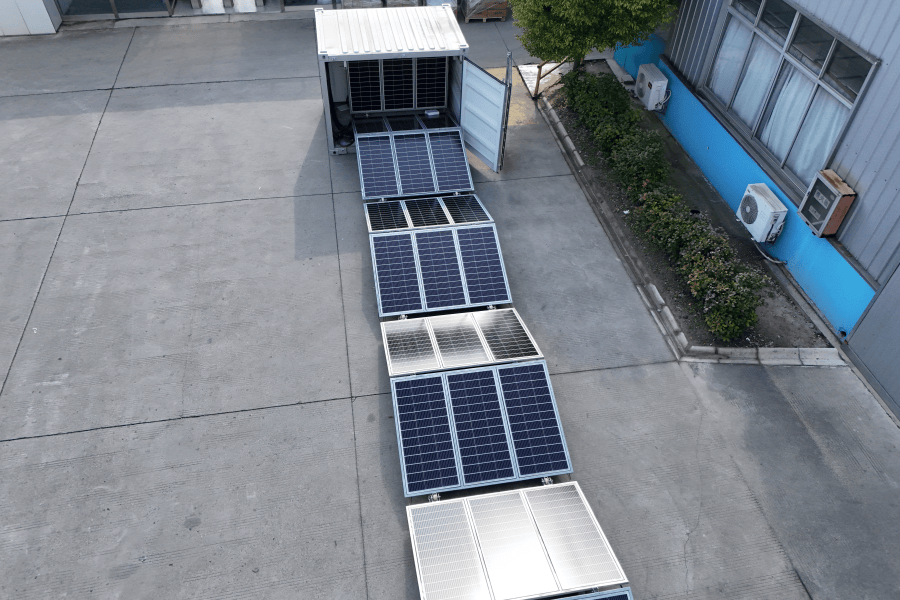
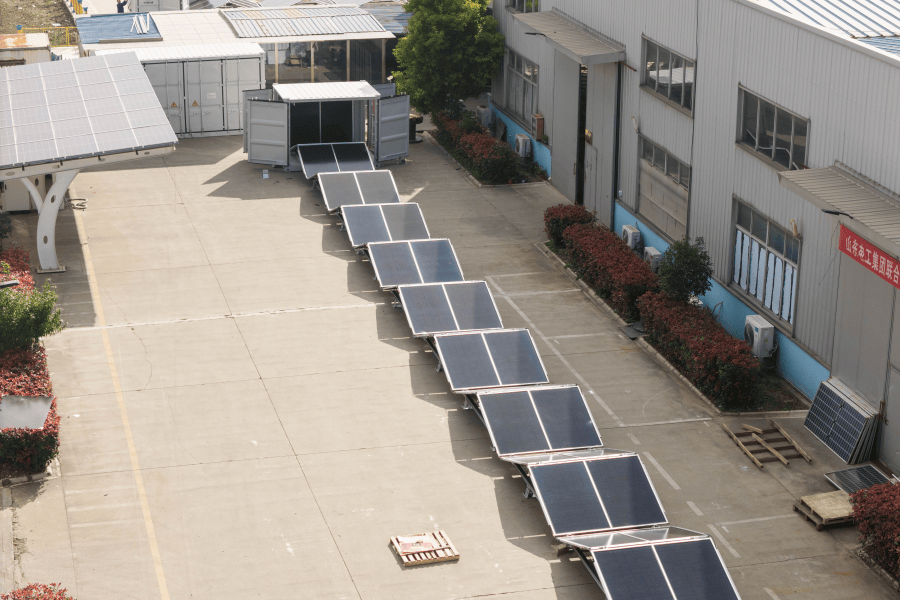
The solution was a fully containerized, liquid-cooled lithium-ion BESS. Here's what that meant on the ground:
- The All-in-One Box: The entire system - battery racks, liquid cooling plates, power conversion (PCS), and climate control - was pre-integrated into a single, ruggedized shipping container at our facility. This wasn't just for shipping ease; it was tested to relevant UL and IEC standards (like UL 9540 and IEC 62933) as a complete unit before it ever left the dock. That's crucial for local inspectors who need to see certified systems.
- Conquering the Climate: The liquid cooling system is a closed loop. A coolant is circulated through cold plates attached directly to each battery cell, precisely pulling heat away. The external radiator is designed for high ambient temps. The key? The battery cells themselves never "breathe" the corrosive outside air. The internal environment stays clean, dry, and at a uniform optimal temperature.
- The Outcome: The system achieved a higher sustained C-rate (the rate of charge/discharge) safely, allowing it to absorb more solar midday and release more power at night. The space savings versus an air-cooled system of similar capacity was about 25%, which made the difference in fitting it on the constrained site. Most importantly, the remote monitoring capabilities mean most diagnostics are done from thousands of miles away, and any physical maintenance is simplified and far less frequent.
Beyond the Box: Key Technical Insights from the Field
Looking at this case, a few critical points stand out that any project developer should consider:
- Thermal Management is Lifespan Management: Think of temperature consistency as the key to battery longevity. Liquid cooling can reduce the peak operating temperature and minimize cell-to-cell variation. In our experience, this can have a more significant impact on extending service life than just selecting a slightly better cell chemistry alone. It protects your capital investment.
- LCOE is the North Star: Everyone focuses on upfront capital cost per kWh. For remote microgrids, you must model the total LCOE. A slightly higher upfront cost for a liquid-cooled system that lasts 5+ years longer, has 95%+ availability, and reduces O&M visits by 60%... that almost always wins financially over a 15-year horizon. The National Renewable Energy Lab (NREL) has great tools for this kind of modeling.
- Safety by Design: A well-designed liquid-cooled system isn't just about efficiency. The precise temperature control reduces thermal runaway risk. Furthermore, having a sealed, robust container that meets UL 9540 provides a critical physical and fire-rated barrier - a huge plus for insurance and permitting, especially in fire-conscious regions like California or Australia.
What This Means for Your Project
So, does every project need liquid cooling? No. For a temperate, easily accessible warehouse installation, air-cooling might be perfectly economical. But if your project involves harsh environments, space constraints, high cycling demands, or - critically - remote locations where reliability is non-negotiable, then liquid-cooled containerized solutions move from being a "premium option" to the pragmatic default choice.
At Highjoule, our approach is shaped by these on-the-ground realities. We don't just sell containers; we engineer resilient energy assets. That means designing from the cell up with thermal homogeneity in mind, pre-integrating all systems to minimize on-site commissioning headaches (a massive cost saver on islands), and ensuring every unit is built to the strictest standards our global clients demand, whether that's UL, IEC, or IEEE. Our service model is built around remote proactive monitoring, so we're your first line of defense, long before a site visit is ever needed.
The dream of energy-independent, renewable-powered islands is absolutely achievable. But it hinges on choosing storage that's as robust and reliable as the communities it serves. The right technology, deployed in a thoughtful, integrated way, makes all the difference. What's the single biggest environmental challenge facing your next remote or harsh-site project?
Tags: UL Standard BESS LCOE Renewable Integration Thermal Management Liquid Cooling Island Energy Remote Microgrid
Author
James Zhang
20+ years agricultural energy storage engineer / Highjoule CTO