
Step-by-Step Installation of Smart BMS Monitored 1MWh Solar Storage for Public Utility Grids
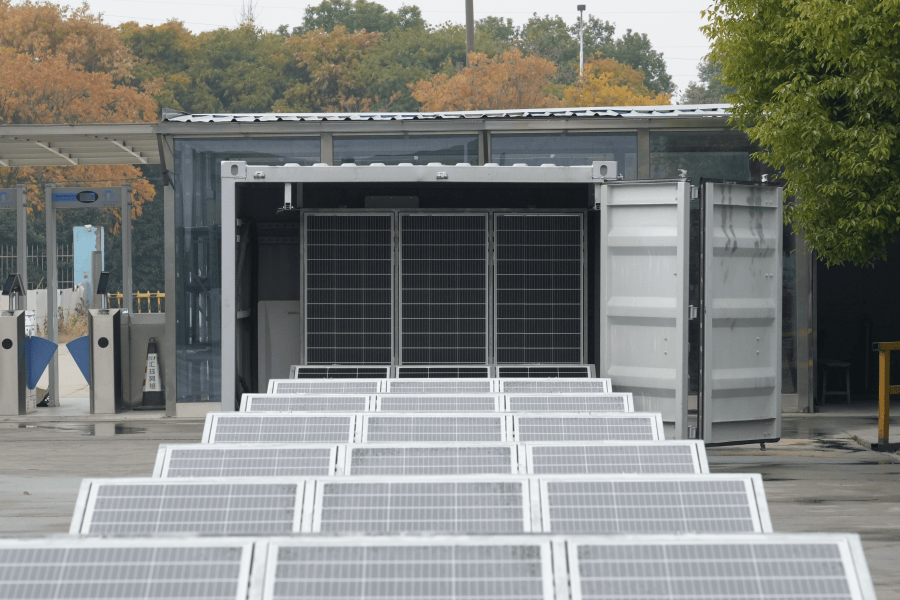
Table of Contents
- The Grid Balancing Headache: More Renewables, More Problems
- Why Your Installation Process is Costing You Millions
- A Better Way Forward: The Smart BESS Blueprint
- The Step-by-Step Breakdown: From Site to Grid Connection
- Lessons from the Field: A 1MWh Case in Point
- Your Next Move: Questions to Ask Your Vendor
The Grid Balancing Headache: More Renewables, More Problems
Let's be honest. If you're managing a public utility grid in North America or Europe right now, your job has never been more complex. The push for renewables is fantastic, but it's turning grid stability into a high-wire act. One minute you've got a surplus of solar power at noon, the next you're scrambling as the sun sets and demand spikes. The International Energy Agency (IEA) points out that grid-scale battery storage is set to grow tenfold by 2030, and for good reason. It's the shock absorber our modern grids desperately need. But here's the rub I've seen firsthand: the promise of storage often gets tangled in the messy reality of deployment.
Why Your Installation Process is Costing You Millions
This is where the real pain lives, far from the glossy brochures. The industry talks a big game about Levelized Cost of Storage (LCOS), but too often, the conversation stops at the battery cell price. Honestly, that's just the beginning. The hidden monster is in the installation and integration. I've been on sites where a "standard" 1MWh BESS deployment dragged on for months over what should have been weeks. Why? Unforeseen civil works, interconnection paperwork snags, and a battery management system (BMS) that treats its own battery racks like strangers. This delay isn't just a schedule problem; it's a direct hit to your project's financial viability. Every day of lost revenue and accrued financing costs pushes your actual LCOS higher. Worse, a rushed or poorly integrated installation is a safety risk. Thermal management isn't something you can bolt on as an afterthought; it has to be baked into the design and execution from day one.

A Better Way Forward: The Smart BESS Blueprint
So, what's the fix? It's moving from seeing installation as a construction task to treating it as a precision integration process. The core of this is a Smart BMS-monitored system. We're not talking about a simple voltage tracker here. A true Smart BMS is the central nervous system. It doesn't just monitor; it predicts, balances, and communicates. It knows the state of every single cell, manages the C-rate (that's the charge/discharge speed, crucial for battery life) intelligently based on grid needs and cell health, and ensures the thermal management system is proactive, not reactive. When you start with this level of integrated intelligence, the entire installation sequence becomes smoother, safer, and faster. This is the philosophy we've built into Highjoule's systems. Our Smart BMS is designed from the ground up to meet UL 9540 and IEC 62619 standards, not just checked against them later. That means from the moment our containers arrive on your site, they're pre-configured to talk to each other and to your SCADA, slashing integration time.
The Step-by-Step Breakdown: From Site to Grid Connection
Let's get practical. Here's what a streamlined, modern installation for a 1MWh grid-tied system should look like, based on dozens of deployments.
Phase 1: Pre-Site (The Paperwork & Planning Powerhouse)
- Site Audit & Digital Twin: We don't just send a surveyor. We use LiDAR and existing data to create a digital model of the site. This helps us prefabricate cable trays, conduit runs, and even plan crane lift paths to the inch, minimizing on-site surprises.
- Standards & Interconnection Lockdown: This is non-negotiable. All equipment, especially the BMS and power conversion system (PCS), must have pre-certified UL/IEEE compliance documentation. We work with your utility's engineering team upfront to align on IEEE 1547-2018 for interconnection, so there are no last-minute rejections.
Phase 2: Site Execution (The Clockwork Phase)
Day 1-3: Foundation & Container Placement. With a precise plan, the foundation work is quick. Our containerized 1MWh solutions are delivered as pre-assembled, weatherproof units. The Smart BMS is already alive inside, performing self-checks during transport.
Day 4-7: Electrical Hookup & "First Talk". This is the critical phase. High-voltage cabling connects the PCS to the grid. But the magic is in the low-voltage comms. We connect the Smart BMS to the site network. Within hours, not days, you should see real-time data on your dashboard C cell voltages, temperatures, state-of-charge. This immediate visibility is a game-changer for quality control.

Phase 3: Commissioning (The Proof is in the Data)
- Functional Testing: We run the system through its paces at various C-rates, verifying response times and grid signal adherence.
- Thermal Run Validation: We simulate peak load to trigger the cooling system, verifying that the BMS and thermal management work in concert to keep all cells within a safe, tight temperature band. This is where battery longevity is won or lost.
- Grid Integration Test: The final handshake with the utility grid, proving frequency regulation and voltage support functions.
Lessons from the Field: A 1MWh Case in Point
Let me give you a real example. We worked with a municipal utility in Germany's North Rhine-Westphalia region. They needed a 1MWh storage system to smooth out solar PV fluctuations from a local solar farm and provide grid frequency containment reserve (FCR).
The Challenge: A tight, 10-week window from contract to commercial operation date (COD), and a site with limited space for construction staging.
The Highjoule Approach: We leveraged our pre-integrated, Smart BMS-monitored container. Because the BMS and PCS were pre-married in our factory, on-site electrical work was cut by 40%. The Smart BMS's granular data allowed the local team to validate performance daily during commissioning. They could see, for instance, that all 160+ battery modules were perfectly balanced, which is a direct indicator of long-term health.
The Outcome: The system was grid-connected in week 9. The utility's project manager told me the clarity of the BMS data was what gave them the confidence to sign off on final acceptance so quickly. They're now using that same data for predictive maintenance, planning service visits only when the system suggests it's needed.
Your Next Move: Questions to Ask Your Vendor
The difference between a project that's a showpiece and one that's a headache is in the details of the installation methodology. When you're evaluating partners for your next 1MWh+ project, move beyond specs and ask operational questions:
- "Can you show me a detailed, hour-by-hour installation timeline for a similar project?"
- "How does your Smart BMS reduce on-site integration time versus a standard system?"
- "Can I see the UL 9540 certification for the entire assembled system, not just the components?"
- "What does your post-commissioning BMS data dashboard look like, and how do you use it for remote support?"
Getting clear answers here will tell you more about your project's future success than any data sheet ever could. What's the biggest installation delay you've faced, and how did you solve it?
Tags: UL Standard BESS LCOE Smart BMS Energy Storage Installation Public Utility Grid
Author
James Zhang
20+ years agricultural energy storage engineer / Highjoule CTO