
The Ultimate Guide to LFP (LiFePO4) 1MWh Solar Storage for Remote Island Microgrids
The Ultimate Guide to LFP (LiFePO4) 1MWh Solar Storage for Remote Island Microgrids
Honestly, when you're managing energy for a remote island or off-grid community, the stakes feel different. It's not just about ROI; it's about reliability, safety, and keeping the lights on when the nearest service crew is a boat or helicopter ride away. I've seen this firsthand on site, from the Caribbean to the Scottish Isles. The dream of energy independence through solar is real, but without the right storage backbone, it remains just that - a dream. This guide cuts through the marketing fluff. We'll talk about why a 1MWh LFP (LiFePO4) system is becoming the go-to workhorse for these critical applications, and what you really need to know before you commit.
Quick Navigation
- The Real Cost of Getting It Wrong: Island Energy Pain Points
- Why LFP (LiFePO4) is a Game-Changer for Remote Sites
- The 1MWh Sweet Spot: Balancing Scale, Cost, and Complexity
- Beyond the Brochure: Key Specs Your Engineer Cares About
- From Blueprint to Reality: A Pacific Northwest Case Study
- Making It Happen: A Realistic Path Forward
The Real Cost of Getting It Wrong: Island Energy Pain Points
Let's be blunt. Deploying storage in a remote location amplifies every mistake. A standard commercial installation hiccup might mean a technician is onsite in 2 hours. On an island, it could mean 2 weeks of running diesel gensets at eye-watering cost. The problem isn't just technical; it's logistical and financial.
The core pain points I consistently see are:
- Safety as a Non-Negotiable: You can't have a thermal event. Period. Evacuation options are limited, and firefighting resources are often basic. Systems that require complex, active cooling or have a higher intrinsic risk profile keep project managers awake at night.
- Total Lifetime Cost (LCOE) Surprises: The initial capex is just the entry ticket. It's the operational costs - diesel top-ups for unreliable storage, frequent maintenance flights for technicians, premature battery replacements - that sink the economics. The International Renewable Energy Agency (IRENA) notes that in many island contexts, the levelized cost of electricity (LCOE) from solar+storage is now competitive, but only if the storage is robust over 15+ years.
- Logistical Nightmares: Every component you ship has a cost and a risk. Needing to ship specialized fluids for cooling, or having a system that requires complex assembly on a windy dock, adds layers of cost and potential failure points.
I was once on a project where a poorly specified battery's BMS failed due to salt mist corrosion. We had to airfreight a replacement unit and a specialist. The downtime and extra cost erased the project's savings for an entire year. That's the "agitation" C it's real money and reputation on the line.
Why LFP (LiFePO4) is a Game-Changer for Remote Sites
This is where the solution enters the chat. Lithium Iron Phosphate (LFP) chemistry isn't new, but its maturity and cost curve have made it the undisputed champion for stationary storage, especially in demanding environments. Here's why, in plain English:
- Inherent Stability: The phosphate cathode material is far more resistant to thermal runaway than other lithium-ion chemistries. It's a fundamental chemical advantage. This translates to simpler, less failure-prone thermal management systems - often passive air cooling is sufficient, which is a huge win for reliability and maintenance.
- Long, Predictable Life: LFP batteries typically offer >6000 cycles to 80% depth of discharge. For a 1MWh system cycling daily, that's over 16 years of service. This long lifespan directly crushes your long-term LCOE, which is the ultimate metric for island microgrids.
- Forgiving and Flexible: They can handle partial state-of-charge operation better than many alternatives, which is perfect for solar smoothing where the battery might not fully cycle every day. This reduces stress on the cells.
At Highjoule, we've standardized on LFP for all our off-grid and critical infrastructure projects. It's not just a chemistry choice; it's a risk-mitigation strategy. Our containers are designed to UL 9540 and IEC 62933 standards, but we build them with the understanding that the real test happens thousands of miles from a certification lab.
The 1MWh Sweet Spot: Balancing Scale, Cost, and Complexity
So why focus on a 1MWh system? From the field, it's emerging as a pivotal scale. A 1MWh LFP battery bank is substantial enough to anchor a meaningful community or industrial microgrid (powering 100-200 homes for several hours, or a small resort/commercial operation), yet it remains within a realm of manageable logistics and balance-of-plant costs.
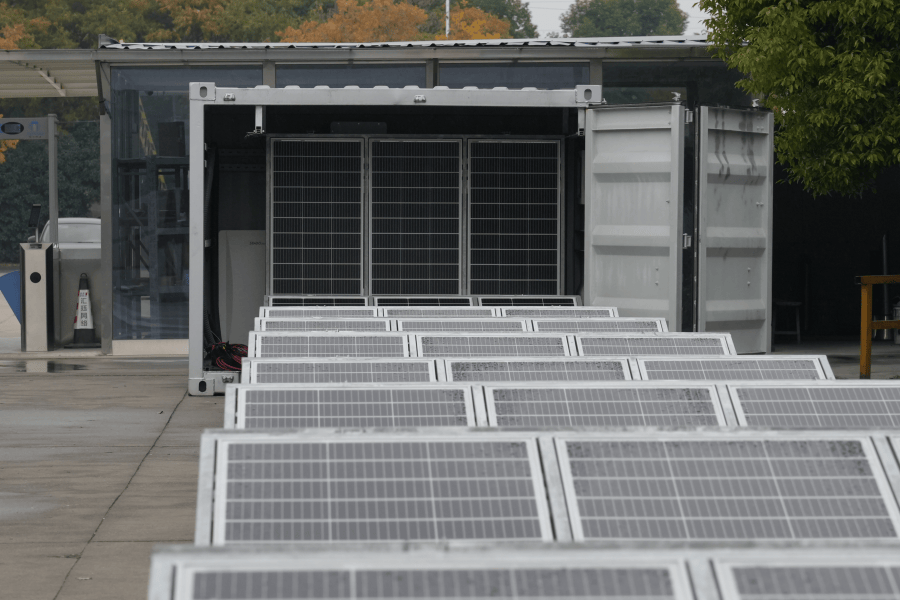
Think of it this way: it's often containerized in a single 20ft or 40ft ISO high-cube. That's a unit you can ship, place on a standard concrete pad, and interconnect without needing a massive substation upgrade. The National Renewable Energy Lab (NREL) has shown in its microgrid modeling that systems in this range (500kWh-2MWh) often hit the optimal knee in the cost-benefit curve for islanded systems displacing diesel.
It provides enough capacity for meaningful solar self-consumption, critical backup during generator maintenance, and firming up renewable output. Going much smaller, and you're not solving the core problem; going much larger, and the complexity, permitting, and grid interconnection challenges (even on a microgrid) can scale non-linearly.
Beyond the Brochure: Key Specs Your Engineer Cares About
When evaluating a 1MWh LFP system, don't just look at the capacity. Dig into these specifics:
- C-Rate (Charge/Discharge Rate): This tells you how quickly you can pull energy out. A 1MWh system with a 1C rate can deliver 1MW of power. A 0.5C rate means 500kW. Match this to your largest expected load or solar curtailment need. Oversizing on power capability is a common and costly mistake.
- Thermal Management: Ask: Is it passive or active? For most temperate and even many warm island climates, a well-designed passive air-cooled LFP system is superior. No pumps, no coolant, no extra points of failure. I've seen active liquid-cooled systems in dusty environments clog filters and overheat. Simplicity wins remotely.
- Depth of Discharge (DoD) & Cycle Life: The vendor's cycle life number (e.g., 6000 cycles) is always tied to a specific DoD (e.g., 90%). Using it at a lower DoD dramatically extends life. A good BMS will let you set conservative limits to preserve longevity.
- Grid-Forming Capability: This is crucial for true island microgrids. Can the battery's inverter "start" the grid from blackout (create a stable voltage and frequency waveform)? Not all can. Ensure your system includes this if you're aiming for true diesel-off operation.

From Blueprint to Reality: A Pacific Northwest Case Study
Let me give you a real example. We recently deployed a 1.2MWh LFP system for a fishing lodge and research station on a remote island off the coast of Washington State, USA. Their challenge: unreliable diesel supply, soaring fuel costs, and a desire for 24/7 power for critical refrigeration and data systems.
The Solution: A 1.2MWh Highjoule AtlasContainer (LFP), paired with an existing 300kW solar array. The system was specified with:
- UL 9540 certification for local permitting.
- Passive thermal management (sufficient for the cool, maritime climate).
- Advanced grid-forming inverters to allow the diesel gensets to shut down completely for up to 8 hours at a time.
The Outcome: Diesel runtime was reduced by over 70% in the first year. The lodge now operates silently on solar+batteries during peak daylight and evening hours. The local utility (a small cooperative) was involved from the start, ensuring interconnection specs met IEEE 1547 standards. The "aha" moment for the owner wasn't the savings report - it was the first night they realized the constant background rumble of the generator was gone.
Making It Happen: A Realistic Path Forward
If you're considering a 1MWh-scale LFP system for a remote microgrid, start with the end in mind. Engage with a partner who asks about your worst-case weather, shipping access, and local technician skill level - not just your energy bill. Demand clarity on the long-term service and support model. Who will monitor the system? How are software updates handled? What's the realistic lead time for a replacement part?
Our approach at Highjoule is to co-develop a digital twin of the system during design, simulating years of weather and load data specific to your site. This isn't just fancy tech; it de-risks the project financially before a single component is ordered. We've learned that the most successful projects are where the technology is treated as one part of a holistic operational plan.
So, what's the biggest operational uncertainty you're facing with your island or remote power project? Is it the regulatory hurdle, the long-term service agreement, or simply getting a clear, total cost picture? The right storage solution should make those answers clearer, not more complex.
Tags: UL Standard BESS LCOE Europe US Market Renewable Energy Microgrid Solar Storage LiFePO4
Author
James Zhang
20+ years agricultural energy storage engineer / Highjoule CTO