
LFP Solar Storage for Military Bases: Cost, Safety & Reliability Guide
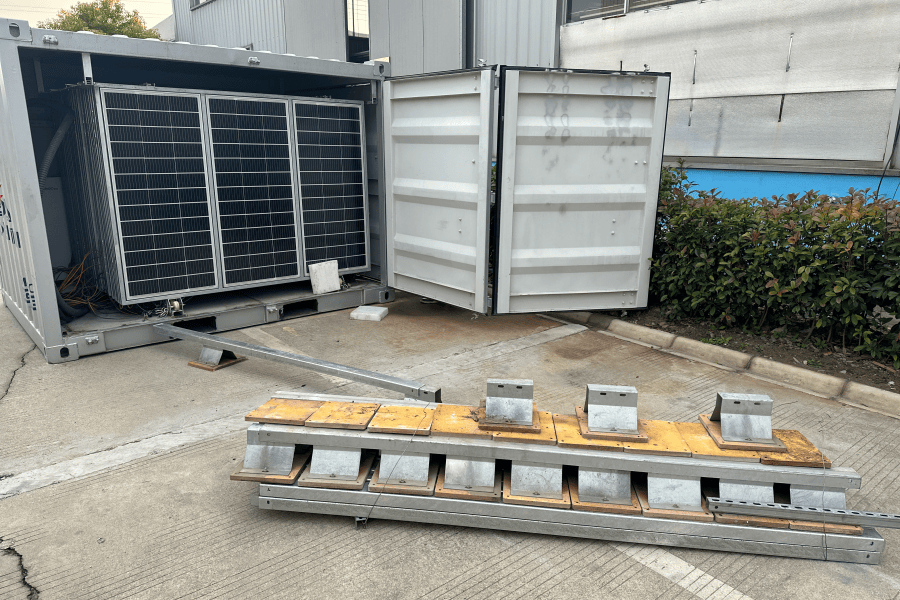
Table of Contents
- The Energy Security Tightrope: Power Risks on Bases
- When the Lights Go Out: The Real Cost of Downtime
- LFP BESS: Your Mission-Critical Energy Shield
- Real-World Fortress: LFP in Action at a US Base
- Decoding the Tech: Safety & Savings Explained Simply
The Energy Security Tightrope: Power Risks on Military Bases
Honestly, sitting down with base commanders over the years, one thing rings loud and clear: reliable power isn't a luxury, it's mission-critical. We're not just talking about keeping the lights on. Think communications systems, surveillance ops, critical medical facilities C a flicker can mean failure. The push for renewables, especially solar, is smart. But here's the rub I've seen firsthand: solar alone isn't enough when the grid goes down or clouds roll in. That intermittent nature? It leaves a gap. And relying solely on diesel gensets? It's noisy, a maintenance headache, a fuel logistics nightmare, and honestly, a glaring target. The real challenge is finding that seamless, silent, resilient bridge C storage that kicks in instantly, holds the fort, and does it safely 24/7, especially under the unique demands of a base environment. You need a fortress for your electrons.
When the Lights Go Out: The Real Cost of Downtime & Compromise
Let's not sugarcoat it. An outage on base isn't like a brownout at home. Remember that NREL study highlighting how critical facilities need sub-second response for backup power? [NREL Study on Critical Infrastructure Resilience] That's the standard. A few seconds of downtime can cascade into compromised communications, halted operations, or worse, safety risks. And the financial hit? It's massive. Beyond immediate operational losses, consider the long-term: vulnerability during extended grid outages increases reliance on expensive, vulnerable fuel convoys C a point hammered home in multiple DoD resilience reports.
Then there's safety. Old battery chemistries? Honestly, they keep me up at night. Thermal runaway risks in confined spaces or near critical infrastructure C it's a scenario no base commander wants to imagine. We need solutions inherently designed to avoid that nightmare. And let's talk lifespan and cost. Base budgets are tight. Deploying systems needing replacement every few years, or requiring massive cooling infrastructure just to operate safely? That eats into funds needed elsewhere. The total cost of ownership (TCO) over 15-20 years is where the real battle for value is won or lost.
LFP BESS: Your Mission-Critical Energy Shield
This is where Lithium Iron Phosphate (LFP) steps up. After 20 years in this field, deploying systems globally, LFP isn't just another battery tech C it's the specific answer to the military's unique energy storage headache. Why? It starts with intrinsic safety. The chemistry is fundamentally more stable. You get significantly higher thermal runaway thresholds, meaning less risk of catastrophic failure under stress, extreme temps, or even damage C a non-negotiable for base security. Think of it as the difference between stable C4 and volatile nitro. That peace of mind is priceless.
Then there's endurance. LFP batteries simply last longer. We're routinely seeing quality LFP systems designed for 7,000+ cycles at 80% depth of discharge (DoD). Honestly, that translates to potentially 15+ years of reliable service. Compare that to maybe half that for older chemistries under similar military-grade usage. Less frequent replacement means lower long-term costs and less operational disruption.
Finally, performance. High C-rates matter (that's basically how fast the battery can charge or discharge its energy). Quality LFP systems deliver the rapid bursts of power needed for seamless transitions during outages and handle the high charge rates from solar arrays efficiently. Coupled with advanced thermal management C like Highjoule's liquid cooling systems ensuring optimal temp ranges even in desert heat or arctic cold C you get consistent performance, cycle after cycle. 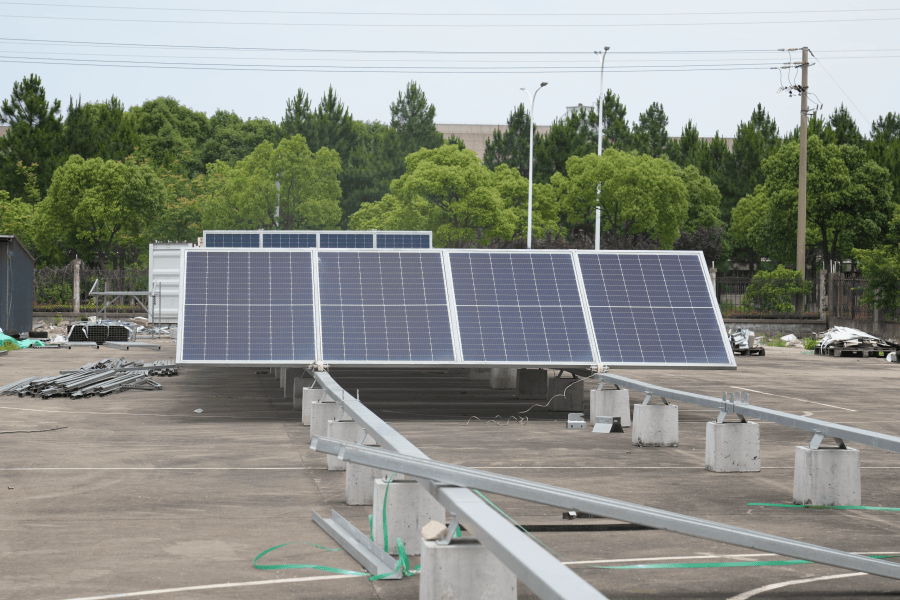
Real-World Fortress: LFP in Action at a US Base
Take a project we completed at a forward-operating base in California last year. They needed to bolster solar self-consumption, reduce generator runtime (fuel cost + noise!), and have absolute black-start capability for critical comms. Challenges? Space was tight, safety paramount, temps soared.
The solution centered on a containerized 3.44MWh LFP BESS (like our HJ-G0 line). The key factors? UL 9540 certification for the entire system was mandatory (fire safety). Advanced liquid cooling managed the thermal loads within the container. Integrated controls ensured seamless switching between solar, battery, and grid/generator, achieving over 90% solar self-consumption and slashing generator hours by 70% during peak sun. The LFP's stability meant it could be sited closer to critical loads than older tech would allow. Honestly, seeing that system kick in during a simulated grid attack C silent, instant, reliable C was the best validation. It just works.
Decoding the Tech: Safety, Standards & Savings for Decision Makers
Okay, let's demystify some jargon often thrown around:
- Thermal Management (The Battery's AC): Batteries generate heat. Poor management kills lifespan and risks safety. Liquid cooling isn't just "nice-to-have" for military LFP; it's essential. It actively circulates coolant to keep every cell in its ideal operating zone, packed densely in a container without overheating spots. Passive air cooling often can't cut it under demanding base conditions. The system has to work in all conditions.
- C-rate (The Power Flow Speed): Think of it as the "flow rate" of energy into or out of the battery. A 1C rate means discharging the full battery capacity in 1 hour. Military needs often require high C-rates (e.g., 0.5C, 1C) for those instantaneous power demands when the grid drops. Good LFP handles this without breaking a sweat or degrading prematurely. It needs muscle.
- LCOE (Levelized Cost of Energy - The True Cost): This is your ultimate metric. It factors in EVERYTHING: upfront cost, installation, expected lifespan, degradation rate, maintenance, charging costs (solar vs. grid), replacement costs. LFP often wins here due to its crazy-long cycle life, lower maintenance, and high efficiency C even if the upfront price per kWh seems higher. That initial sticker shock? Look past it to decades of dependable service. Calculate the lifetime value.
Standards aren't paperwork; they're your safety net. Insist on UL 9540 (system safety), UL 1973 (battery safety), and IEEE 1547 (grid interconnection) compliance. This isn't just about ticking boxes; it's rigorous, independent validation that the system meets the strictest safety and performance benchmarks. Don't compromise here. It's your base's safety on the line.
Highjoule's approach? We engineer LFP systems from the cell up for these demands. Military projects need ruggedness, compliance, and a partner that understands the stakes. That means designing for UL/IEC standards from day one, integrating top-tier cell monitoring (BMS), and building robust thermal systems into containerized solutions ready for harsh environments. Our focus is on maximizing the system's usable life and minimizing your operational burden C because you have bigger missions than babysitting batteries. 
Ready to Fortify Your Base's Energy Independence?
Switching to LFP solar storage isn't just an upgrade; it's a strategic investment in resilience, safety, and long-term cost control for military operations. The tech is proven, the standards are clear, and the benefits C from silent, instant backup to slashing fuel dependence C are operationally transformative.
What specific energy resilience challenge is keeping you up at night on your base? Let's discuss how LFP can be tailored to meet it.
Tags: UL 9540 LFP Battery Microgrid IEEE 1547 Military BESS Energy Security LiFePO4 Storage Photovoltaic System
Author
James Zhang
20+ years agricultural energy storage engineer / Highjoule CTO