
The Ultimate Guide to Rapid Deployment 5MWh Utility-scale BESS for Eco-resorts
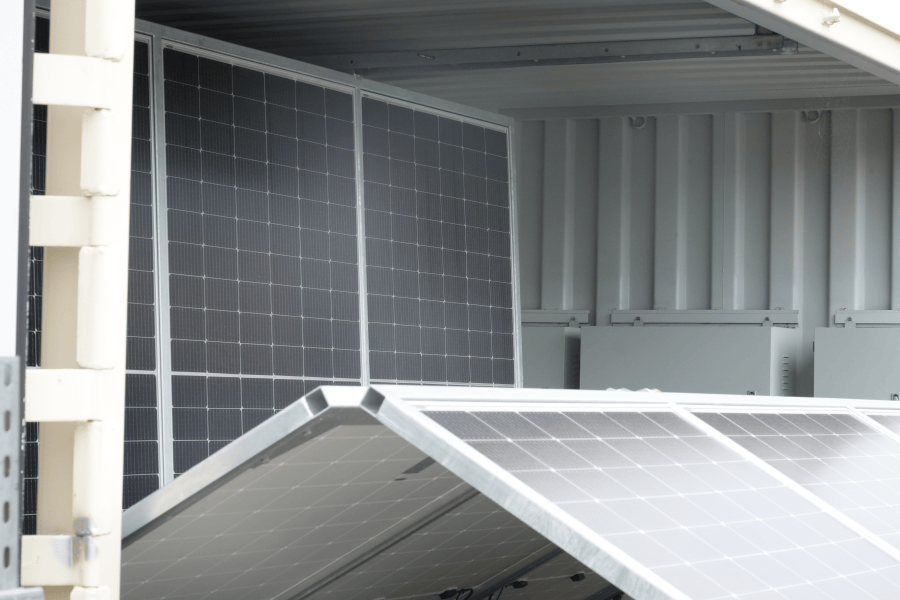
Table of Contents
- The Real Problem: It's Not Just About Buying Batteries
- Why It Hurts: The Hidden Costs of Getting It Wrong
- The 5MWh Rapid Deployment Path: Your Blueprint for Success
- Case in Point: A Mountain Eco-Lodge in Colorado
- Key Tech Simplified: What Your Team Needs to Know
- Making It Real: From Paper to Powered-Up Site
The Real Problem: It's Not Just About Buying Batteries
Honestly, after two decades on sites from California to Bavaria, I can tell you the biggest hurdle for an eco-resort owner isn't deciding if you need a Battery Energy Storage System (BESS). It's navigating the "how." You're sold on the vision: energy independence, slashing diesel generator use, a truly green brand. But then you hit the wall of reality. Permitting labyrinths that vary by county. Interconnection studies that take longer than building the resort itself. And the daunting question of integrating a complex, utility-scale piece of tech into a remote, often beautiful, and sensitive location. You're not in the business of becoming a power utility engineer overnight.
Why It Hurts: The Hidden Costs of Getting It Wrong
Let's agitate that pain point a bit. A delayed deployment isn't just a timeline slip. According to the National Renewable Energy Laboratory (NREL), soft costs - permitting, interconnection, design iterations - can eat up 30% of a distributed storage project's budget. I've seen this firsthand: a 4-month delay waiting for a transformer upgrade approval completely derailed a project's financial model. Then there's safety. A poorly managed thermal system in a container isn't just an efficiency loss; it's a risk. In the US and EU, you're looking at UL 9540 and IEC 62933 standards not as suggestions, but as non-negotiable gates for insurance and operation. Choosing a system not designed for rapid, standardized deployment means you're paying for on-site customization, extended engineering, and a lot of crossed fingers.

The 5MWh Rapid Deployment Path: Your Blueprint for Success
So, what's the solution? It's a shift in mindset. You need a pre-engineered, rapidly deployable 5MWh utility-scale BESS platform. Think of it not as a box of batteries, but as a power plant in a box, designed from the ground up for your scenario. The 5MWh scale is the sweet spot for many eco-resorts - it's substantial enough to shift meaningful solar production, provide hours of backup, and participate in grid services (where available), yet modular enough to fit constrained sites. The "rapid deployment" magic comes from using a solution where the core engineering - safety systems, grid compliance, thermal management - is solved and certified before it ships to your site.
At Highjoule, for instance, our 5MWh FlexPod units arrive with full UL 9540 certification. This means the local AHJ (Authority Having Jurisdiction) isn't evaluating a one-off design; they're verifying a pre-approved system. It cuts months off the timeline. The integration is plug-and-play with major solar inverters, and the form factor is designed for the kind of access roads a resort might have, not a massive industrial park.
Case in Point: A Mountain Eco-Lodge in Colorado
Let me give you a real example. We worked with a high-end lodge in the Rockies. Their challenge? Peak demand charges were astronomical, their diesel backup was noisy and smelly (bad for the "eco" brand), and their interconnection capacity was maxed out, blocking solar expansion. Their goal was a 5MWh system to time-shift solar, provide silent backup, and avoid a $500k grid upgrade fee.
The rapid-deployment approach was key. We used a pre-certified containerized BESS. Because the electrical design and fire suppression were pre-approved to UL standards, the county permit was issued in weeks, not months. The site work was primarily a level pad and a pre-designed interconnect cabinet. From delivery to commissioning, it was under 11 weeks. Now, the system cuts their peak demand by 40%, runs the property silently for critical hours during outages, and allowed them to add a 500kW solar array without any grid upgrade. The financials worked because the deployment was fast and predictable.
Key Tech Simplified: What Your Team Needs to Know
You don't need a PhD, but understanding three concepts will make you a savvy buyer:
- C-rate (Charge/Discharge Rate): Simply put, it's how fast the battery can drink or pour out energy. A 1C rate means a 5MWh system can theoretically fully discharge in 1 hour. For resorts, you often need a high C-rate (like 1C or more) to handle sharp peaks - like when everyone returns from hiking and turns on the AC. A system with a low C-rate might be cheaper but can't deliver the power punch you need.
- Thermal Management: This is the HVAC for your battery. Lithium-ion batteries perform best and live longest in a tight temperature band. I've opened containers where the cooling system was an afterthought; the temperature variance from top to bottom racks was huge, killing cell life. A proper, liquid-cooled or advanced air-cooled system is critical for a 20-year asset in a variable climate.
- LCOE (Levelized Cost of Energy Storage): This is your ultimate metric. Don't just look at the upfront $/kWh of the battery. LCOE factors in total cost (installation, financing) over total energy delivered over its life. A robust, well-cooled system with a higher upfront cost but a longer, more reliable life often has a lower LCOE. It's the cost of ownership that matters.
Making It Real: From Paper to Powered-Up Site
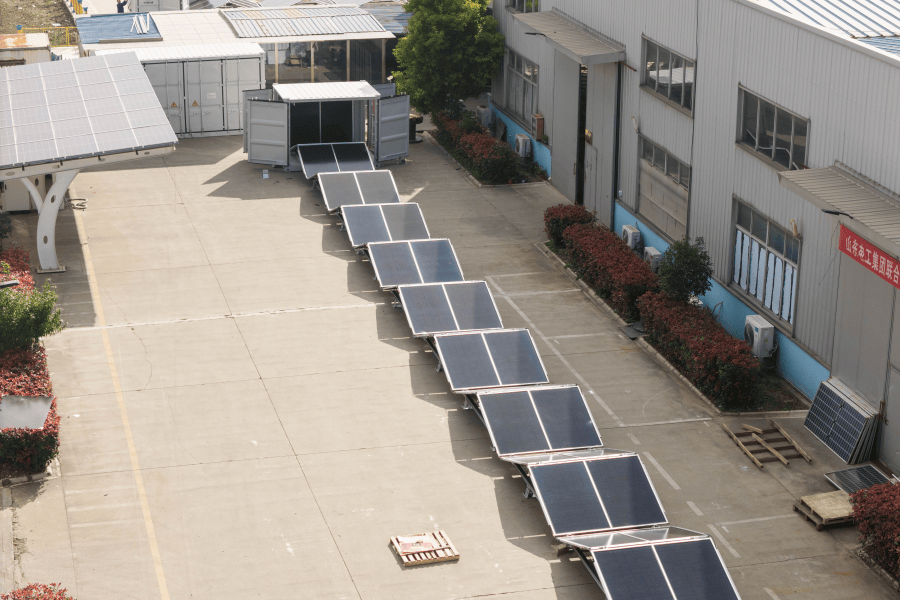
How does this come together? It starts with a partner who thinks about the whole journey. You need a provider whose solution is built to the right standards (UL, IEC, IEEE) from day one, eliminating that risk. The hardware should be modular - so your 5MWh system might be two 2.5MWh containers, giving you siting flexibility. The software must be intuitive, showing you savings, state of charge, and system health in a clear dashboard your facilities manager can use.
Finally, it's about local support. A container might come from a global supply chain, but the commissioning engineer and the service technician need to speak the local technical and regulatory language. That's why at Highjoule, we structure our service hubs around major markets. When you have a question, you're talking to someone who knows the difference between California's Rule 21 and Germany's VDE-AR-N 4110, because they've done the installs.
The dream of a resilient, renewable-powered eco-resort is completely achievable. The key is to stop thinking like a battery shopper and start thinking like a project director. Choose a platform that eliminates the complexity, de-risks the deployment, and lets you focus on what you do best: creating an unforgettable guest experience. So, what's the biggest barrier you're facing right now in your energy planning?
Tags: UL Standard BESS LCOE Europe US Market Renewable Energy Utility-Scale Energy Storage Eco-Resort
Author
James Zhang
20+ years agricultural energy storage engineer / Highjoule CTO