
The Ultimate Guide to Rapid Deployment Lithium Battery Storage Container for Military Bases
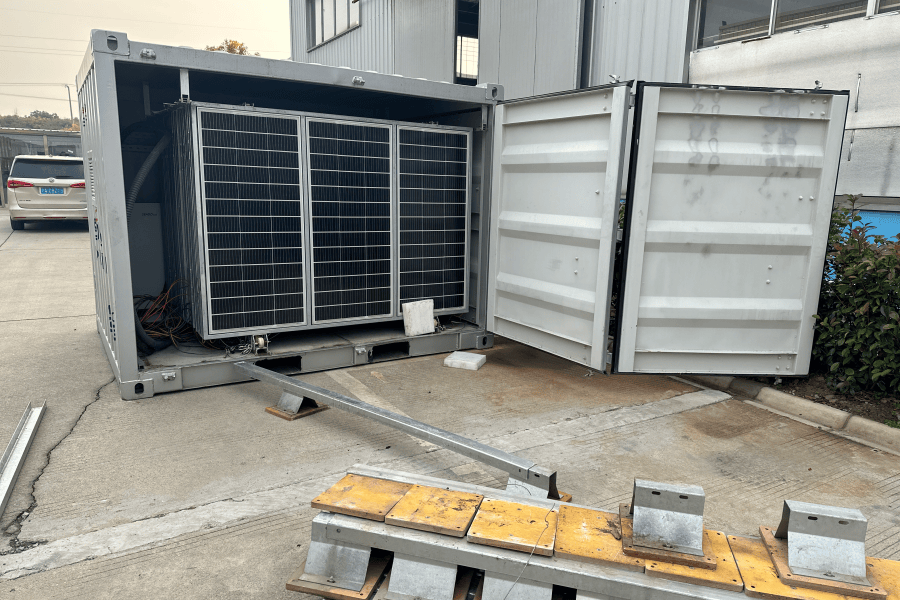
Table of Contents
- The Silent Logistics Nightmare
- Why "Rapid Deployment" Isn't Just About Speed
- The Containerized Solution, Deconstructed
- A Case Study from the Field
- Beyond the Box: Expert Insights for Decision Makers
- Making the Right Call
The Silent Logistics Nightmare
Let's be honest. When we talk about energy security for forward operating bases or remote installations, the conversation usually jumps to generators. Diesel, mostly. Reliable? Sure, in a way. But I've been on-site for enough deployments to see the real cost. It's not just the fuel bill, which is staggering - it's the convoy. Every gallon of diesel needs a truck, and every truck needs soldiers to drive and protect it. The U.S. Army has published studies highlighting that fuel convoys are among the most vulnerable targets in theater. You're not just paying for energy; you're paying in risk, manpower, and complex logistics.
The dream, of course, is to integrate renewables. Solar panels are a no-brainer in sun-drenched regions. But here's the core problem that keeps project managers up at night: how do you store that energy in a way that's as mobile, secure, and quickly operational as the base itself? A permanent, poured-concrete battery facility isn't an option. Traditional modular systems often require weeks of complex on-site assembly, commissioning, and integration. That's weeks where your energy resilience is still just a plan on paper.
Why "Rapid Deployment" Isn't Just About Speed
When we at Highjoule talk about "rapid deployment," we're agitating the real pain points. It's a holistic concept. Speed-to-power is critical - getting from delivery to grid-forming in under 48 hours, for instance. But true rapid deployment is also about:
- Regulatory Speed: Will your system pass the base commander's safety review? Does it meet UL 9540 and IEC 62933 standards out of the box? If not, you're stuck in paperwork purgatory.
- Operational Simplicity: Can it be set up by a crew without a PhD in electrochemistry? I've seen beautifully engineered systems fail in the field because the interface was too complex for the personnel on hand.
- Scalability: A base grows, its missions change. Can your storage grow with it, plug-and-play, without a complete redesign?
Honestly, a system that's fast to unload but slow to permit or impossible to operate is worse than useless. It's a stranded asset.
The Containerized Solution, Deconstructed
This is where the pre-fabricated, containerized lithium battery energy storage system (BESS) comes in. It's not a new idea, but the engineering maturity we have today is a game-changer. Think of it as a data center for energy: all the critical components - battery racks, thermal management, power conversion systems (PCS), fire suppression, and controls - are integrated, tested, and certified in a controlled factory environment.
For a military application, this means you're receiving a battle-ready unit. At Highjoule, our RapidDeploy series is built to this exact philosophy. We don't ship components; we ship a solution. The container itself is a hardened shell, often with added ballistic and environmental protection specs as required. The magic happens before it leaves our dock: full-cycle testing, grid compliance simulation, and safety certification. It arrives not as a puzzle, but as a tool.

A Case Study from the Field
Let me give you a real example, though I'll keep the specific location generic for security. A NATO ally needed to harden a coastal surveillance outpost. They had intermittent grid power and wanted to integrate a new solar array to reduce generator runtime and create a silent watch capability. The challenges were classic: limited space, a non-technical garrison, and a need for extreme reliability in a salty, humid environment.
The solution was a 500kW/1MWh Highjoule RapidDeploy container. It was flown in via heavy-lift transport, dropped onto a prepared pad (just a level gravel area), and connected. The pre-integrated design meant the only external connections were AC power in/out, comms, and the solar PV input. Our team, working with local engineers, had it commissioned and synchronized with the existing generators and new solar in 36 hours. The commander's main comment? "It just worked." The system now manages the solar intake, minimizes generator fuel burn by over 70%, and provides seamless backup during grid outages. The Levelized Cost of Energy (LCOE) for that outpost plummeted, but more importantly, its operational security soared.
Beyond the Box: Expert Insights for Decision Makers
If you're evaluating these systems, look past the brochure's megawatt-hour rating. Ask your vendor these questions, the ones we discuss internally on every project:
- Thermal Management: How does the container handle extreme heat or cold? Lithium batteries are sensitive. A robust liquid cooling system isn't a luxury; it's what ensures performance in the desert at 120F and longevity over a 15-year service life. Passive air cooling often can't cut it under military load profiles.
- C-rate Intelligence: This is the rate of charge/discharge. A system with a high C-rate can deliver massive power quickly - critical for starting large loads or responding to sudden outages. But consistently operating at a very high C-rate stresses the batteries. A good system has an intelligent battery management system (BMS) that optimizes the C-rate for the task, balancing immediate power needs with long-term health.
- Grid-Forming Capability: Can the BESS "black start" a microgrid if everything goes down? Not all can. This feature turns your storage from a backup participant into the foundational pillar of your independent energy network.
These aren't just specs; they're the difference between a project that succeeds on day one and one that becomes a maintenance headache. Our engineering focus is on baking this intelligence into the container's DNA, so the local operator doesn't need to think about it.

Making the Right Call
The shift from diesel-dependent to renewable-resilient bases isn't coming; it's happening now. The choice isn't whether to adopt storage, but how. The rapid deployment containerized BESS represents the most pragmatic, secure, and operationally sound path forward. It turns energy from a logistical burden into a strategic asset.
What's the first step? It starts with a conversation that focuses on your specific mission profile, threat landscape, and energy goals. What's the one energy vulnerability that keeps you up at night?
Tags: UL Standard BESS Rapid Deployment Lithium Battery Container Military Energy Security
Author
James Zhang
20+ years agricultural energy storage engineer / Highjoule CTO