
Rapid Deployment Pre-integrated PV Container for Remote Island Microgrids: The Ultimate Guide
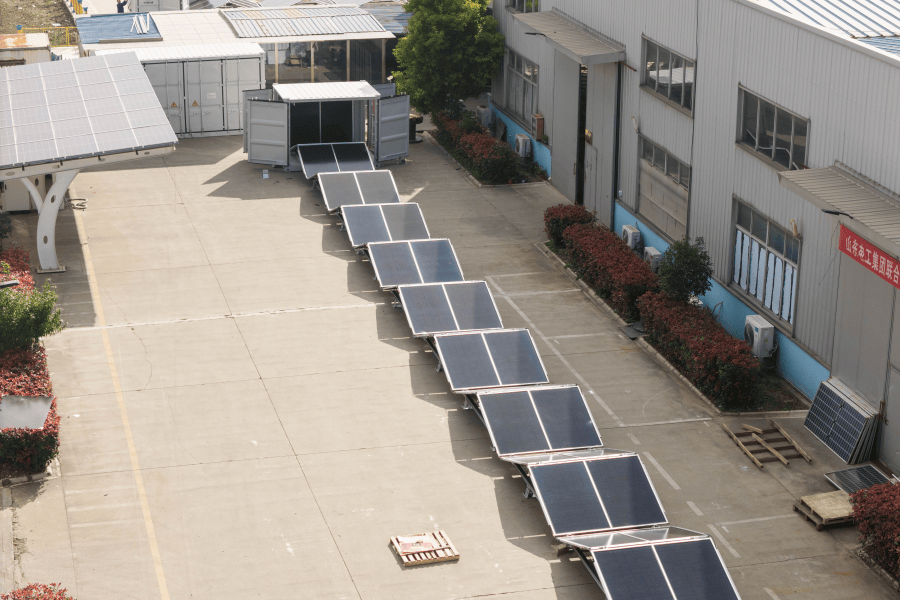
Table of Contents
- The Remote Island Energy Challenge: More Than Just a Logistics Headache
- Why Traditional BESS Deployments Fall Short on Islands
- The All-in-One Solution: Unpacking the Pre-Integrated PV Container
- A Real-World Case Study: From Diesel Dependence to Solar Sovereignty
- Key Tech Simplified: What Makes a Container Truly "Rapid Deployment"
- Your Next Steps Towards Energy Independence
The Remote Island Energy Challenge: More Than Just a Logistics Headache
Let's be honest. If you're managing energy for a remote island community, resort, or industrial outpost, you're not just an energy manager C you're a logistics wizard, a cost controller, and often, the person who gets the call when the lights flicker. I've sat across the table from folks in the Caribbean, the Greek Isles, and off the coast of Scotland, and the story is painfully similar. You're trapped between the volatile cost of imported diesel, the immense potential of your local sun and wind, and a ticking clock to reduce your carbon footprint.
The dream of a solar-plus-storage microgrid is obvious. The reality of building one? That's where the headache begins. According to the International Renewable Energy Agency (IRENA), islands often pay up to 10 times more for electricity than mainland grids, with fossil fuel imports sucking up a huge portion of their GDP. Every day you wait, you're burning capital C literally.
Why Traditional BESS Deployments Fall Short on Islands
Here's what I've seen firsthand on site. A traditional battery energy storage system (BESS) deployment for a microgrid isn't a single project; it's five or six smaller projects stacked on top of each other, each with its own delays and risks.
- The Civil Works Marathon: Pouring custom foundations, building a separate power conversion system (PCS) shelter, running miles of medium-voltage cabling. It's slow, weather-dependent, and disrupts the very community you're trying to serve.
- The "Integration Lottery": You're sourcing batteries from one vendor, inverters from another, and the thermal management system from a third. Getting them all to talk to each other seamlessly on a remote site? That's where months of commissioning headaches begin. A study by the National Renewable Energy Lab (NREL) highlights system integration as a top contributor to project cost overruns and delays in island settings.
- The Standards Jigsaw: For the US market, you need UL 9540 and UL 1973. For Europe, it's IEC 62619 and IEC 62933. Ensuring every individual component meets these standards is one thing; proving the entire assembled system does is a regulatory maze that can stall a project for months.
The result? Project timelines stretching to 18-24 months, budgets ballooning by 20-30% due to on-site surprises, and a levelized cost of energy (LCOE) that makes your finance team wince. You're building a power plant piece-by-piece in a place with limited skilled labor and expensive freight. It's the hard way.
The All-in-One Solution: Unpacking the Pre-Integrated PV Container
This is where the paradigm shifts. Think of a rapid deployment, pre-integrated PV container not as a product, but as a deliverable power plant. The core philosophy we champion at Highjoule is "test once, deploy anywhere."
Imagine this: A 40-foot ISO container arrives at your port. Inside, every critical component C lithium-ion battery racks, PCS, HVAC thermal management, fire suppression, and the energy management system (EMS) C is already mounted, wired, and, most importantly, factory-tested as a unified system. It's been shaken, heated, cooled, and cycled in a controlled environment to simulate a decade of island life. We're talking about a solution that can go from ship deck to synchronized operation in as little as 4-6 weeks, not 18 months.
For you, the decision-maker, this translates to three tangible wins: predictable capital expenditure (CapEx) with far fewer on-site change orders, drastically reduced operational risk because the system integration is our problem, not yours, and a faster path to reducing your LCOE by cutting diesel consumption sooner.

A Real-World Case Study: From Diesel Dependence to Solar Sovereignty
Let me give you a real example, though I've changed the names to protect the client. We worked with a mid-sized island community in the Atlantic that was spending over $500,000 monthly on diesel for its 5 MW peak load. Their solar potential was fantastic, but curtailment (wasting solar energy when production exceeds demand) was making their planned PV array uneconomical.
The Challenge: Integrate a 2 MW / 4 MWh storage system with their new solar farm to shift energy to the evening peak, provide black-start capability after storms, and do it all without disrupting the island's tourism season. They had a 9-month window from contract to commissioning.
The Highjoule Solution: We delivered two of our pre-integrated UL 9540-certified BESS containers. Because the entire system was pre-approved as a single unit, the local permitting authority accepted our factory certification reports, shaving months off the approval process. On-site work was limited to a simple slab, connecting AC and DC cables from the nearby solar field, and a grid interconnection point.
The Outcome: The system was online in 5 months. In the first year, it reduced diesel consumption by 40%, and the ability to store excess midday solar transformed their PV array from a marginal asset into the cornerstone of their grid. The local utility now uses it for frequency regulation, creating a new revenue stream. Honestly, seeing the diesel trucks' visits cut in half was a win everyone on the island felt.
Key Tech Simplified: What Makes a Container Truly "Rapid Deployment"
As an engineer, I geek out on the specs, but let me break down what really matters for your project's success in simple terms:
- C-rate (The "Power Personality"): This is how fast the battery can charge or discharge. A 1C rate means a 4 MWh system can output 4 MW for 1 hour. For islands, you often need a higher C-rate (like 0.5C to 1C) to handle quick surges when a cloud passes over the solar farm or a large load kicks on. Our containers are engineered with this in mind, ensuring the battery chemistry and PCS are perfectly matched for duty.
- Thermal Management (The "Climate Control"): This isn't just an air conditioner. It's a dedicated HVAC system that maintains the battery at its ideal temperature (usually around 25C/77F) year-round. In a sealed container in the tropics, without this, battery life and safety plummet. Our systems use indirect liquid cooling for superior uniformity and efficiency, which directly protects your long-term investment.
- LCOE Focus (The "True Cost"): The Levelized Cost of Energy is your ultimate scorecard. A pre-integrated container attacks LCOE from all angles: lower installed CapEx, higher reliability (less downtime), and optimized cycling to maximize diesel displacement. The faster, more reliable deployment means you start saving on fuel from day one, improving your payback period dramatically.
The key is that in a pre-integrated solution, we've already solved the puzzle of how these elements work together. You're not buying components; you're buying a guaranteed performance outcome.

Your Next Steps Towards Energy Independence
The journey from a diesel-dependent island to a renewable-powered microgrid is complex, but the first step is straightforward: change how you think about the storage system itself. Stop thinking in terms of procuring and integrating discrete parts. Start thinking in terms of procuring a guaranteed, certified, and operational energy asset that arrives ready to work.
At Highjoule, our role isn't just to sell you a container. It's to bring two decades of global deployment experience to your specific site plan, help navigate the UL or IEC certification path, and provide the local service and monitoring to ensure it performs for its entire 15+ year life. We've made the mistakes and learned the lessons so you don't have to.
So, what's the single biggest logistical hurdle you're anticipating for your island's energy transition? Is it the port infrastructure, the local electrical code, or the sheer timeline? Let's have that conversation.
Tags: UL Standard BESS LCOE Europe US Market Renewable Energy Microgrid Pre-integrated Container
Author
James Zhang
20+ years agricultural energy storage engineer / Highjoule CTO