
Scalable Modular BESS Containers: The Ultimate Guide for Public Utility Grids
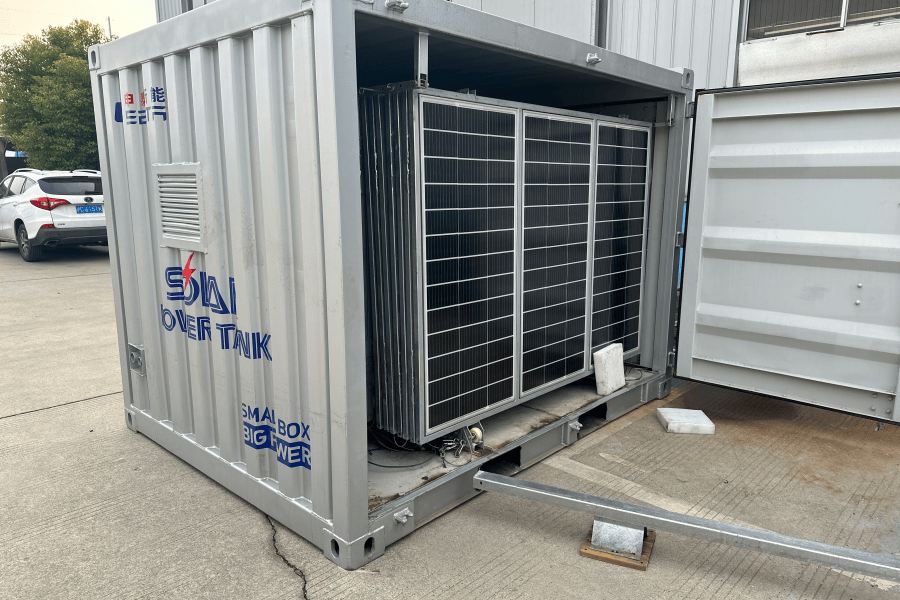
Table of Contents
- The Real Grid Problem Utilities Face Today
- Why Traditional BESS Approaches Are Stalling Your Projects
- The Modular Solution: More Than Just Plug-and-Play
- A Case in Point: De-risking Deployment in the Real World
- Expert Corner: The Tech That Makes Modular Work
- Building a Future-Proof, Profitable Grid
The Real Grid Problem Utilities Face Today
Let's be honest. If you're managing a public utility grid in North America or Europe right now, you're being pulled in three directions at once. You need to integrate more renewables - fast. The IEA projects global renewable capacity will grow by a staggering 2,400 GW between 2022-2027. That's a lot of intermittent solar and wind looking for a home on your network. You need to shore up reliability and frequency regulation, especially as older thermal plants retire. And you're under immense pressure to do all this while keeping costs down for ratepayers and demonstrating prudent, safe investments to regulators.
It's a tough spot. I've sat across the table from many of you, and the frustration is palpable. The ambition is there, but the path forward often feels blocked by massive, one-off BESS projects that are complex to permit, expensive to install, and slow to scale. You're not just buying a battery; you're embarking on a multi-year civil engineering feat.
Why Traditional BESS Approaches Are Stalling Your Projects
This is where the agitation really sets in. The old model of custom-built, monolithic battery storage plants creates real pain points I've seen firsthand on site.
First, cost and timeline overruns are the rule, not the exception. Pouring concrete, managing complex on-site electrical integration, and dealing with weather delays - it adds up. The levelized cost of storage (LCOE) becomes a moving target, and that's a major headache for any CFO.
Second, scalability is an afterthought. What happens when your grid needs 50 MW more capacity next year? With a traditional setup, you're basically starting from scratch with another huge capital project. It's not agile, and it doesn't match the iterative growth of renewable generation.
Third, and this is a big one, safety and standardization concerns keep everyone up at night. Every jurisdiction has its own interpretation of codes like NFPA 855, UL 9540, and IEC 62933. A bespoke design means re-validating safety for every single project. It's a regulatory maze that slows deployment to a crawl.

The Modular Solution: More Than Just Plug-and-Play
So, what's the way out? This is where the concept of scalable, modular energy storage containers shifts from a nice idea to a critical operational necessity. It's the core of a practical guide for modern utilities. Think of it not as a single product, but as a deployment philosophy.
A true modular BESS container is a pre-engineered, factory-built unit that integrates the battery racks, thermal management, fire suppression, and power conversion systems. It arrives on your site as a fully tested, certified asset. At Highjoule, we build our GridCore Modular Containers this way because we've seen the alternative. It turns a construction project into a logistics and connection exercise. The value isn't just in the box; it's in the certainty it brings to your planning.
- Predictable Compliance: Each unit is pre-certified to UL 9540 and IEC standards, so you're not gambling on AHJ approval.
- Capital Flexibility: You can start with a 5 MW system and add identical 5 MW blocks as demand or funding phases allow. Your LCOE becomes predictable.
- Operational Simplicity: If a module needs service, you can isolate it without taking the entire site offline. It's a game-changer for maintenance.
A Case in Point: De-risking Deployment in the Real World
Let me give you a real example, though I'll keep the client name generic. A midwestern US utility needed to add 30 MW / 60 MWh of storage for renewable firming and peak shaving. Their initial plan, a traditional build, was facing permitting delays and rising steel/concrete costs.
We pivoted them to a modular container strategy. We delivered the system as six identical 5 MW / 10 MWh GridCore containers. Because the design was pre-approved, the site permit focused on foundation and interconnection - not re-validating the entire BESS design. The first container was energized in under 8 weeks from arrival. They staged the remaining units over 18 months, aligning perfectly with their budget cycles and the gradual interconnection of a new wind farm.
The project manager told me later, "The modular approach didn't just save us time; it de-risked the whole program for our board." That's the real win.
Expert Corner: The Tech That Makes Modular Work
As an engineer, I geek out on this stuff, but let's keep it practical. For a modular system to deliver on its promises, three things are non-negotiable:
1. Intelligent Thermal Management: This isn't just about air conditioning. It's about precise, cell-level cooling uniformity across the entire container. Why? Inconsistent temperatures cause cells to degrade at different rates. In a modular system, where you expect each unit to perform identically for years, superior thermal design is what ensures they actually do. It's the unsung hero of both safety and long-term ROI.
2. Thoughtful C-Rate Configuration: When we talk about a container's C-rate (like 0.5C, 1C), we're really talking about its job description. A 1C system is built for powerful, short-duration bursts (like frequency regulation). A 0.25C system is designed for long, slow energy shifts (like solar shifting). The beauty of a modular approach is you can mix and match these profiles on the same site. Maybe you need two containers for fast-response services and four for energy arbitrage. Modularity gives you that granular control over your grid assets.
3. True Grid-Forming Interoperability: The future grid needs storage that can do more than just follow. Advanced modular containers now come with grid-forming inverters as an option. This means they can "black start" a section of grid or provide stable voltage and frequency without a fossil-fuel generator backing them up. It's a key feature for building resilience into your network.

Building a Future-Proof, Profitable Grid
The journey to a resilient, renewable-powered grid isn't a single leap. It's a series of deliberate, scalable steps. Scalable modular energy storage containers provide the literal building blocks for that journey. They transform BESS deployment from a capital-intensive gamble into a manageable, predictable operational expense.
The question for utility decision-makers is no longer if you need storage, but how to acquire it with the least risk and the most strategic flexibility. Does your current roadmap allow you to scale storage capacity in sync with renewable growth? Does it give you the operational agility to meet both today's and tomorrow's grid service needs?
Honestly, the technology is here, proven, and ready to deploy. The real work is aligning your procurement and planning with this more agile, modular mindset. That might be the most important step you take this year.
Tags: UL Standard BESS LCOE Utility-scale Storage US EU Market Grid Modernization Scalable Modular Energy Storage Container
Author
James Zhang
20+ years agricultural energy storage engineer / Highjoule CTO