
Tier 1 Pre-Integrated PV Container: The Mining BESS Game-Changer
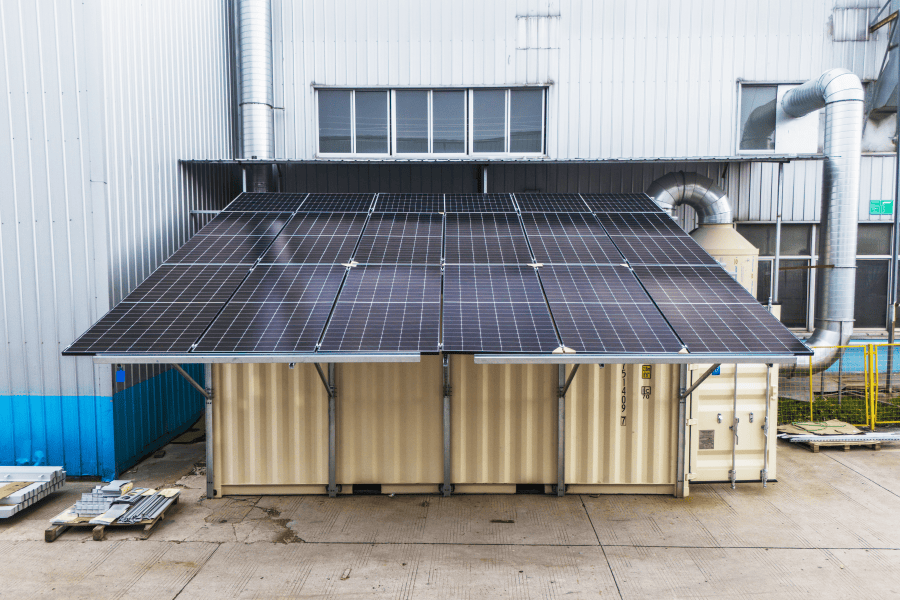
Beyond the Grid: Powering Remote Mines with Intelligence, Not Just Diesel
Honestly, if I had a dollar for every time I've walked a remote site and heard the constant, expensive hum of diesel gensets... well, let's just say I'd have a very healthy retirement fund. For decades, that's been the soundtrack to mining operations in places like Mauritania, Chile, or the Australian outback. Reliable? Often. But the true cost C in fuel logistics, emissions, and operational vulnerability C is staggering. Today, the conversation is shifting. It's not just about adding solar panels to save some fuel; it's about creating a truly resilient, intelligent, and cost-predictable energy ecosystem. And at the heart of this shift is a technology that's often misunderstood: the Tier 1 battery cell pre-integrated PV container.
Quick Navigation
- The Real Cost of "Remote"
- When Good Intentions Meet Harsh Reality
- The Pre-Integrated Container: More Than a Box
- Learning from Nevada: A Blueprint for Mauritania
- The Devil's in the Details: An Engineer's Perspective
The Real Cost of "Remote"
We all talk about "remote operations," but the implications are profound. It's not just a long drive from the nearest city. It means every liter of diesel is flown or trucked in at a massive premium. It means maintenance teams are hours away. It means a single generator failure can halt a multi-million dollar operation. According to the International Energy Agency (IEA), the industrial sector C including mining C accounts for nearly 40% of global energy consumption. A significant portion of that in off-grid mining is diesel, a fuel with volatile prices and a heavy carbon footprint.
The initial thought is simple: "Let's add solar!" And that's a great first step. But I've seen this firsthand on site: a solar array paired with a makeshift, on-site assembled battery system from mixed-grade components. The integration is clunky, the safety protocols are a patchwork, and when the inverter fails or a battery module underperforms, you're left with finger-pointing between five different suppliers while the mine's power manager is having a very bad week.
When Good Intentions Meet Harsh Reality
This is where the pain amplifies. You've invested in renewables, but you haven't solved for resilience. The core issue is system integrity. A container filled with "good deal" cells from an unknown supply chain might work on day one. But in the 50C heat of a Mauritanian summer, without a unified and rigorous thermal management system, degradation accelerates. Cycle life plummets. Your projected Levelized Cost of Energy (LCOE) C the true metric of your project's financial success C goes out the window.
Worse is safety. Different components, wired together on-site to different standards, are a risk. UL 9540 and IEC 62933 aren't just acronyms on a datasheet; they are a rigorous set of rules that govern how every component interacts to prevent thermal runaway. In a remote location, a fire isn't an incident; it's a catastrophe. The financial and reputational damage can be terminal.
The Pre-Integrated Container: More Than a Box
So, what's the answer? It's moving from a component procurement mindset to an energy system procurement mindset. The Tier 1 pre-integrated PV container is the physical embodiment of this shift.
Think of it not as a container, but as a power plant in a box, delivered to your site. The magic word is "pre-integrated." This means:
- Tier 1 Cells from the Start: It uses battery cells from manufacturers like CATL, LG, or Samsung, with proven, audited track records of millions of cycles in the field. This isn't a gamble; it's insurance.
- Engineered as One System: The battery racks, thermal management (liquid cooling is becoming the gold standard for mining apps), fire suppression, inverter, and transformer are all designed, tested, and certified together as a single unit. At Highjoule, we subject our containers to the same extreme environmental stress tests we've seen from the Nevada desert to Nordic winters.
- Plug-and-Play with Intelligence: It arrives with a unified control system. You're not just getting DC energy storage; you're getting an energy manager that seamlessly orchestrates between solar PV, the BESS, and your existing backup gensets, optimizing for lowest LCOE and ensuring power quality for your sensitive processing equipment.

Learning from Nevada: A Blueprint for Mauritania
Let's talk about a project that mirrors the Mauritanian challenge. We worked with a mid-tier gold mining operation in Nevada, USA. Their challenge: reduce a 4 MW diesel load, stabilize grid voltage at a weak interconnection point, and provide backup for critical leaching pumps. The site conditions were harsh: high ambient heat, dust, and limited space for infrastructure.
The solution was a 2.5 MW/5 MWh pre-integrated container solution using Tier 1 NMC cells. Because it was pre-engineered, the deployment was shockingly fast C from delivery to commissioning in under three weeks. The unified thermal management system keeps the cells at optimal temperature even during peak summer discharge cycles. Honestly, the most telling result wasn't just the 40% diesel reduction in the first year. It was the mine manager's comment: "For the first time, I have a clear, real-time dashboard of my entire energy position. I can predict my costs." That's the value of an integrated system.
The Devil's in the Details: An Engineer's Perspective
Here's what I tell every client looking at these systems:
- C-rate Isn't Just a Number: A 1C discharge rate sounds good, but in mining, you need bursts of power for heavy equipment. You need to understand the continuous and peak C-rates the system is designed for, and how that impacts heat generation and longevity. A pre-integrated system is engineered for these real-world duty cycles.
- Thermal Management is the Lifespan Governor: Passive air cooling often isn't enough for desert mines. Active liquid cooling is like a precision HVAC system for each battery module. It adds cost upfront but is non-negotiable for maximizing cycle life in harsh climates. It's the single biggest factor in hitting your 10 or 15-year LCOE target.
- Compliance is a Journey, Not a Stamp: Ask for the certification reports. UL 9540, for instance, tests the entire energy storage system unit. A box full of individually certified parts doesn't guarantee a certified whole. This is the core advantage of a pre-integrated, factory-tested solution from a provider like us at Highjoule C it arrives with the full system certification already in hand.
The landscape for remote mining energy is changing. The question is no longer if you should integrate solar and storage, but how to do it in a way that delivers predictable, safe, and resilient power for the life of your mine. The choice between a collection of parts and a proven, pre-integrated power system is, in my two decades on site, the most critical decision you'll make.
What's the one operational vulnerability in your power mix that keeps you up at night?
Tags: UL Standard LCOE Optimization BESS PV Integration Tier 1 Battery Mining Energy Pre-integrated Container
Author
James Zhang
20+ years agricultural energy storage engineer / Highjoule CTO