
Top 10 Air-cooled Off-grid Solar Generators for Construction Sites: A Site Engineer's Guide
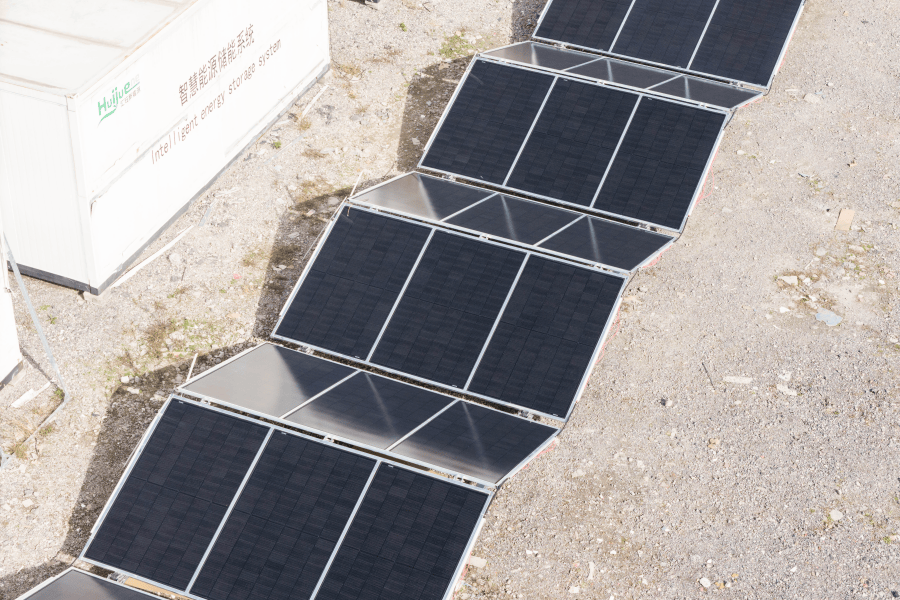
Table of Contents
- The Problem Nobody Talks About: It's Not Just Power, It's the Package
- What Makes a "Top" Manufacturer? Beyond the Brochure
- Navigating the Top 10 Landscape
- Getting It Right On-Site: My Two Cents from the Field
- What Should You Ask Before You Buy?
The Problem Nobody Talks About: It's Not Just Power, It's the Package
Honestly, when you're managing a construction site, your primary headache is schedule and budget. The last thing you want is your power source adding to that list. We've all been there - dealing with the constant rumble and fumes of diesel gensets, the insane fuel logistics, and the noise complaints that can shut down a site or delay permits. It's a real cost, not just in diesel, but in time and community relations.
So, you look at solar generators. Smart move. But here's the agitation: not all "off-grid solar generators" are built for the brutal reality of a construction site. I've seen units that work great in a lab or a backyard fail miserably when faced with concrete dust, constant vibration from heavy machinery, and the thermal stress of being in an open field with zero shade. The biggest pitfall? Thermal management. An air-cooled system that can't handle 100F+ ambient temps will throttle power output right when you need it most, or worse, shut down to protect itself. According to a NREL study on battery degradation, operating at high temperatures consistently can slash battery cycle life by half or more. That's a financial hit you'll feel down the line.
This is where the real solution lies: finding a manufacturer whose product is engineered for the environment, not just the electrical load. The Top 10 Manufacturers of Air-cooled Off-grid Solar Generator for Construction Site Power aren't just selling a box with batteries and panels; they're selling reliability in a harsh, mobile, and unforgiving setting.
What Makes a "Top" Manufacturer? Beyond the Brochure
From my 20+ years on sites from Texas to Bavaria, a top manufacturer for this niche gets three things fundamentally right:
- Ruggedization & Compliance: The unit must be built like industrial equipment. Think IP54 rating or higher for dust and water ingress. More critically, it must have the right safety certifications - UL 9540 for the energy storage system and UL 1973 for the batteries are non-negotiable in North America. In Europe, look for IEC 62619. This isn't red tape; it's your insurance policy.
- Intelligent Air-cooling: "Air-cooled" shouldn't mean "a couple of fans." It needs a smart, ducted thermal management system that isolates sensitive electronics from dust while maintaining optimal cell temperature (ideally 20-30C). I've seen firsthand how a well-designed system can maintain full C-rate output on a hot day, while a poor one loses 30% of its capacity.
- Service & Support Network: What happens when something goes wrong? A top manufacturer has a local or regional support network. You can't afford to ship a 10-ton container back to Asia for a firmware glitch or a faulty BMS communication cable. Companies like ours, Highjoule, invest heavily in local technician networks because downtime on your site is our biggest failure.

Navigating the Top 10 Landscape
Let's talk about the list. You'll see familiar global brands and specialized players. I won't just name them - you can find that with a quick search. Instead, I'll give you the on-site engineer's view of what differentiates the leaders.
The true leaders in this Top 10 Manufacturers of Air-cooled Off-grid Solar Generator for Construction Site Power arena typically offer containerized or skid-mounted solutions in the 100kWh to 1MWh+ range. They understand that for construction, scalability and mobility are key. You might start a project with a 200kWh unit and later add another container as the site expands.
One project in Northern Germany comes to mind. The challenge was powering a remote highway construction site with strict environmental noise limits. The solution was a 500kWh air-cooled BESS paired with a temporary solar array. The key to success wasn't just the hardware; it was the manufacturer's ability to provide a grid-forming inverter that could handle the large in-rush currents from starting massive electric pile drivers - a detail many overlook. They also provided a clear degradation warranty, which directly impacted the project's Levelized Cost of Energy (LCOE) calculation, making the CapEx easier to justify against diesel.
That's the expert insight: always ask about the inverter's surge capability and the warranty's fine print on cycle life and throughput. It tells you more about their confidence in the product than any spec sheet.
Getting It Right On-Site: My Two Cents from the Field
Here's where I get practical. When we at Highjoule deploy a system, we obsess over a few technical things that make all the difference:
- C-rate in Real Life: A manufacturer might advertise a 1C discharge rate. But at 95F ambient, can it sustain that? Ask for performance data at high ambient temperatures. A slightly lower, sustainable C-rate is better than a high one that vanishes in the heat.
- Thermal Management Design: Open the unit (or have them show you). Are the air channels clean? Is there separation between battery racks and power electronics? Good design prevents hot spots, which are the primary cause of premature cell failure.
- LCOE, Not Just Upfront Cost: The cheapest unit often has the highest long-term cost. Factor in the projected cycle life, round-trip efficiency (aim for >92%), and expected degradation. A robust, slightly more expensive system from a top manufacturer will have a lower LCOE over a 5-year project.
Our approach has always been to engineer for the lowest possible LCOE, not the lowest sticker price. That means using high-cycle-life LFP chemistry, designing our air-cooling for real-world extremes, and ensuring every component, from the busbar to the BMS, meets UL or IEC standards. It's boring engineering, but it's what keeps the lights on (and the concrete mixers turning) day after day.
What Should You Ask Before You Buy?
So, you're evaluating the Top 10 Manufacturers of Air-cooled Off-grid Solar Generator for Construction Site Power. Cut through the marketing. Here are your must-ask questions:
- "Can you provide a third-party test report for UL 9540/IEC 62619 compliance?"
- "What is the guaranteed power output at 40C (104F) ambient temperature?"
- "What is the expected cycle life to 80% capacity under a daily 100% DoD cycle, and what is the warranty coverage for that?"
- "Do you have local field service engineers, and what is the typical response time for a critical issue?"
- "Can your system's controller integrate with my site's other power sources (like a backup diesel gen) for automatic switching?"
The right manufacturer won't hesitate on these answers. They'll have the data, the certifications, and the case studies ready. Because in the end, you're not buying a generator. You're buying predictable, silent, and clean power for your site, every single day. That's the real value proposition.
What's the one site condition you're most worried a solar generator won't handle? Dust, heat, vibration, or something else entirely? Let's talk about it - I've probably seen it.
Tags: UL Standard BESS Off-grid Power US Market Air-cooled ESS Construction Solar Generator
Author
James Zhang
20+ years agricultural energy storage engineer / Highjoule CTO