
Top 10 Manufacturers of Air-cooled Solar Container for Industrial Parks
Contents
- The Cooling Conundrum in Industrial BESS
- Why Air-Cooling is Winning in Industrial Parks
- Navigating the Manufacturer Landscape
- What to Look For Beyond the Box
- A Real-World Test: California Meets Air-Cooling
The Cooling Conundrum in Industrial BESS
Honestly, when I'm on site with a client at an industrial park, the conversation rarely starts with "show me your C-rate." It starts with, "How do we keep this thing running safely and cheaply for the next 20 years?" And right there, in that question, lies the single biggest operational headache for large-scale battery storage: thermal management.
I've seen this firsthand. A battery's performance, lifespan, and most critically, its safety, are directly tied to its operating temperature. Let it get too hot, and you accelerate degradation - effectively burning money. Let hotspots develop, and you're flirting with thermal runaway. The International Renewable Energy Agency (IRENA) notes that improper thermal management is a leading factor in reducing the useful life of a BESS, impacting the all-important Levelized Cost of Storage (LCOS). For an industrial operator, that's not an engineering footnote; that's a direct hit to the ROI they promised their board.
The Legacy Challenge: Complexity and Cost
For years, the go-to for large installations was liquid cooling. It's effective, no doubt. But here's the aggravation: it's complex. It requires pumps, coolant, secondary containment, more maintenance points, and a higher upfront cost. For a sprawling industrial park looking to deploy multiple containerized solutions, that complexity multiplies. The installation is more involved, and if something goes wrong with the cooling loop, you might have to take the entire container offline.
Why Air-Cooling is Winning in Industrial Parks
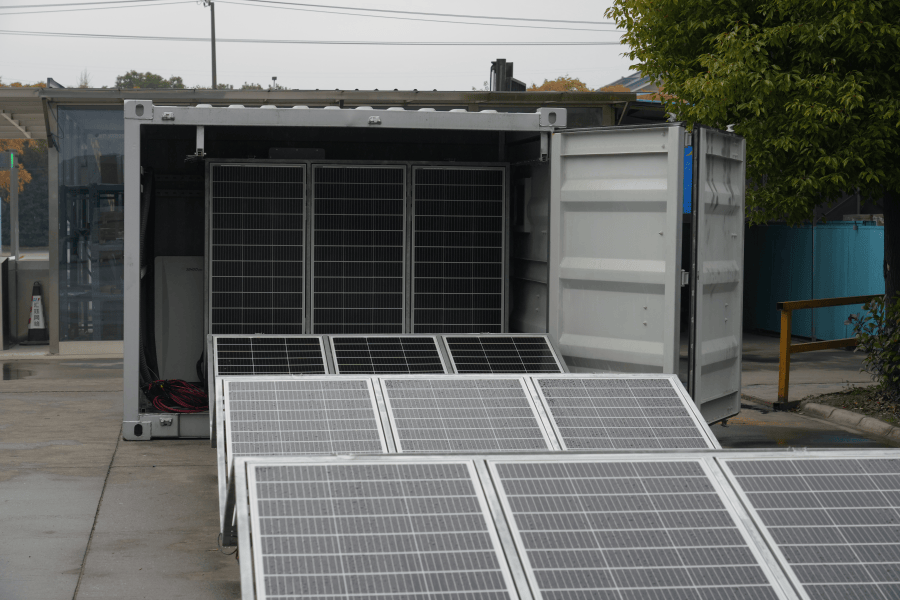
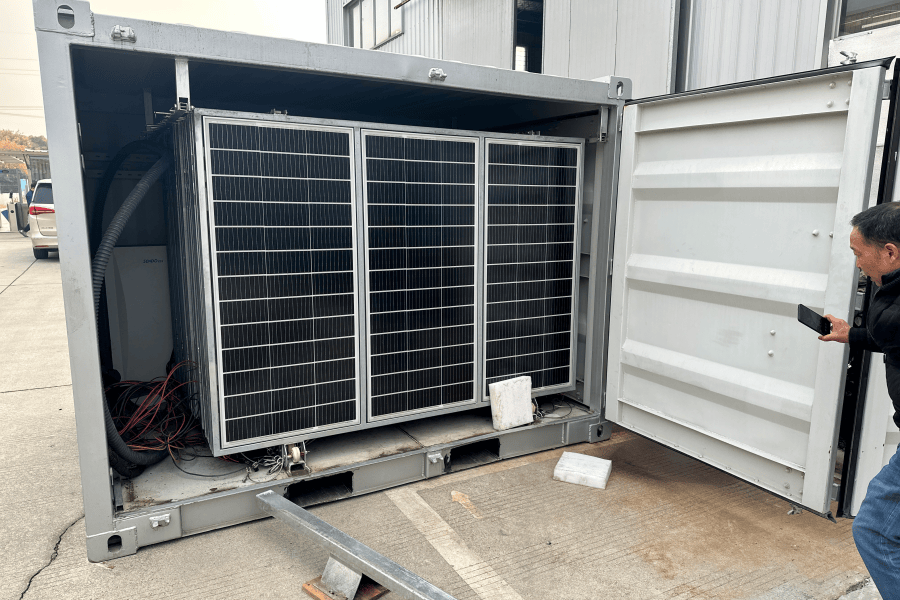
This is where the shift towards advanced air-cooled solar containers is happening, and it's a solution that makes immense sense for many industrial applications. The core idea is elegant simplicity: use highly efficient, smartly ducted HVAC systems to maintain a uniform, optimal temperature inside the container.
The benefits are music to a plant manager's ears:
- Lower Capex & Simpler Deployment: Fewer components mean a lower initial cost and faster, simpler installation. You're basically plugging in a giant, smart, battery-filled refrigerator.
- Easier & Safer Maintenance: No liquid leaks to worry about. Standard HVAC components are familiar to most technicians, simplifying repairs and reducing downtime.
- Proven Reliability: Modern air-cooling systems with sophisticated zoning and monitoring can maintain temperatures within a tight 3C range, which is more than sufficient for many of today's LFP (Lithium Iron Phosphate) battery chemistries that dominate the industrial sector.
It's not that air-cooling is "worse" than liquid. It's that for a huge segment of the market - industrial parks with good ventilation space, moderate climates, and a focus on lifecycle cost - it's the right tool for the job.

Navigating the Manufacturer Landscape
So, you're considering an air-cooled container solution. The market is bustling, and a list of Top 10 Manufacturers of Air-cooled Solar Container for Industrial Parks will include a mix of global giants and specialized innovators. You'll see names from Asia, Europe, and North America.
The key isn't just to pick a name from a list. It's to understand what differentiates them in a way that matters for your specific site in Texas or North Rhine-Westphalia. The checklist starts with compliance: UL 9540 and IEC 62933 aren't just acronyms; they're your baseline insurance policy for safety and grid interoperability in the US and EU markets. Any serious manufacturer will have these.
What to Look For Beyond the Box
Where the real differentiation happens is in the details. Here's what I look at when evaluating a system, based on lessons learned from deployments:
- Thermal Design Intelligence: Does it just blow cold air, or does it have targeted zoning? Batteries at the center of the rack need different airflow than those at the edges. Look for designs with computational fluid dynamics (CFD) modeling behind them.
- Grid-Forming Readiness: This is the next big thing. Can the inverter in that container "form" a grid? For industrial parks looking at microgrids or providing grid services, this capability future-proofs your investment.
- Localization & Support: A container from a manufacturer 8,000 miles away is only as good as its local service and parts network. How quickly can they get a technician on site? Do they have regional warehousing for critical spares?
At Highjoule, for instance, our approach has always been to partner with manufacturers who view the container as an integrated system, not just a shell for batteries. Our focus is on optimizing the entire package for LCOE - that means balancing upfront cost with long-term efficiency and durability. We ensure the air-cooling system is precisely sized for the local climate (using ASHRAE data for the US, for example) and that every component, down to the busbars, is chosen for minimal loss and maximum safety.
A Real-World Test: California Meets Air-Cooling
Let me give you a concrete example. We worked with a food processing plant in California's Central Valley. Their pain points were classic: high demand charges, need for backup power during PSPS (Public Safety Power Shutoff) events, and a tight physical footprint. A liquid-cooled system's complexity and water usage were concerns.
We deployed a 2 MWh air-cooled container solution from a partner manufacturer. The challenges were the ambient heat - peaking at 40C+ in summer - and dust from agricultural operations. The solution wasn't just a standard box. It involved:
- A redundant, high-efficiency HVAC system with N+1 fan configuration.
- Advanced filtration on the air intakes to handle dust.
- An intelligent control system that pre-cooled the container during off-peak hours to reduce peak load on the HVAC.
The result? The system has maintained optimal battery temperature, even during heatwaves, with zero thermal-related derating. The simplicity of the air-cooled design allowed the plant's own maintenance team to handle basic filter changes, minimizing service calls. The project's LCOS came in 15% below a comparable liquid-cooled proposal, purely due to lower installed cost and maintenance overhead.
The Final Word
The move towards air-cooled containers for industrial parks isn't a compromise; it's a smart specialization. It acknowledges that for many businesses, the ultimate metric isn't the highest possible C-rate, but the lowest, safest, and most reliable cost of energy over decades. When you look at that list of Top 10 Manufacturers, look past the logo. Look at the thermal maps, the service network map, and the long-term financial model. That's where you'll find the right partner for your energy future.
What's the biggest operational constraint you're facing with your current power infrastructure? Is it space, cooling, or something else entirely?
Tags: UL Standard BESS LCOE Europe US Market Thermal Management Industrial Energy Storage Renewable Energy IEC Standard Air-Cooled Container
Author
James Zhang
20+ years agricultural energy storage engineer / Highjoule CTO