
Top 10 C5-M Anti-corrosion BESS Manufacturers for Reliable Data Center Backup Power
Contents
- The Silent Threat to Your Data Center's Last Line of Defense
- Why C5-M Isn't Just Another Compliance Checkbox
- Navigating the Top 10 C5-M BESS Manufacturer Landscape
- What to Look For: Going Beyond the Spec Sheet
- A Real-World Test: When the Gulf Coast Meets a Hyperscaler
- Making the Right Choice for Your Critical Load
The Silent Threat to Your Data Center's Last Line of Defense
Let's be honest. When you're planning a data center, the backup power system often gets boxed into a compliance discussion - "We need 72 hours of backup to meet Tier X," "The generators must kick in within 10 seconds." The battery system? It's sometimes treated as the silent, passive component sitting between the grid and the gensets. But I've been on-site for too many post-mortems where the failure wasn't the generator; it was the battery that was supposed to bridge the gap. And in coastal areas, industrial zones, or anywhere with airborne salinity or chemical pollution, that failure has a name: corrosion.
I remember walking into a data center facility in Florida after a near-miss event. The humidity was palpable, and when we opened the battery cabinet for the UPS, it wasn't pretty. Tell-tale white powder on terminals, discolored busbars. The system had passed its factory tests with flying colors, but the local environment was eating it alive from the inside. The real cost wasn't just the replacement hardware; it was the massive, unbudgeted OpEx for constant inspection and the terrifying, unquantifiable risk to uptime. This is the core problem: standard commercial-grade enclosures and components simply aren't built to withstand the aggressive, corrosive atmospheres common in many strategic data center locations.
Why C5-M Isn't Just Another Compliance Checkbox
This is where the conversation needs to shift from generic "BESS" to specifically engineered solutions. The ISO 12944 C5-M classification isn't marketing fluff; it's a rigorous, internationally recognized standard defining protection for structures in "very highly corrosive" industrial and marine atmospheres. Think coastal salt spray, chemical processing plants, or areas with high levels of industrial pollution. A C5-M rated BESS is designed from the ground up for this war of attrition.
What does this mean in practice? It's not just a thicker coat of paint. It's about:
- Material Science: Using hot-dip galvanized steel for structural components, with specialized multi-layer coating systems that are tested for thousands of hours in salt spray chambers.
- Component-Level Protection: Every nut, bolt, busbar, and connector is selected or treated for corrosion resistance. Stainless-steel hardware becomes the baseline, not an upgrade.
- Sealing and Filtration: Enhanced ingress protection (think IP54 or higher) with corrosion-resistant air filters to keep the hostile atmosphere out of the battery and power conversion compartments.

Navigating the Top 10 C5-M BESS Manufacturer Landscape
So, you're looking for a Top 10 Manufacturers of C5-M Anti-corrosion BESS (Battery Energy Storage System) for Data Center Backup Power. The list typically includes global giants and specialized players. You'll see names from Asia, Europe, and North America. I won't regurgitate a static list here - those change quarterly. Instead, let me give you the framework for evaluating them. The "top" manufacturer for a hyperscaler in Virginia might be wrong for a colocation provider in Rotterdam.
Key differentiators among leaders include:
- Certification Pedigree: Look for third-party validation. A manufacturer claiming C5-M should have their enclosures and coatings certified by bodies like UL or based on IEC 60068-2 standards. Don't just take a datasheet's word for it.
- Thermal Management Design: Corrosion protection can challenge cooling efficiency. The best designs integrate sealed, liquid-cooled systems or sophisticated, filtered air-cooling that maintains performance without compromising the protective envelope.
- Localized Support: Can they provide local spare parts and technicians who understand the system's specific protective features? A specialized bolt isn't much good if you have to ship it from overseas during an outage.
What to Look For: Going Beyond the Spec Sheet
When reviewing proposals, move past the headline C5-M claim. Ask the tough, practical questions I would ask on your behalf:
- "Can you walk me through the specific coating process and show me the salt spray test reports for the fully assembled cabinet, not just a sample plate?"
- "How does your Battery Management System (BMS) account for potential sensor degradation in a corrosive environment? What's the redundancy?"
- "What is the expected impact of the C5-M protection on the system's Levelized Cost of Storage (LCOS) over 15 years, considering reduced maintenance and failure risk?"
Honestly, the last point is crucial. A C5-M system might have a 10-15% higher CapEx, but I've seen projects where it reduces lifetime maintenance costs by 30% or more. That's a compelling financial and risk-management argument. It changes the conversation from pure cost to total cost of ownership and risk mitigation.
A Real-World Test: When the Gulf Coast Meets a Hyperscaler
Let me share a case that stuck with me. A major hyperscaler was building a massive campus on the U.S. Gulf Coast. The site was perfect for land and power, but the salt-laden air was a known killer of electrical equipment. Their standard global BESS specification wasn't going to cut it.
The challenge was twofold: provide N+1 redundant backup power for critical loads and ensure the systems would survive the environment for its entire 15-year design life without becoming a maintenance nightmare. We worked with them to specify a C5-M level solution. The deployment involved:
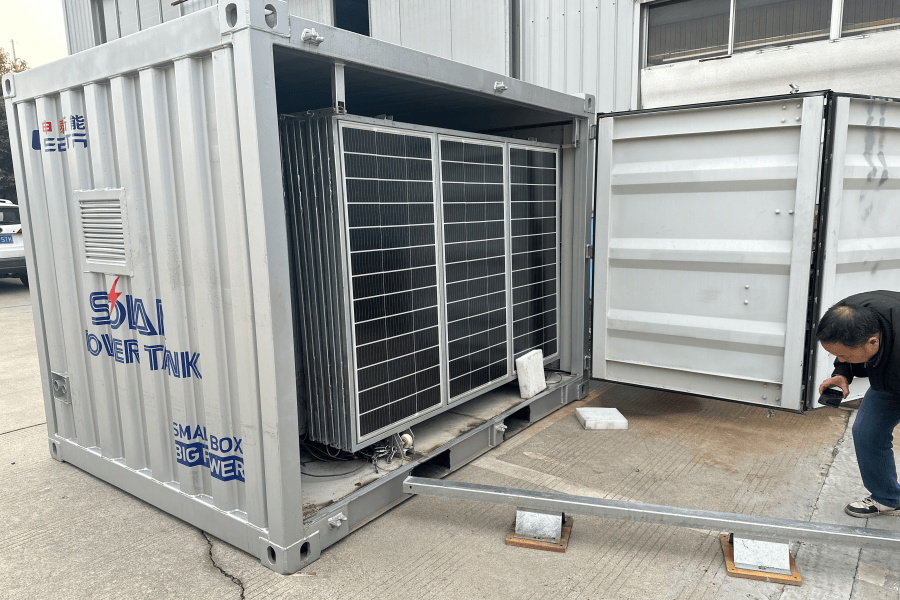
- Custom-designed 2.5 MW/5 MWh containerized BESS units.
- All external and internal steelwork was hot-dip galvanized and finished with a certified three-layer coating system.
- HVAC units used specialized corrosion-resistant coils and filters.
- Every electrical connection point was treated with anti-corrosive sealant.

Making the Right Choice for Your Critical Load
At Highjoule, we've learned that trust in backup power is built on two things: intelligent electrochemistry and brutal, physical resilience. Our approach to C5-M environments isn't an afterthought; it's integrated into our design philosophy from day one. We source components that meet the standard, but we also design for serviceability within that protected shell - because even the toughest system needs maintenance access. And we run the financial models with you, because proving the long-term value is as important as proving the technical specs.
The market for Top 10 Manufacturers of C5-M Anti-corrosion BESS (Battery Energy Storage System) for Data Center Backup Power is evolving fast. The real question isn't just "who's on the list?" It's "which partner understands that this isn't just about storing electrons, but about guaranteeing those electrons are there, in the most punishing conditions, when every millisecond counts?"
What's the single biggest environmental threat to uptime at your next planned site location? Let's talk about how to design the solution before the concrete is poured.
Tags: UL Standard Data Center Backup Power Battery Energy Storage System C5-M Anti-corrosion BESS Data Center Resilience
Author
James Zhang
20+ years agricultural energy storage engineer / Highjoule CTO