
Top 10 C5-M Anti-corrosion Solar Container Manufacturers for Military Bases
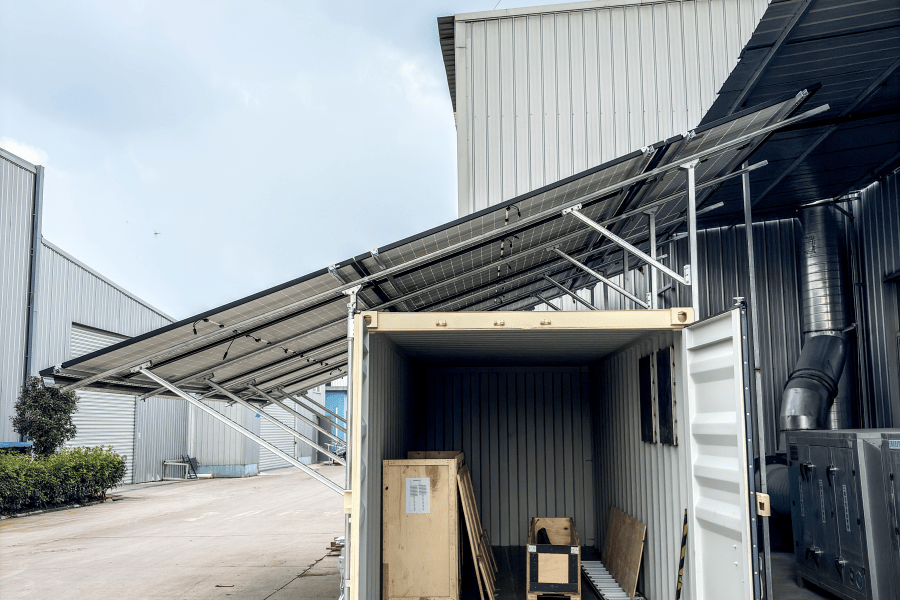
Table of Contents
- The Silent Threat to Military Energy Security
- Why C5-M Corrosion Protection Isn't Just a "Nice-to-Have"
- The Solution: Containerized Solar + Storage, Built to Last
- Navigating the Landscape: Key Manufacturers for Defense Projects
- It's More Than Just a Box: The BESS Inside Matters
- Making the Right Choice for Your Base's Future
The Silent Threat to Military Energy Security
Let's be honest. When you're planning a solar-plus-storage project for a forward operating base or a domestic training facility, the big-ticket items get all the attention: the battery chemistry, the inverter capacity, the solar panel output. But over two decades of deploying BESS from the deserts of the Middle East to coastal installations in Europe, I've seen a silent, relentless enemy take down more systems than you'd think: corrosion.
It's not dramatic. It doesn't happen overnight. It's a slow creep of rust on cabinet hinges, white powder forming on electrical contacts, and seals degrading under UV and salt spray. The International Energy Agency (IEA) emphasizes resilience as a cornerstone of modern energy infrastructure, and for military assets, that resilience is non-negotiable. A system failure during a critical mission isn't an operational hiccup; it's a strategic vulnerability.
Why C5-M Corrosion Protection Isn't Just a "Nice-to-Have"
Here's the agitating part. Most commercial-grade containerized solutions are built for a relatively benign industrial park. They might meet a basic ingress protection (IP) rating, but military deployments are a different beast. We're talking about:
- Coastal Bases: Constant salt-laden air (chlorides) that accelerates corrosion 5-10 times faster than inland environments.
- Arctic or High-Altitude Posts: Extreme thermal cycling, from -40C to +40C, which stresses materials and coatings.
- Desert Outposts: Abrasive sandstorms and drastic day-night temperature swings.
A standard ISO container might house the equipment, but without a C5-M level protection system - a classification defined by ISO 12944 for very high corrosivity industrial and marine atmospheres - you're essentially putting commercial hardware into a warzone against the elements. I've been on site for "unexpected maintenance" where the real root cause was a spec sheet that overlooked the environmental class. The cost wasn't just in parts; it was in downtime and logistical headaches you don't need.

The Solution: Containerized Solar + Storage, Built to Last
This is where purpose-built, C5-M certified anti-corrosion solar containers come in. They aren't just painted boxes. They are integrated protection systems. Think of them as the armored vehicle for your energy assets. The Top 10 Manufacturers of C5-M Anti-corrosion Solar Container for Military Bases understand this deeply. Their value isn't just in fabrication; it's in material science and rigorous testing.
A true C5-M solution involves hot-dip galvanized steel frames, multi-layer coating systems (epoxy, polyurethane), stainless steel fasteners, and specially protected ventilation systems. It's about creating a stable, protected micro-environment for the heart of the system: the Battery Energy Storage System (BESS) and power electronics inside.
Navigating the Landscape: Key Manufacturers for Defense Projects
Identifying the right partner is critical. The leading manufacturers in this niche typically share a few key traits that go beyond the container itself:
- Compliance with Localized Standards: They don't just meet ISO. Their designs and components are validated against UL 9540 (BESS safety) in North America and IEC 61439 (low-voltage switchgear) in Europe. This is crucial for base integration and insurance.
- Proven Defense Sector Experience: They have a track record of working with the specific procurement, documentation, and security protocols of defense organizations.
- Full-System Integration Mindset: The best ones work seamlessly with BESS providers like us at Highjoule. Honestly, I prefer it this way. We focus on our core expertise - optimizing the battery system for performance and Levelized Cost of Storage (LCOS) - while they ensure the fortress around it is impenetrable. Our collaboration ensures the thermal management system we design (critical for battery lifespan and safety) works in perfect harmony with their container's climate control.
For instance, on a recent project for a European NATO member state, the challenge was deploying a 2 MW/4 MWh BESS to a coastal radar installation. The challenge wasn't the power rating; it was surviving the North Sea environment for 20+ years. The solution involved partnering with a top-tier C5-M container manufacturer. They provided the shell with certified corrosion protection, while we integrated our NMC-based battery racks, liquid cooling thermal system, and UL 9540A-tested fire suppression. The result? A resilient asset that reduces diesel dependence and operates reliably in a punishing climate.
It's More Than Just a Box: The BESS Inside Matters
This brings me to my core insight. Specifying the container is step one. What you put inside determines the mission's success. Let's break down two technical aspects in plain terms:
1. Thermal Management: Batteries are like athletes; they perform best within a tight temperature range. In a sealed container in the desert, heat buildup is a killer. A passive ventilation system might not cut it. An active liquid cooling system, like the one we use in Highjoule's GridArmor series, actively circulates coolant to keep every battery cell at its ideal temperature. This isn't about comfort - it's about preventing premature aging and, more importantly, managing thermal runaway risks. A C5-M container with poor thermal design is a safe?- but useless, system.
2. The LCOE/LCOS Reality: Levelized Cost of Energy (or Storage) is your true cost metric. A cheaper, under-specified container might save capex upfront. But if it leads to a 15% faster degradation of the batteries inside due to temperature stress or corrosion-related failures, your operational costs (opex) skyrocket. Investing in a high-integrity C5-M container from a reputable manufacturer directly protects your long-term LCOE by safeguarding the far more valuable assets it houses.

Making the Right Choice for Your Base's Future
So, when you're evaluating the Top 10 Manufacturers of C5-M Anti-corrosion Solar Container for Military Bases, look at the whole picture. Ask them: "How do you ensure compatibility with the BESS provider's thermal management specs?" "Can you show me test certificates for both the coating system and the integrated container's performance under IEEE 1547 for grid interconnection?"
At Highjoule, our role is to be that expert partner for the power system inside. We've seen what works on the ground, and we know that resilience is a chain with no weak links. The container is a critical, foundational link. Choosing a manufacturer who treats it as a integrated protective system, not just a commodity, is the first decisive step toward energy security that stands the test of time and terrain.
What's the single biggest environmental challenge your next deployment site poses? Let's talk about how to engineer the solution from the outside in.
Tags: UL Standard BESS Europe US Market Solar Container Renewable Energy Military Energy Security C5-M Corrosion Protection
Author
James Zhang
20+ years agricultural energy storage engineer / Highjoule CTO