
Top 10 Tier 1 BESS Manufacturers for Industrial Parks: A 20-Year Engineer's Take
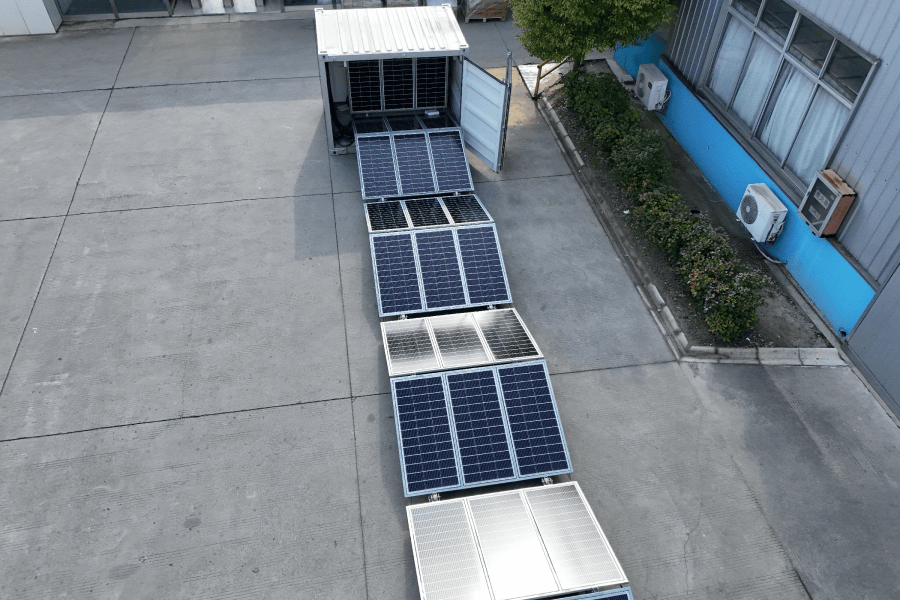
Let's Talk About Powering Your Industrial Park for the Next 20 Years
Honestly, if you're managing an industrial park in the US or Europe right now, your to-do list is already a mile long. Between managing energy costs, navigating grid constraints, and hitting those sustainability targets, it's a lot. I've been on-site at parks from California to North Rhine-Westphalia, and the conversation always turns to one thing: how do we get a reliable, safe, and economically sensible battery storage system (BESS) in here? And more often than not, the first question I get is, "Should we just go with one of the big names, the Top 10 Manufacturers of Tier 1 Battery Cell BESS?"
It's a smart starting point, but it's not the whole story. Let's grab a coffee and talk about what that "Tier 1" label really means on the ground, and what you should be looking for beyond the brand name.
In This Article
- The Real Problem: It's Not Just About Buying a Battery
- What "Tier 1" Truly Means for Your Bottom Line & Safety
- Key Criteria for Industrial Park BESS Selection
- The Human Element: Deployment & Long-Term Trust
- Making the Choice: A Practical Next Step
The Real Problem: It's Not Just About Buying a Battery
The pain point I see most isn't a lack of options - it's analysis paralysis mixed with genuine risk anxiety. You're not buying a commodity; you're investing in the backbone of your park's energy resilience for 15+ years. A report by the National Renewable Energy Laboratory (NREL) highlights that while BESS costs are falling, the lifetime value and safety performance vary significantly based on cell quality, system design, and O&M.
The aggravation? Choosing wrong is costly. It's not just the capital expense. It's the hidden costs: a system that degrades faster than projected, forcing an early replacement. A thermal management design that can't handle a Texas heatwave or a German heat dome, leading to throttled output or worse, a safety incident. Or a system that isn't seamlessly compliant with local codes like UL 9540 in the US or the IEC 62933 series in the EU, causing delays and rework. I've seen this firsthand on site - a project stalled for months because the container certification didn't align with the local fire marshal's interpretation of the standard. That's downtime nobody can afford.
What "Tier 1" Truly Means for Your Bottom Line & Safety
So, when we talk about "Tier 1" cell manufacturers, we're really talking about a proxy for long-term bankability. These are the giants - think CATL, LG Energy Solution, Samsung SDI, Panasonic, and others - with proven, massive-scale production, extensive R&D, and a public track record. For you, the park operator or developer, this translates to a few concrete things:
- Lower Financial Risk: Banks and insurers view projects using Tier 1 cells more favorably. Their performance data is transparent, which makes predicting your Levelized Cost of Storage (LCOS) - think of it as the "lifetime cost per kWh" of using your system - much more reliable.
- Consistency & Warranty Backing: You get predictable performance across thousands of cells. More importantly, the manufacturer has the financial strength to actually honor a 10- or 15-year warranty.
- Safety by Design: Tier 1 cells undergo rigorous testing. Their chemistry and manufacturing processes are mature, which is the first and most critical layer in preventing thermal runaway events.
But here's the crucial insight from the field: A Tier 1 cell does not automatically mean a Tier 1 BESS. The cell is just the heart. You need a world-class "body" - the battery management system (BMS), thermal management, power conversion system (PCS), and safety controls - built around it.

Key Criteria for Industrial Park BESS Selection
When evaluating systems from top manufacturers, don't just look at the spec sheet's peak power. Dig into these three areas:
1. Thermal Management & Safety: The Non-Negotiable
Industrial parks are tough environments. Dust, temperature swings, constant cycling. The BMS must do more than just monitor voltage. It needs to actively manage cell-level temperatures with precision. Ask about the cooling method (liquid vs. air), its energy consumption (which eats into your round-trip efficiency), and its fail-safes. Does it have early detection and isolation protocols that go beyond the standard? At Highjoule, for instance, our design includes a multi-stage gas and temperature detection system inside our UL 9540-certified enclosures, because we know on-site response time is everything.
2. Understanding C-Rate in Real Terms
You'll see specs like "1C" or "0.5C." Simply put, the C-rate tells you how quickly the battery can charge or discharge relative to its capacity. A 1C rate on a 2 MWh system means it can, in theory, discharge 2 MW in one hour. A higher C-rate (like 2C) means more power, faster - great for sharp grid demand charges. But here's the trade-off: consistently high C-rates can stress the battery and accelerate degradation. You need to match the C-rate to your actual use case. Is it for daily energy shifting (lower C-rate is fine) or for rapid frequency regulation (needs higher C-rate)? A good partner will model this with you.
3. The Total Cost of Ownership: LCOE/LCOS
The sticker price is just the entry ticket. The real metric is the Levelized Cost of Energy (LCOE) or Storage (LCOS). This factors in everything: capex, installation, financing, expected degradation over 20 years, maintenance, and efficiency losses. A cheaper system with poor degradation might have a higher LCOS than a more expensive, robust one.
| Consideration | Cheaper, Lesser-Known System | Tier 1 Cell-Based, Engineered System |
|---|---|---|
| Initial Capex | Lower | Higher |
| Projected Degradation | Higher (e.g., 30% loss in 10 yrs) | Lower (e.g., 20% loss in 10 yrs) |
| O&M & Replacement Risk | Higher | Lower |
| Likely 20-Year LCOS | Higher | Lower |
The Human Element: Deployment & Long-Term Trust
Let me share a quick case from a food processing park in the Midwest. They had a great Tier 1-based BESS unit. The challenge? Integrating it with their legacy CHP (combined heat and power) plant and navigating the utility interconnection process. The hardware was only 50% of the battle. The other 50% was local engineering support for the controls, someone who could be on-site during commissioning, and a clear O&M plan.
This is where choosing a solution provider versus just a hardware vendor makes all the difference. You need a partner whose engineers understand both the IEEE 1547 grid interconnection standard and the practical reality of your park's distribution panel. A partner that offers performance monitoring and has local technicians, or trained local partners, for swift support. Our model at Highjoule has always been to embed with the client's team during deployment - because that's where trust is built and future problems are prevented.

Making the Choice: A Practical Next Step
So, should you focus on the Top 10 Manufacturers of Tier 1 Battery Cell BESS? Absolutely - use it as your quality filter for the core component. But your final decision should be on the complete, engineered system and the team behind it.
Start by mapping your specific goals: Is it demand charge reduction, backup power, or renewables time-shift? Then, look for providers whose systems are built with Tier 1 cells but also demonstrate deep, proven expertise in:
- Local Compliance: Full system certification (UL, IEC) for your region.
- System Integration: A proven track record of making the BESS talk to your existing infrastructure.
- Transparent Performance Modeling: They should show you the projected degradation and LCOS under your operating conditions.
- Localized Support: Ask for references from projects in your geographic area.
The right system isn't just a container in your yard; it's a seamless, reliable, and profitable extension of your operations. What's the one operational constraint in your park that a truly well-engineered BESS could solve tomorrow?
Tags: UL Standard BESS LCOE Europe US Market Industrial Energy Storage Tier 1 Battery
Author
James Zhang
20+ years agricultural energy storage engineer / Highjoule CTO