
Liquid-Cooled ESS Containers for Industrial Parks: Solving Thermal & Safety Challenges
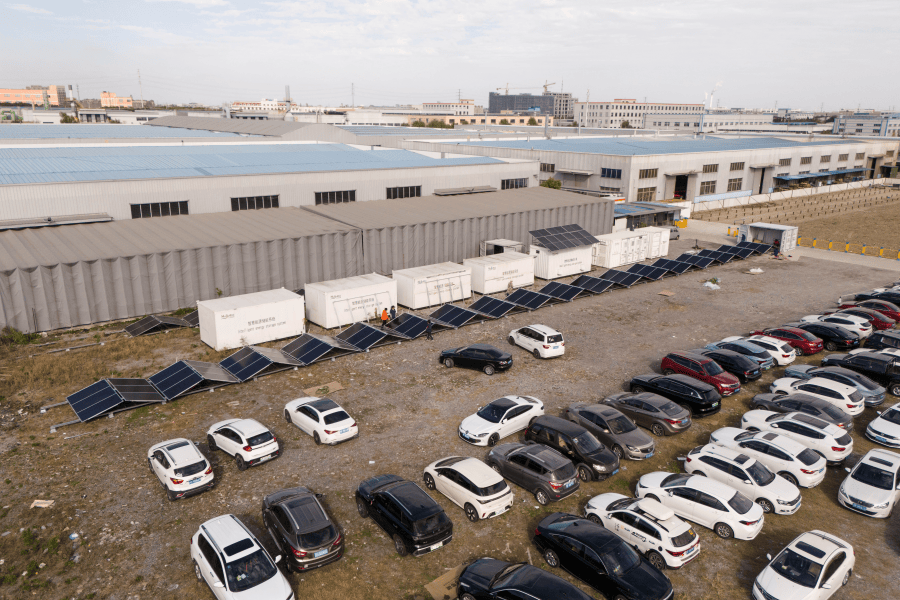
When Your Factory's Battery Needs a Chill Pill: The Real-World Shift to Liquid Cooling
Hey there. Let's be honest, if you're managing an industrial park or a large manufacturing facility, your plate is more than full. The last thing you need is another piece of complex, high-maintenance equipment. But here you are, looking at energy storage C and for good reason. The promise of peak shaving, backup power, and smoothing out those solar/wind curves is too compelling to ignore. But I've been on enough sites across the U.S. and Europe to know the quiet anxiety that comes with a standard air-cooled battery container humming away in the corner of your property. You think about heat, longevity, and frankly, safety. What if I told you the industry is undergoing a quiet but fundamental shift, and the answer isn't just more fans? Let's talk about why liquid-cooled industrial ESS containers are becoming the new benchmark for serious, safe, and profitable deployments.
Quick Navigation
- The Real Problem Isn't Just Heat, It's Risk
- Why "More Fans" Falls Short for Industrial Demands
- Liquid Cooling: The Industrial-Grade Solution Arrives
- A Real-World Case: Precision Cooling in a German Industrial Park
- Expert Insight: It's About LCOE, Not Just Tech Specs
- Making the Shift: What to Look For
The Real Problem Isn't Just Heat, It's Risk
The phenomenon is clear: industrial energy demands are intense, unpredictable, and costly. When you pair a BESS with your operations, you're often asking it to perform high C-rate cycles C that's engineer-speak for charging or discharging it hard and fast to catch price arbitrage or respond to a grid signal. This generates significant heat inside the battery cells. Now, according to a National Renewable Energy Laboratory (NREL) report, temperature inconsistency between battery cells is one of the leading accelerants of degradation. A spread of just 5C can slash a battery's lifespan dramatically.
But let me agitate this a bit from my on-site perspective. The problem isn't merely a shorter warranty period. It's about thermal runaway risk. In an air-cooled system, especially in a densely packed container, a single cell overheating can create a hotspot that fans simply can't contain fast enough. The recent focus on standards like UL 9540A (test for thermal propagation) isn't just bureaucratic red tape. It's a direct response to real-world incidents. For a plant manager, this transcends operational efficiency C it's about asset protection, insurance premiums, and peace of mind.
Why "More Fans" Falls Short for Industrial Demands
Air cooling has its place, I've deployed plenty. But for industrial parks, its limitations are stark. First, it's inherently imprecise. You're cooling the entire container air volume, not each battery rack or module directly. This leads to those dangerous temperature gradients I mentioned. Second, it's noisy and bulky C those large ducts and fans eat into valuable space and can be a nuisance. Third, and this is a big one for sites in Arizona or Spain, its efficiency plummets when the ambient air temperature is high. You're essentially trying to cool a hot battery with a hot day. Honestly, I've seen systems derate (reduce power output) on the hottest afternoons, just when you need them most to offset peak demand charges.
Liquid Cooling: The Industrial-Grade Solution Arrives
So, what's the solution? It's moving the cooling medium from air to a liquid, typically a dielectric fluid, that circulates through channels directly attached to each battery module. Think of it like a precision climate control system for every cell in the house, versus opening a few windows at one end of a long hall.
The benefits aren't just theoretical:
- Radical Temperature Uniformity: We're talking cell-to-cell temperature differences of less than 2-3C. This is the single biggest factor in extending cycle life.
- Compact Power Density: Without massive air ducts, you can pack more battery capacity into the same footprint. Or get the same capacity in a smaller container.
- Silent & All-Weather Operation: The system is largely sealed and independent of outside air temperature. It performs consistently whether it's -10C or 45C outside.
- Inherent Safety Enhancement: A well-designed liquid cooling plate acts as a thermal barrier, slowing down any potential propagation between cells or modules. This is a critical layer of safety-by-design that aligns perfectly with the intent of UL and IEC standards.
At Highjoule, when we design our liquid-cooled container solutions for the U.S. and EU markets, this safety-by-design principle is paramount. It's not an add-on; it's integrated from the first CAD drawing, ensuring compliance isn't a hurdle but a baseline.
A Real-World Case: Precision Cooling in a German Industrial Park
Let me give you a concrete example from our work. We deployed a 4 MWh liquid-cooled BESS container for a mid-sized automotive parts manufacturing park in North Rhine-Westphalia, Germany. Their challenge was classic: high IEA-noted grid volatility, ambitious on-site solar targets, and a need for reliable process power.
The site had space constraints and strict internal safety protocols that viewed traditional BESS with skepticism. The solution was a single, UL 9540A-tested container with a direct-to-chip liquid cooling system. The installation was notably simpler C no complex external ventilation ductwork to engineer. But the real proof was in the data. After 18 months of operation, the system's performance data showed a remarkable 98% round-trip efficiency maintenance and a measured temperature spread across the entire system of under 2.5C. The plant engineers, initially wary, now point to the BESS as a model of predictable, low-maintenance operation. It just works, silently managing their peak loads and integrating their solar without breaking a sweat.

Expert Insight: It's About LCOE, Not Just Tech Specs
Here's the key insight I share with every operations director: the move to liquid cooling is fundamentally an economic decision, measured by Levelized Cost of Storage (LCOE). LCOE is the total lifetime cost of your storage asset divided by the total energy it will discharge over its life.
While a liquid-cooled system might have a slightly higher upfront capex, it dramatically improves the denominator in that equation:
- Longer Lifespan: Cooler, more uniform operation means more cycles before degradation. You're not replacing batteries as often.
- Higher Usable Capacity: You can safely utilize more of the battery's rated capacity without accelerating wear.
- Lower O&M: Sealed systems have less dust ingress, fewer moving parts (fans) to fail, and reduced need for frequent filter changes.
When you run the numbers over a 10-15 year horizon, the LCOE of a liquid-cooled system often undercuts an air-cooled one. You're buying predictability and total lifetime value, not just a battery box.
Making the Shift: What to Look For
If this resonates, and you're evaluating storage for your industrial site, focus on the system's thermal management philosophy. Ask your provider:
- Can you show me the temperature gradient data (max delta-T) from a similar deployment?
- How is the cooling system fail-safe designed? What happens if a pump fails?
- Can you provide the full certification suite (UL 9540, UL 9540A, IEC 62619) for the complete container system, not just the cells?
Our experience at Highjoule is that the conversation quickly shifts from "can we do this?" to "how do we optimize it for your specific load profile?" That's where the real value gets unlocked C when the technology is so robust and safe it becomes an invisible, profit-generating asset on your balance sheet.
So, what's the temperature spread in your current or planned storage solution? It might be the most important number you're not looking at.
Tags: UL Standard BESS LCOE Thermal Management Industrial Energy Storage
Author
James Zhang
20+ years agricultural energy storage engineer / Highjoule CTO