
Step-by-step Installation of Smart BMS Monitored Energy Storage for Data Center Backup
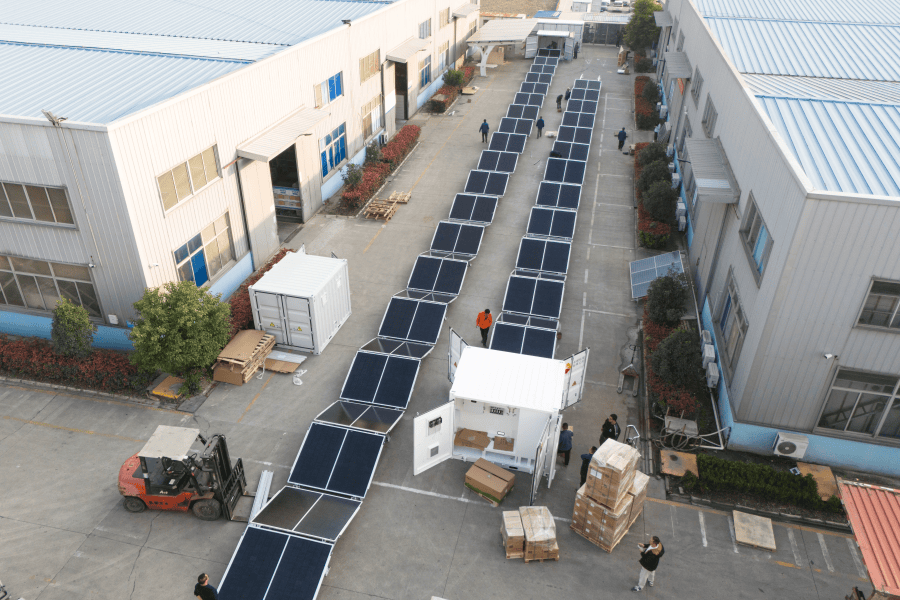
Table of Contents
- The Silent Problem: When "Backup Power" Isn't Enough
- Why This Hurts Your Bottom Line and Uptime
- A Better Way: The Smart, Step-by-Step Containerized Approach
- The Installation Playbook: From Site Prep to Commissioning
- Real-World Proof: A German Data Center Case
- The Expert Edge: What You Won't Find in the Manual
- Making It Real for Your Site
The Silent Problem: When "Backup Power" Isn't Enough
Let's be honest. For years, the conversation around data center backup power started and ended with diesel gensets. They're loud, they're dirty, and frankly, they're a single point of failure that gives every facilities manager I've met a quiet sense of dread. The shift to battery energy storage systems (BESS) for bridging power is smart C it's cleaner, faster, and aligns with ESG goals. But here's the real industry phenomenon I've witnessed firsthand across projects in California, Texas, and Northern Europe: too many deployments treat the BESS container as a "big battery in a box," plug-and-play. That mindset is where the real risk creeps in.
A container isn't just a shell. It's a complex electrochemical ecosystem. Slapping it on a slab, hooking up cables, and calling it a day ignores the critical interplay between step-by-step installation, integrated smart Battery Management System (BMS) monitoring, and long-term performance. According to a National Renewable Energy Laboratory (NREL) analysis, improper commissioning and integration can degrade system efficiency by up to 15% in the first year alone. That's not just lost kilowatt-hours; it's compromised reliability when you need it most.
Why This Hurts Your Bottom Line and Uptime
Why does this matter so much? Let's agitate that pain point a bit. A poorly integrated BESS doesn't fail during the sunny Tuesday afternoon test. It fails at 2 AM during a winter storm when the grid flickers. The aggravation multiplies in three areas:
- Safety & Compliance: Local AHJs (Authorities Having Jurisdiction) in the US and EU are getting stricter. A container that's not installed per NEC, UL 9540, and IEC 62933 standards isn't just a paperwork issue C it's a fire safety risk that can shut your entire operation down for inspection.
- Hidden Costs: That initial "cheaper" installation can balloon lifecycle costs. Poor thermal management (more on that later) stresses cells, shortening lifespan. Inefficient voltage alignment between stacks increases conversion losses. You end up with a higher Levelized Cost of Storage (LCOS) C the real metric that matters for CFOs.
- Operational Blindness: A BMS that isn't seamlessly tied into your SCADA and building management system is just a fancy gauge. You lose predictive capability. You can't see cell-level imbalances developing or track degradation trends. You're reactive, not proactive.
A Better Way: The Smart, Step-by-Step Containerized Approach
So, what's the solution? It's a philosophy shift. It's viewing the Step-by-step Installation of Smart BMS Monitored Energy Storage Container for Data Center Backup Power as a single, integrated discipline. The goal isn't just to have backup power; it's to have predictable, auditable, and optimized backup power for the next 15+ years. This is where our experience at Highjoule Technologies truly comes into play. We don't ship containers and wish you luck. We deliver a process where the installation protocol is designed hand-in-glove with the BMS's monitoring capabilities from day one.
Think of it like this: the smart BMS is the brain and nervous system. The installation steps are the skeletal and muscular alignment. If the "body" is misaligned during setup, the "brain" spends its entire life compensating for a preventable problem, wasting energy and capacity.

The Installation Playbook: From Site Prep to Commissioning
Based on hundreds of deployments, here's the core playbook we follow. It goes far beyond the vendor manual.
Phase 1: Pre-Site & Design (The Most Critical Phase)
- Site Audit with a BMS Lens: We don't just measure the concrete pad. We analyze ambient temperature profiles, prevailing wind direction for thermal dissipation, and utility interconnection points. The BMS's thermal sensors will live in this environment, so we model it upfront.
- DC/AC System Design for Balance: This is where LCOE optimization starts. We design the string configuration and inverter pairing to match the operational C-rate (the speed of charge/discharge) needed for data center backup. A 2C-rate for a 15-minute bridge is different than a 0.5C-rate for a 2-hour hold. The installation wiring must match this design to minimize resistance losses.
Phase 2: Physical Installation & Integration
- Precision Leveling & Anchoring: Sounds simple, right? I've seen a 3-degree slope on a pad cause coolant flow issues in liquid-cooled systems, leading to hot spots the BMS constantly fights. We use laser-leveling and seismic anchoring per local codes (IBC in US, Eurocode in EU).
- Cabling with Cybersecurity in Mind: Power cables are laid in separate conduits from BMS communication cables (CAN bus, Ethernet) to prevent EMI interference. Conduits are sealed to IP65 standards. The BMS network is physically isolated from public internet access points as a primary cyber barrier.
- Container Commissioning as a System: We don't power on the whole container at once. The smart BMS is booted first to perform an initial diagnostic on all cell voltages and temperatures before the main DC bus is energized. This catches shipping damage immediately.
Phase 3: Digital Twin & Acceptance Testing
- Creating the Baseline "Digital Twin": Once live, the BMS performs a 72-hour full-cycle baseline test. This creates the system's "fingerprint" C the normal operating range for every cell voltage, module temperature, and internal resistance. This twin becomes the reference for all future predictive maintenance.
- UL/IEC Compliance Documentation Pack: We deliver a full dossier, not just a certificate. It includes torque logs for every busbar connection, insulation resistance test results, and BMS firmware versioning - everything a stringent EU or US inspector would ask for.
Real-World Proof: A German Data Center Case
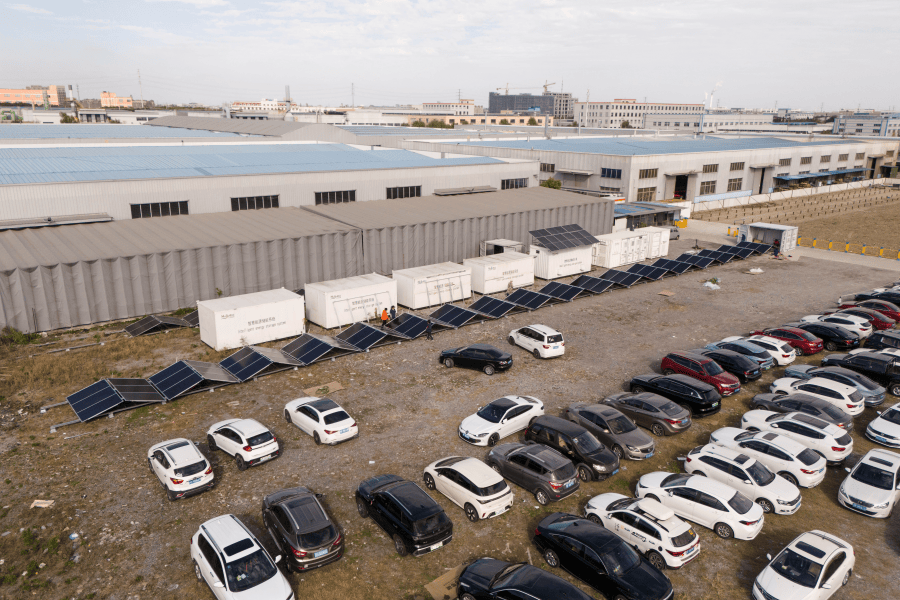
Let me give you a concrete example from a project we completed in Frankfurt, Germany. The client needed a 2 MWh/1 MW BESS for grid-down bridging and peak shaving. Their primary challenge was space constraint and strict German BImSch (emission control) regulations, which limited audible noise and mandated full recyclability reporting.
The Highjoule Solution: We deployed a UL 9540A-tested container with an integrated, liquid-cooled thermal system. The step-by-step installation was key. First, we used predictive modeling to place the container intake/exhaust to use natural wind for auxiliary cooling, reducing fan runtime (and noise). Second, during the BMS integration, we calibrated its algorithms to prioritize cell longevity (a lower, steady C-rate) for peak shaving, but allowed a higher, short-burst C-rate for emergency backup. The BMS actively manages these two modes.
The Outcome: The system passed T1V S1d inspection on the first try due to our comprehensive documentation pack. The smart BMS data showed a 12% reduction in auxiliary cooling energy use compared to the baseline model, directly improving the site's PUE. The client now has granular, cell-level data for their sustainability reports.
The Expert Edge: What You Won't Find in the Manual
Here's some honest, from-the-field insight. The manual tells you the "what." Our experience informs the "how" and "why."
- Thermal Management is Everything: It's not just about air conditioning. It's about airflow inside the rack. We ensure no cell pack is downstream of another's hot air exhaust. The BMS temperature sensors are placed not just on the cell surface, but on the busbars C a common failure point due to thermal cycling loosening connections.
- Interpreting C-rate for Your Needs: Marketing specs love a high C-rate. Honestly, for data center backup, a moderate C-rate (1-2C) is often more than sufficient and far gentler on the cells. We design and install the system to deliver the right C-rate for your specific duty cycle, which maximizes cycle life and optimizes your LCOE.
- The "First Response" Handoff: When we commission a site, we don't just train your engineers on the HMI. We simulate a fault with them. We show them how the BMS alarm hierarchy works, what's a "critical, respond now" alert versus a "monitor" advisory. This turns your team from operators into informed first responders.
Making It Real for Your Site
The journey from a concrete pad to a resilient, smart backup power asset is a series of deliberate, interconnected steps. It's the difference between having a battery and having a guaranteed performance. At Highjoule, our product advantage isn't just in the UL and IEC-certified hardware; it's baked into this installation and integration methodology. Our service capability is the assurance that the smart BMS data you see on day one is clear, accurate, and actionable for the life of the system.
So, what's the one question about your site's specific constraints - be it space, grid interconnection rules, or backup duration - that would most impact how we'd approach this step-by-step process for you?
Tags: UL Standard BESS US Market Data Center Backup Smart BMS EU Market Energy Storage Installation
Author
James Zhang
20+ years agricultural energy storage engineer / Highjoule CTO