
High-Voltage DC BESS for Island Microgrids: Solving Remote Energy Challenges
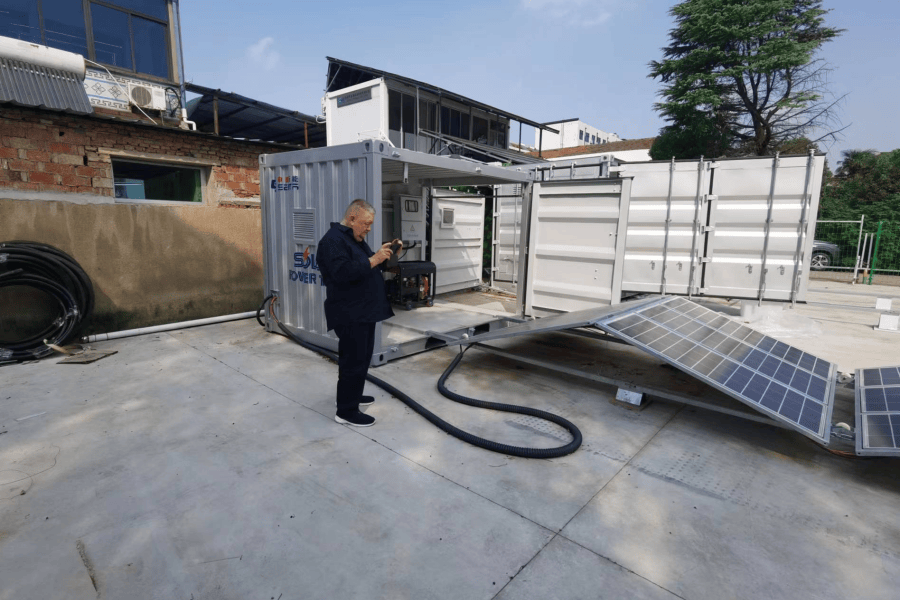
Beyond the Grid: Why High-Voltage DC BESS is a Game-Changer for Island Microgrids
Hey there. If you're reading this, you're probably wrestling with one of the toughest challenges in energy: keeping the lights on and the economy running in a remote location. Maybe it's an island community, a mining operation, or a coastal resort. I've been on-site for more of these deployments than I can count, from the Caribbean to the Scottish Isles, and honestly, the patterns are always the same. The excitement of a renewable project meets the hard reality of reliability, cost, and sheer complexity. Today, I want to cut through the noise and talk about a specific, often misunderstood, piece of the puzzle: the technical specs of a High-Voltage DC Battery Energy Storage System (BESS) for these off-grid or weak-grid scenarios. It's not just a battery box; it's the linchpin of your entire energy independence strategy.
Quick Navigation
- The Real Problem: More Than Just "Keeping the Lights On"
- Why It Hurts: The High Cost of Getting it Wrong
- The Solution Unpacked: High-Voltage DC BESS Specs That Matter
- A Case in Point: Lessons from a Mediterranean Island
- Beyond the Spec Sheet: What We've Learned on the Ground
The Real Problem: More Than Just "Keeping the Lights On"
Let's be clear. Deploying storage for a remote island isn't like adding a battery to a stable grid in California or Germany. The core problem is threefold, and it's viciously interconnected.
First, fuel dependency. You're likely burning diesel. A lot of it. The International Renewable Energy Agency (IRENA) points out that electricity costs in small island developing states can be up to 4-5 times higher than global averages, primarily due to imported fossil fuels. Every kilowatt-hour is tied to volatile global prices and messy logistics.
Second, intermittent renewables integration. So you add solar or wind. Great! But without the right storage, you end up with a chaotic system. Too much sun? You have to curtail (waste) precious solar energy because the diesel gensets can't ramp down fast enough. A cloud passes over? You get a voltage dip that can crash sensitive equipment. The grid becomes less stable, not more.
Third, and this is the big one I see on site, is the operational burden. Many early microgrids used a patchwork of low-voltage AC-coupled systems. You end up with multiple conversion stages (DC-AC-DC-AC), each one losing 2-3% efficiency and adding a point of failure. The thermal management in a small container with all that equipment is a nightmare. Maintenance requires specialized, flown-in technicians. Honestly, I've seen systems where the operational complexity negated the financial benefits.
Why It Hurts: The High Cost of Getting it Wrong
Amplifying these problems isn't just about theory; it hits the bottom line and safety record.
- Sky-High LCOE (Levelized Cost of Energy): If your storage system is inefficient or has a short lifespan, your "cheap" renewable energy isn't cheap anymore. Inefficient conversions and poor thermal management degrade batteries faster, forcing a costly replacement years ahead of schedule.
- Safety & Insurance Headaches: Remote sites have limited fire response. A battery system that isn't designed from the ground up for safety (think cell-level fusing, advanced gas detection, and passive fire suppression) is a massive liability. Insurers are increasingly demanding recognized certifications like UL 9540 and IEC 62933. Without them, you might not get coverage, full stop.
- Lost Economic Opportunity: An unreliable grid scares off investment. A hotel can't risk blackouts. A data center won't even consider it. The microgrid isn't just a utility; it's the foundation for economic development.
The Solution Unpacked: High-Voltage DC BESS Specs That Matter
This is where a purpose-built High-Voltage DC BESS changes the equation. It's not a commodity product. For a remote microgrid, the technical specification is your blueprint for success. Here's what to look for, in plain English.
1. High-Voltage DC Coupling (The Architecture): Instead of converting solar DC to AC and then back to DC for the battery, a high-voltage DC system connects the PV array and the BESS on a common DC bus. This single conversion step to AC for the grid boosts system efficiency by 3-8%. That's energy you were losing, now saved. It also simplifies controls dramatically - the battery and solar act as a single, coordinated source.
2. The Battery C-Rate & Thermal Management (The Heart & Lungs): The C-rate (charge/discharge rate) is critical. For island grids, you need a battery that can handle both slow, steady charging from midday sun and very fast discharge to support the grid when a cloud passes or a diesel generator stumbles. A spec that includes a continuous C-rate of 0.5C to 1C is often the sweet spot. But here's the on-site insight: this high performance is useless without military-grade thermal management. Look for a liquid cooling specification. It maintains even cell temperature, which is the number one factor in extending battery life and preventing thermal runaway. Air-cooled systems in a 40C island container? I wouldn't bet on a 10-year lifespan.

3. Grid-Forming Capability (The Brain): This is non-negotiable. Your BESS must be able to "form" the grid voltage and frequency by itself, without relying on a diesel genset. It needs to be the bedrock. The spec should explicitly mention grid-forming inverters compliant with IEEE 1547 and UL 1741-SB. This is what allows you to run on 100% solar+storage for hours, with diesel only as a backup.
4. Safety & Compliance as a Core Spec: The specification document should read like a safety manual. Cell-level fusing, DC arc-fault detection, inert gas fire suppression systems, and full UL/IEC certification aren't optional add-ons; they are the product. At Highjoule, our design philosophy is that safety isn't tested in, it's architected in from the first sketch. This is what gives local authorities and insurers confidence.
A Case in Point: Lessons from a Mediterranean Island
Let me give you a real example. We deployed a system for a 300-resident island with a hotel and desalination plant. Their challenge: reduce 90% diesel use, but guarantee 24/7 power for the water plant.
- Old System: 500kW solar, low-voltage AC-coupled BESS, legacy diesel gensets. They were curtailing 30% of solar and still having daily grid disturbances.
- Our High-Voltage DC BESS Solution: We integrated a 1.2MWh Highjoule system with a 1500V DC bus, directly coupled to the existing solar. The spec focused on a 1C capable, liquid-cooled battery and a true grid-forming inverter.
- The Outcome: Diesel run-hours dropped by 88% in the first year. The grid frequency, which used to swing wildly, is now rock-solid. The hotel reported zero power quality issues for the first summer season ever. The key was the DC architecture's efficiency and the grid-forming inverter's stability - specs that were executed, not just promised.
Beyond the Spec Sheet: What We've Learned on the Ground
A perfect spec is useless if it can't be deployed and maintained. After 20 years, here's my take:
LCOE is Your True North. Don't just buy on upfront cost. Model the total lifetime cost: efficiency gains, longer cycle life from better cooling, and reduced maintenance. A higher-quality, high-voltage DC system almost always wins on 10-year LCOE.
Localization Matters. Can the system interface be operated by local staff? Are spare parts available regionally? At Highjoule, we build remote monitoring and simple, modular replacement into our service model. You shouldn't need a Ph.D. to check system health.
The Partnership Mindset. Your storage provider should act as a long-term partner in energy resilience, not just a vendor shipping a container. They need to understand the local grid codes, help with interconnection studies, and be there for the lifecycle.
So, if you're evaluating a Technical Specification of High-voltage DC BESS for Remote Island Microgrids, look past the peak power and energy numbers. Scrutinize the architecture, the thermal management details, the compliance certificates, and the company's track record in making it all work, miles away from the nearest support truck. The right spec isn't a list of parts; it's a blueprint for energy independence.
What's the single biggest operational headache you're facing with your current microgrid setup? I'd be curious to hear.
Tags: UL Standard BESS LCOE High-voltage DC Island Microgrid Remote Energy
Author
James Zhang
20+ years agricultural energy storage engineer / Highjoule CTO