
Wholesale Price of Black Start Capable Lithium Battery Storage Container for High-altitude Regions
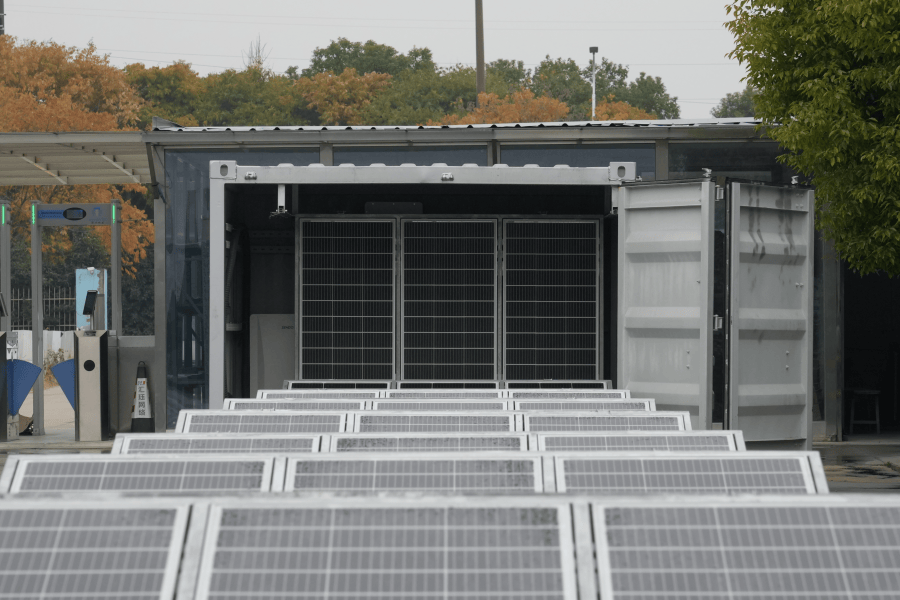
Table of Contents
- The Real Problem Isn't Just the Price Tag
- Why High Altitude Punishes Standard BESS Containers
- Black Start: The Non-Negotiable for Grid Resilience
- Decoding the "Wholesale Price": It's a System, Not a Box
- Case Study: A Mine in the Rockies & The $200k Lesson
- Asking the Right Questions Before You Buy
The Real Problem Isn't Just the Price Tag
Let's be honest. When you're sourcing a Wholesale Price of Black Start Capable Lithium Battery Storage Container for High-altitude Regions, that initial quote can be a shock. I've sat across the table from project developers in Colorado and Switzerland who showed me bids that varied by 40% for seemingly similar container specs. The immediate reaction is to chase the lowest per-kWh number. But here's the hard truth from two decades on site: that upfront figure is almost meaningless if the system isn't engineered for the twin demons of thin air and the mission-critical demand of black start.
The real cost isn't the purchase order. It's the Levelized Cost of Energy Storage (LCOE) over 15+ years. It's the cost of a thermal runaway event at 3,000 meters because the HVAC couldn't cope. It's the cost of a container that can't perform a black start when the microgrid is islanded after a storm. I've seen this firsthand: a system that saved $50k on procurement ended up spending $200k on retrofits and lost revenue in its first 18 months. That's the pain we need to agitate and solve.
Why High Altitude Punishes Standard BESS Containers
Phenomenon: You take a perfectly good, UL 9540-certified container designed for sea-level operation and plop it down at 2,500 meters. The problems start quietly.
First, thermal management. Air is less dense. It carries away less heat. Your standard air-cooling system works 30-40% less efficiently. Cells run hotter, degrade faster, and the risk of thermal propagation increases. The NREL has published studies showing battery degradation rates can accelerate by up to 15-20% in high-altitude, high-temperature cycles without proper design.
Second, internal electrical systems. Arc flash risk increases. Dielectric strength of air decreases. Your BMS and safety disconnects need specific altitude de-rating, something often overlooked in off-the-shelf wholesale offers. Honestly, most generic "wholesale" containers are built for the most common denominator - mild, low-altitude climates. Deploying them higher is a gamble.

Black Start: The Non-Negotiable for Grid Resilience
Now, layer on black start capability. This isn't just backup power. It's the ability to boot up a dead grid from scratch, with no external power source. For remote communities, mining operations, or critical infrastructure in the Alps or Rockies, this is the core value proposition.
The technical challenge here is immense. The system needs to maintain a "ready-to-boot" state with minimal self-discharge, often for months. It requires robust power conversion systems (PCS) that can act as a grid-forming source, creating a stable voltage and frequency waveform from zero. The battery's C-rate - the speed at which it can discharge - is critical. A black start needs a high burst of power (a high C-rate) to energize transformers and motors, which standard energy-optimized (low C-rate) containers can't deliver. You're not buying a battery; you're buying a grid-starting engine.
Decoding the "Wholesale Price": It's a System, Not a Box
So, when Highjoule Technologies looks at the Wholesale Price of Black Start Capable Lithium Battery Storage Container for High-altitude Regions, we break it into the value-driven system cost:
- Cell & Chemistry Selection: LFP (Lithium Iron Phosphate) is the baseline for safety. But for black start, we often spec cells with a higher peak C-rate, which influences cost.
- Altitude-Engineered Thermal System: This is where costs diverge. We use liquid-cooled modules or forced-air systems with altitude-compensated fans and larger heat exchangers. It adds maybe 8-12% to the unit cost but prevents 100% cost overruns later.
- Grid-Forming PCS & Black Start Logic: This is specialized hardware and software, tested to IEEE 1547 and relevant EU grid codes. It's integrated, not bolted on.
- Compliance & Certification: UL 9540 is table stakes. We ensure the entire system, including altitude adjustments, is certified. For the EU, IEC 62933 standards are paramount. This documentation has a cost but is your insurance for financing and operation.
The "wholesale" part becomes viable through modular, platform-based design, not by cutting corners on these essentials.
Case Study: A Mine in the Rockies & The $200k Lesson
Let me give you a real example. A critical metals mining operation in Colorado, at 2,800 meters, needed backup and black start for its processing plant. They procured a low-cost, wholesale container not designed for altitude. The first summer, the thermal system couldn't keep up. The BESS derated itself to 60% capacity on hot days, failing to support critical loads. A voltage spike during a weak-grid event then tripped the non-grid-forming PCS.
The retrofit? A new, altitude-rated HVAC system, a grid-forming PCS upgrade, and reinforced electrical insulation. Total: ~$200k plus weeks of downtime. When we at Highjoule came in for the Phase 2 expansion, we delivered a containerized system with:
- Liquid-cooled battery racks with wider operating tolerances.
- PCS pre-tested for black start sequences at high altitude in our lab.
- Full UL 9540 certification with altitude documentation for the local AHJ.
The upfront price was higher. But the total installed and operational cost is lower, and the mine now has guaranteed resilience. That's the LCOE calculation that matters.
Asking the Right Questions Before You Buy
So, what should you, as a decision-maker, do? Shift the conversation from "What's your per-kWh price?" to these questions:
- "Can you provide the thermal system performance curve at my specific altitude and ambient temperature range?"
- "Is the black start sequence fully integrated and tested with the PCS and BMS? Can I see the test protocol?"
- "What are the de-rating factors for the main components (PCS, HVAC, transformers) at my site's elevation?"
- "Is the UL/IEC certification inclusive of the system as configured for high-altitude operation?"
At Highjoule, we build these answers into every system we design for challenging environments. Our value isn't in being the cheapest box on the dock. It's in delivering a power asset you can forget about for 20 years, knowing it will work when the grid is at its worst, and the air is at its thinnest. That's what true resilience looks like. What's the one failure point your current plan can't afford?
Tags: UL Standard BESS LCOE Europe US Market Black Start Renewable Energy IEEE Standards High-altitude Energy Storage Wholesale Price
Author
James Zhang
20+ years agricultural energy storage engineer / Highjoule CTO