
Wholesale Price of High-voltage DC 5MWh Utility-scale BESS for Data Center Backup Power
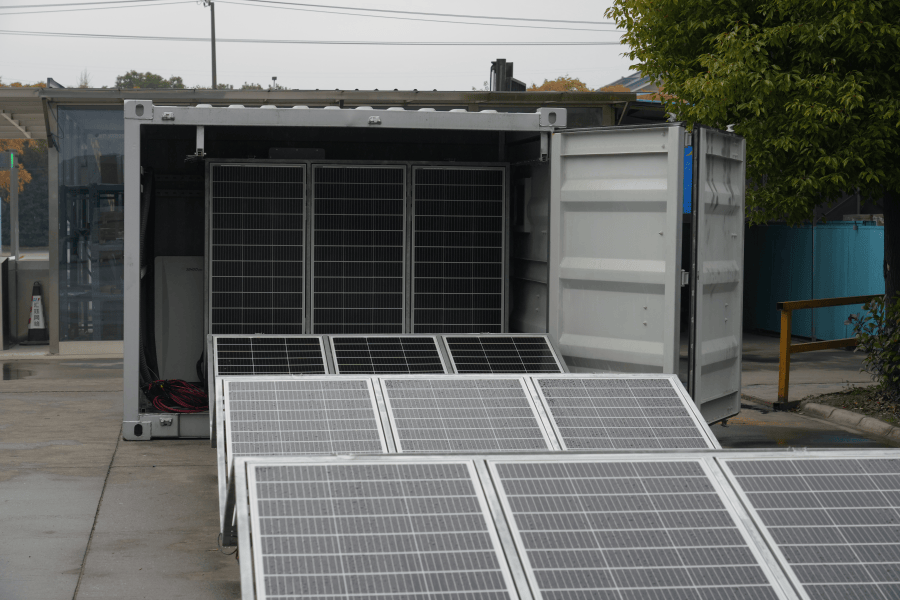
Table of Contents
- The Silent Cost of a Data Center's Weakest Link
- Beyond the Sticker Shock: What Really Drives Your BESS Cost?
- The High-Voltage DC Shift: Not Just a Spec, A System-Wise Strategy
- A Real-World Glimpse: How 5MWh BESS Units Are Deployed
- Your Next Step: Framing the Right Questions
The Silent Cost of a Data Center's Weakest Link
Let's be honest. When we talk about data center resilience, the conversation usually starts with servers, cooling, and network redundancy. The backup power system? Too often, it's an afterthought - a necessary box to tick for compliance. But I've been on-site during grid failures and peak demand events, and I can tell you firsthand: that's when your backup power strategy moves from a line item on a budget to the single point of failure for your entire operation.
The problem isn't a lack of options. The problem is the hidden complexity behind a simple-sounding requirement like "deploy a 5MWh Battery Energy Storage System (BESS)." I've seen projects where the initial Wholesale Price of High-voltage DC 5MWh Utility-scale BESS for Data Center Backup Power looks attractive, but the total cost of ownership balloons due to integration nightmares, inefficient thermal management eating into lifecycle, or safety certifications that delay commissioning by months. In the U.S. and Europe, you're not just buying a battery; you're buying into a web of standards - UL 9540, IEC 62933, IEEE 1547 - that dictate everything from cell to system. A misstep here doesn't just cost money; it risks your operational license.
Beyond the Sticker Shock: What Really Drives Your BESS Cost?
So, what should you really be looking at when evaluating that wholesale price quote? It's about understanding the levers that control long-term value.
- LCOE is Your North Star: The upfront capital expenditure (CapEx) is just one piece. The Levelized Cost of Energy Storage (LCOE) gives you the true cost per MWh delivered over the system's life. A key driver here is cycle life and depth of discharge. A cheaper system might use a higher C-rate (the speed at which it charges/discharges) aggressively, which can degrade cells faster. You might save 10% upfront but lose 30% of your usable capacity in 5 years.
- Thermal Management Isn't Optional: I've opened containers where poor airflow design created hot spots of 15C above ambient. Heat is the enemy of lithium-ion longevity. Advanced liquid cooling or forced-air systems with precise zoning might add to the initial wholesale price of a high-voltage DC 5MWh utility-scale BESS, but they directly protect your investment by ensuring uniform temperature, maximizing cycle life, and, critically, enhancing safety.
- The Standards Premium: Compliance with UL or IEC standards isn't cheap for manufacturers. It involves rigorous testing of failure modes and propagation. But this is where that "premium" pays for itself. It de-risks your project for insurers, local authorities, and your own board. According to the National Renewable Energy Laboratory (NREL), standardized, safety-certified systems can reduce soft costs related to permitting and interconnection by up to 30%.

The High-Voltage DC Shift: Not Just a Spec, A System-Wise Strategy
This brings us to the technical pivot that's changing the economics: the move to high-voltage DC (typically 800V to 1500V) architectures. When you see a quote for a Wholesale Price of High-voltage DC 5MWh Utility-scale BESS for Data Center Backup Power, you're looking at more than just a battery rack.
Think of it like this: higher voltage means lower current for the same power output. Lower current means thinner, less expensive copper cabling, lower losses (heat), and more compact power conversion systems. For a 5MWh system, the balance-of-system (BOS) savings - the stuff around the battery cells - can be substantial. At Highjoule, our design philosophy has always been to optimize the entire system, not just pack in the cheapest cells. By integrating high-voltage DC architecture from the ground up, we target a lower LCOE, even if the per-kWh cell price is comparable. The efficiency gain, often reaching 2-3% more round-trip efficiency compared to traditional low-voltage setups, translates directly into more reliable backup runtime and lower operational costs.
A Real-World Glimpse: How 5MWh BESS Units Are Deployed
Let me give you a snapshot from a project we supported in Northern Germany, an industrial park with a high-density data operation. The challenge was twofold: provide seamless backup power for critical IT load during grid instability and participate in the primary frequency regulation market to generate revenue when not in backup mode.
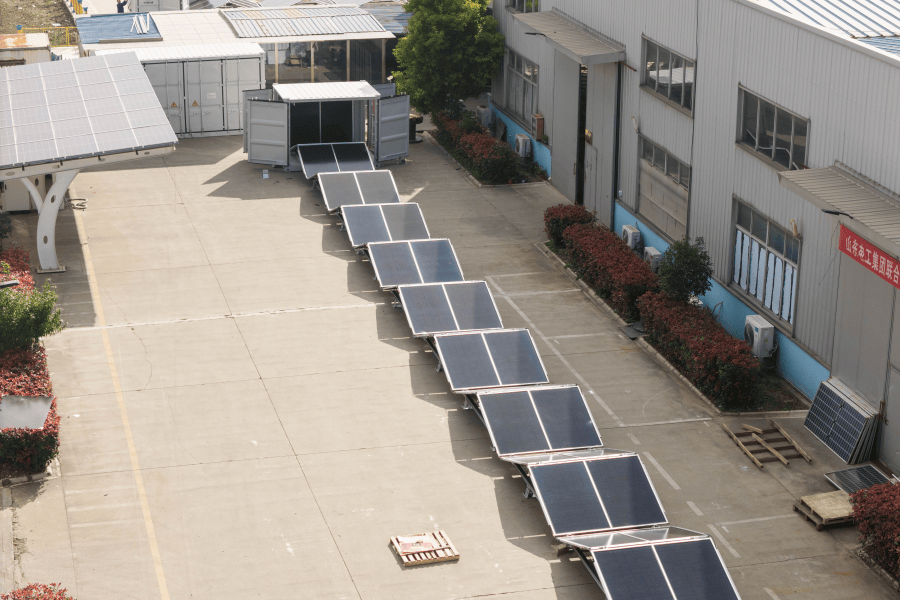
The client initially compared bare-bones wholesale prices for 5MWh BESS. The winning solution, however, was a containerized high-voltage DC system that came with a slightly higher initial tag. Why? It featured a UL 9540A-tested enclosure (non-negotiable for their insurer), an advanced climate control system rated for the local temperature swings, and most importantly, a grid interface unit pre-configured for German grid codes (VDE-AR-N 4110). This pre-certification shaved 4 months off the commissioning timeline. The system's high C-rate capability, safely managed by its thermal design, allows it to respond to grid signals in milliseconds for frequency services, creating an ancillary revenue stream. That's the real "price" conversation - total system value.
Our role at Highjoule in such projects goes beyond supply. It's about localized deployment intelligence - understanding that a BESS in Texas needs different cooling specs than one in Finland, or that California's Rule 21 has nuances different from UK's G99. This on-the-ground knowledge is baked into our system designs, ensuring that the promised performance and safety in the brochure is what you get on your site.
Your Next Step: Framing the Right Questions
So, when you're evaluating suppliers and those wholesale price points, move the conversation beyond $/kWh. Here are a few questions I'd ask if I were in your seat:
- "Can you walk me through the thermal management design and show me the worst-case scenario hot spot analysis?"
- "What is the projected LCOE of this system over 10 years at my specific duty cycle, and what assumptions is that based on?"
- "Which specific UL or IEC standards does this complete system - container, HVAC, fire suppression, EMS - hold certification for, and can I see the reports?"
- "How is the system's energy management software optimized for my dual-use case: maximizing backup readiness while allowing for potential market participation?"
The right 5MWh BESS isn't a commodity you buy by the pound. It's a critical infrastructure component. Its true "price" is measured in unwavering reliability during a blackout, in the longevity that defers your next capital cycle, and in the peace of mind that comes from knowing it's built and certified to the highest standards. That's the investment that truly backs up your data.
Tags: BESS LCOE UL Standards Data Center Backup Power Utility-Scale Energy Storage High-voltage DC Wholesale Price
Author
James Zhang
20+ years agricultural energy storage engineer / Highjoule CTO