
Wholesale Price of LFP (LiFePO4) Hybrid Solar-Diesel Systems: A Game-Changer for Eco-Resorts
Table of Contents
- The Eco-Resort Energy Dilemma: It's More Than Just a Bill
- Why the Old Numbers Don't Work Anymore
- The LFP Wholesale Shift: What's Really Changing?
- Looking Beyond the Price Tag: The Real System Cost
- A View from the Field: Making the Hybrid System Work
- Your Next Steps: Smarter Than Just Getting a Quote
The Eco-Resort Energy Dilemma: It's More Than Just a Bill
Let's be honest. When we sit down with resort owners in places like the Caribbean, Greek islands, or even remote parts of California, the conversation rarely starts with "I want to be 100% green." It starts with, "My diesel bill is killing me, the grid is unreliable, and my guests are complaining about the noise and smell from the generators at sunset." I've heard this firsthand, from Montana to Mallorca.
The dream of a serene, sustainable getaway is often underpinned by a messy, expensive, and noisy reality of diesel generators running 12-18 hours a day. You've probably looked at solar. But then you hit the hard questions: What happens when it's cloudy? How do I power the kitchens and AC at night? The traditional answer - oversizing solar and adding a massive battery bank - used to make the CAPEX figure look terrifying. That's where the conversation stalled. Until now.
Why the Old Numbers Don't Work Anymore
For years, the business case for a hybrid solar-diesel system was a tough sell. The battery - often the heart of the system - was the cost villain. Older lithium-ion chemistries, while good, came with complex thermal management needs, safety concerns that worried insurers, and a price point that pushed payback periods out to 7-10 years. For a resort operating on seasonal cash flows, that was a non-starter.
The agitation point here isn't just the upfront cost; it's the total cost of ownership (TCO). A cheap system that fails in 5 years or needs constant babysitting isn't cheap. A system that can't handle the surge when all the villa ACs kick on at once is useless. And in our industry, nothing is more costly than a guest experiencing a blackout. I've seen a single outage during a wedding dinner cost a resort not just that night's revenue, but a dozen future bookings from disappointed guests. The risk is real.
The Data That Tells the Story
According to the International Renewable Energy Agency (IRENA), the global weighted average cost for battery storage systems fell by over 60% between 2018 and 2022. But here's the critical part for you: the wholesale price for Lithium Iron Phosphate (LFP) battery cells has been leading this charge. They're becoming the default for stationary storage, and that scale is directly impacting the Wholesale Price of LFP (LiFePO4) Hybrid Solar-Diesel System for Eco-resorts. It's not a future trend; it's the current procurement reality for engineers like us.

The LFP Wholesale Shift: What's Really Changing?
So, the Wholesale Price of LFP (LiFePO4) Hybrid Solar-Diesel System for Eco-resorts is more attractive. Why does that matter so much? It's not just about saving a dollar per kilowatt-hour on the cell purchase. LFP chemistry brings inherent advantages that change the entire system's economics and reliability.
- Safety First (and Lower Insurance Costs): LFP batteries are intrinsically more stable. They're much more resistant to thermal runaway - that's engineer-speak for saying they're far less likely to overheat and cause a fire. This isn't just a datasheet claim. I've seen insurers offer significantly better premiums for UL 9540-certified LFP-based systems, which directly improves your operating budget. For Highjoule, designing to UL and IEC standards isn't an option; it's the baseline for every containerized BESS we ship to the US or EU.
- Longevity That Matches Your Investment Horizon: A quality LFP battery can deliver 6000+ cycles while retaining 80% of its capacity. Honestly, that means you're looking at a battery that can last 15+ years with daily use. This drastically reduces the Levelized Cost of Energy (LCOE) - the true metric of what your power costs over the system's life. When the core component lasts longer, the whole system's financial model gets stronger.
- Forgiving and Flexible: Unlike some chemistries that need to be kept at a perfect 50% state of charge, LFP can sit at 100% charge without significant degradation. For a resort with seasonal peaks, this flexibility is gold. You can build up storage during the shoulder season and be ready for the summer rush.
Looking Beyond the Price Tag: The Real System Cost
When we evaluate the Wholesale Price of LFP (LiFePO4) Hybrid Solar-Diesel System for Eco-resorts, we're really talking about the price of confidence. Here's how a modern system design translates that lower cell cost into resort-ready power:
| Old Challenge | Modern LFP Hybrid Solution | Impact on Your Resort |
|---|---|---|
| High battery capex | Lower wholesale LFP cell prices + optimized system design | Faster ROI, often under 5 years now |
| Generator noise/smell | Smart controller runs gensets only at peak efficiency, minimizes runtime | Quiet, serene guest experience; lower fuel & maintenance |
| Fear of blackouts | Seamless transition (<100ms) from solar to battery to diesel | Zero-interruption power for guests |
| Complex maintenance | Remote monitoring & predictive analytics (like our Highjoule HORIZON platform) | Local staff don't need to be PhDs; we handle alerts proactively |
The key is the integration intelligence. The battery isn't just a bucket for energy; it's an active manager. A smart hybrid controller will sip energy from the solar array, decide when to pull from the battery, and only fire up the diesel generator when absolutely necessary - and when it does, it runs it at its most fuel-efficient load point. This alone can cut diesel consumption by 60-80%.
A View from the Field: Making the Hybrid System Work
Let me give you a real example, though I'll keep the client's name confidential. A 50-villa eco-resort on a non-interconnected island in Europe was spending over ?250,000 annually on diesel, with generators running nearly 24/7. Their goal was to cut fuel costs, reduce noise, and market their genuine green credentials.
The challenge? Space was limited, and the local electrical contractor had never deployed a system of this scale. We didn't just ship a containerized BESS. We provided a complete LFP-based hybrid solar-diesel system kit, engineered for wholesale efficiency and local compliance. This included:
- A pre-integrated power conversion system (PCS) and battery rack with UL/IEC certifications.
- A detailed civil works package so the local team knew exactly how to prepare the foundation.
- Virtual commissioning support - our engineers guided their electricians through the startup via secure video link.
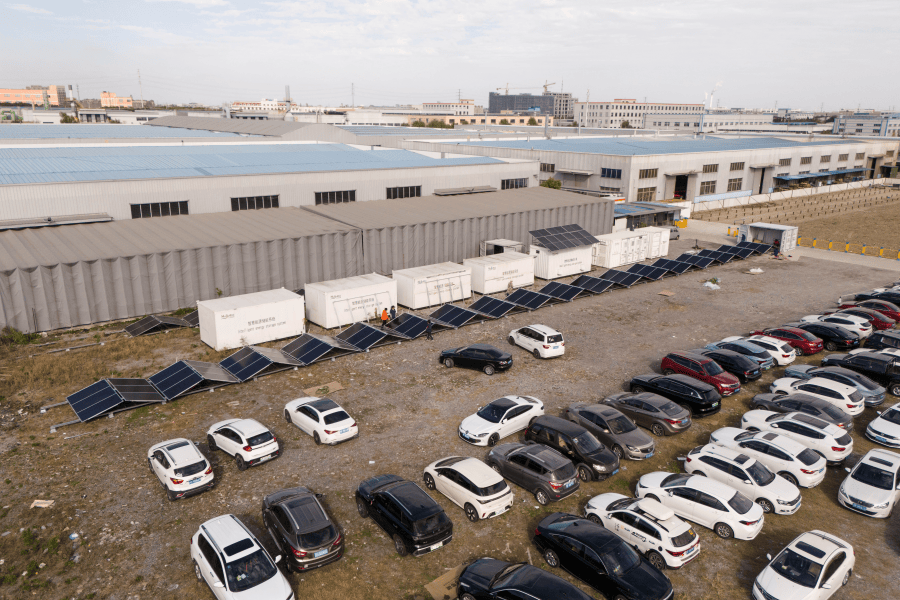
The result? In the first year, diesel usage dropped by 78%. The payback period, factoring in the wholesale system price and saved fuel, is calculated at 4.2 years. But more importantly, the resort now has 22 hours of silent, solar-powered operation per day. That's a marketing story you can't buy.
Expert Insight: The C-Rate and Thermal Talk
You might hear engineers talk about "C-rate." Simply put, it's how fast a battery can charge or discharge. A 1C rate means a 100kWh battery can deliver 100kW for one hour. Some batteries boast high C-rates, but for resort loads, a steady, reliable 0.5C-1C from LFP is usually perfect. Chasing a higher C-rate often means paying more for chemistry you don't need and dealing with more heat. And heat is the enemy. A major part of our design at Highjoule is passive and active thermal management - keeping those LFP modules in their happy zone (around 25C) with minimal energy use from cooling systems. This, again, boosts real-world efficiency and lifespan, making that upfront wholesale price work harder for you.
Your Next Steps: Smarter Than Just Getting a Quote
The landscape has shifted. The Wholesale Price of LFP (LiFePO4) Hybrid Solar-Diesel System for Eco-resorts is now at a point where the decision is less about "can we afford it?" and more about "what's the optimal design for our specific load profile and site?"
So, before you go out asking for generic bids, do this: Get a year's worth of your diesel delivery invoices and your hourly load data if you have it. That tells the real story of your energy hunger. Then, look for a partner who asks you about those details, who talks about LCOE and system longevity, not just the cheapest per-kWh battery price. Ask them how their system complies with your local fire code and insurance requirements. That's where you'll find the true value - and where you'll turn a significant capital expenditure into your most powerful operational advantage and a genuine guest amenity.
What's the one operational headache you wish a new energy system could simply make disappear?
Tags: UL Standard BESS LFP Battery Eco-Resort Energy Wholesale Price Hybrid Solar-Diesel System
Author
James Zhang
20+ years agricultural energy storage engineer / Highjoule CTO