
Wholesale Price of Rapid Deployment Hybrid Solar-Diesel System for EV Charging Stations
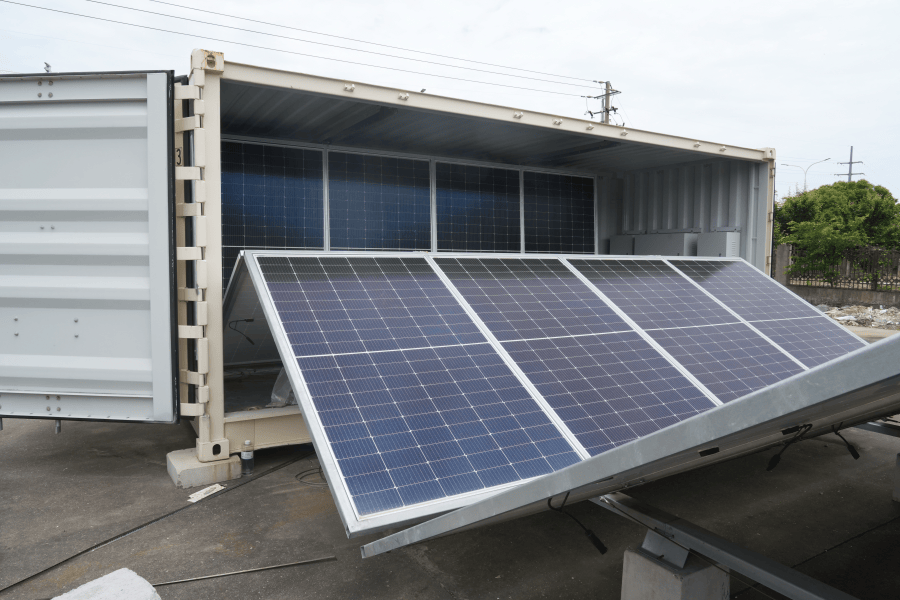
Table of Contents
- The Real Problem Isn't Just "Price"
- The Hidden Costs That Eat Your Budget
- The Solution: A Smarter Framework for Wholesale Pricing
- A Case Study from California: Speed vs. Stability
- Expert Insights: What Really Drives Long-Term Value
- Making the Numbers Work for Your Project
The Real Problem Isn't Just "Price"
Let's be honest, when you're looking at the Wholesale Price of Rapid Deployment Hybrid Solar-Diesel System for EV Charging Stations, what you're really asking is, "How do I get this critical infrastructure live, reliable, and compliant without getting a nasty surprise on the final invoice?" I've been on dozens of sites across the U.S. and Europe, and the core pain point I see isn't the sticker shock of the hardware itself. It's the unpredictable, spiraling costs of making it all work under real-world pressure.
You're dealing with a perfect storm: utility interconnection queues that stretch for years, volatile energy prices, and the urgent need to support EV fleets now. A rapid-deploy system seems like the answer, but if the underlying battery storage isn't designed for the specific duty cycle of fast-charging - those intense, high-power bursts - you'll be paying for it in maintenance and premature replacement. That initial "wholesale price" becomes a footnote.
The Hidden Costs That Eat Your Budget
So, what gets missed in the initial quote? First, compliance and safety. In the U.S., UL 9540 and UL 9540A are non-negotiable for grid-tied storage. In Europe, it's the IEC 62933 series. I've seen projects delayed 6+ months because the BESS container showed up without the right certifications. The delay cost in lost charging revenue dwarfed any upfront savings. Second, thermal management. A battery's C-rate - basically, how fast you can charge and discharge it - is directly tied to how well you can keep it cool. An undersized cooling system for a busy EV station will throttle your power output and slash battery lifespan, effectively doubling your levelized cost of energy (LCOE) over a decade.
According to a National Renewable Energy Laboratory (NREL) analysis, balance-of-system costs and long-term operational inefficiencies can account for up to 40% of a storage project's lifetime cost. That's where the real "price" is hidden.
The Solution: A Smarter Framework for Wholesale Pricing
Therefore, the smartest wholesale price isn't the lowest component cost. It's the price of a fully integrated, pre-validated system. At Highjoule, when we talk about our rapid-deploy hybrids, we're pricing a solution where the power conversion, battery management, and thermal systems are engineered together from the start. This means the diesel genset isn't just a backup; it's a smartly dispatched asset that minimizes runtime, and the solar PV integration is managed to smooth out demand charges effectively.
Our approach is to provide a "plug-and-play" containerized solution that's already been tested to the relevant UL and IEC standards. This upfront investment in compliance and integration is what actually saves you money by de-risking the entire deployment timeline. Honestly, I've seen this firsthand on site: a pre-certified system can cut commissioning time from weeks to days, getting your EV revenue stream flowing immediately.
A Case Study from California: Speed vs. Stability
Let me give you a real example. We worked with a logistics park in Southern California that needed to power six new heavy-duty EV truck chargers. Their grid connection was 18 months out. They needed a rapid-deploy hybrid system, and fast. The initial "wholesale price" from a low-bid vendor looked attractive, but the system's thermal design was marginal for the local climate and the promised C-rate.
We proposed our integrated solution at a different price point. The key differentiator was our liquid-cooled BESS with a higher-grade cell chemistry, optimized for high C-rate operation without degradation. 
The result? Their system went live in 11 weeks from contract signing. More importantly, after one full year of operation, our data monitoring shows the battery's state of health is at 98.7%, meaning they're on track for a much longer asset life than the standard warranty. The slightly higher initial price delivered a significantly lower total cost of ownership, proving the business case.
Expert Insights: What Really Drives Long-Term Value
From a technical standpoint, here are two things you must scrutinize in any wholesale price quote:
- Thermal Management Spec: Don't just accept "air-cooled" or "liquid-cooled." Ask for the design ambient temperature range and the guaranteed continuous C-rate at that temperature. If they can't provide clear data, walk away. Heat is the number one killer of battery life in high-cycling applications like EV charging.
- LCOE, Not Just Capex: Insist on a simple Levelized Cost of Energy (LCOE) model. This factors in the initial cost, expected cycle life, efficiency losses, and maintenance. A cheaper battery with half the cycle life will have a much higher LCOE. A robust system from a provider like us, with a 20-year design life and local service support, will show its true value here.
Making the Numbers Work for Your Project
So, how do you navigate this? Start by defining your real needs: peak power demand, daily energy throughput, and site-specific constraints. Then, evaluate quotes not just on the line item for the Wholesale Price of Rapid Deployment Hybrid Solar-Diesel System for EV Charging Stations, but on the total package - certifications, integration quality, thermal performance data, and the vendor's track record for on-time, compliant deployment.
At Highjoule Technologies, our value is in delivering certainty. We've spent nearly two decades refining this balance. The right price is the one that gets your station operational reliably, keeps it running safely under UL and IEC watch, and maximizes your return over 15+ years. What's the one site constraint you're most worried about derailing your project timeline?
Tags: UL Standard BESS LCOE Europe US Market Renewable Energy EV Charging Hybrid Systems
Author
James Zhang
20+ years agricultural energy storage engineer / Highjoule CTO