
Scalable Modular Solar Container for Coastal Salt-spray: Price, Performance & Protection
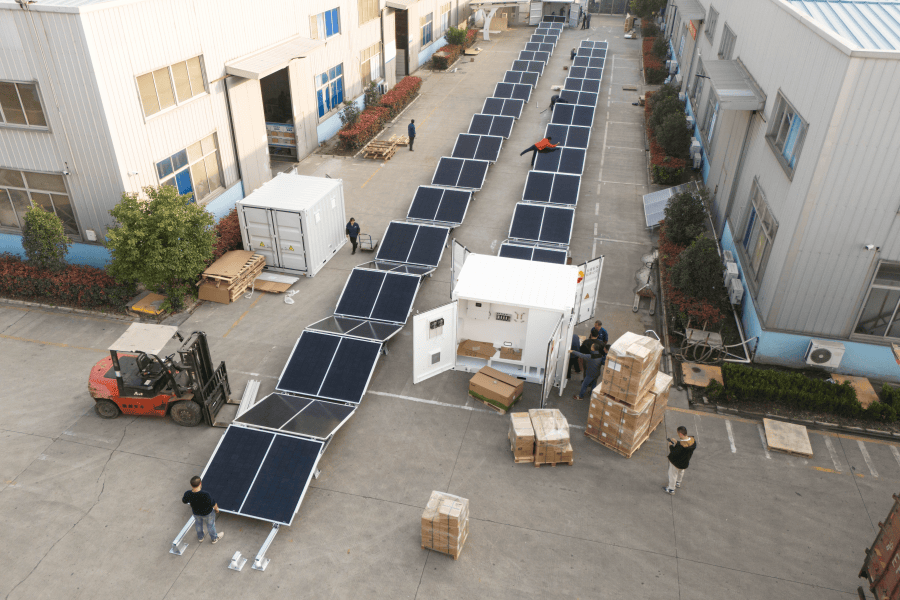
Table of Contents
- The Real Cost Isn't Just the Price Tag
- Salt: The Silent Killer of Coastal Energy Assets
- Thinking Beyond the Box: The Scalable Modular Solution
- Case in Point: A North Sea Wind Farm's Backup Power
- Key Considerations for Your Procurement
- Making the Right Choice for Your Site
The Real Cost Isn't Just the Price Tag
Let's be honest. When you're evaluating the Wholesale Price of Scalable Modular Solar Container for Coastal Salt-spray Environments, that initial quote is just the starting line, not the finish. I've been on enough project sites from the Gulf Coast to the Baltic Sea to know that the cheapest container unit can become the most expensive asset on your balance sheet if it fails prematurely. The real metric we should be talking about is the Levelized Cost of Energy Storage (LCOE) C the total lifetime cost divided by the total energy it will deliver. A unit that costs 20% more upfront but lasts twice as long in a harsh environment? That's not an expense; it's an investment.
Salt: The Silent Killer of Coastal Energy Assets
Here's the agitating part many suppliers gloss over. Salt-spray isn't just about surface rust. It's a highly conductive, corrosive agent that attacks every weak point. I've seen firsthand on site how it creeps into connector seals, degrades busbar insulation, and accelerates corrosion on battery module casings. This leads to increased resistance, thermal hotspots, and ultimately, catastrophic failure or derating. The National Renewable Energy Lab (NREL) has noted that environmental stress factors, including salt mist, can significantly impact performance degradation rates in BESS. A standard industrial enclosure might be rated IP54, but for persistent salt-spray, you need specialized protection. The cost of unscheduled downtime, component replacement, and lost revenue from a non-operational system will dwarf any initial savings from a less robust unit.

The Domino Effect of Corrosion
- Safety Risks: Corroded electrical connections increase resistance, leading to overheating and potential fire hazards. UL and IEC standards for coastal environments (like UL 50E for enclosures) are not just checkboxes; they're blueprints for safety.
- Performance Loss: As connections degrade, system efficiency drops. You paid for a 2 MW/4 MWh system, but within a few years, you might only be reliably getting 1.8 MW out of it.
- Warranty Voidance: Deploying a system not rated for its specific environment is a surefire way to have warranty claims denied. I've witnessed those painful conversations.
Thinking Beyond the Box: The Scalable Modular Solution
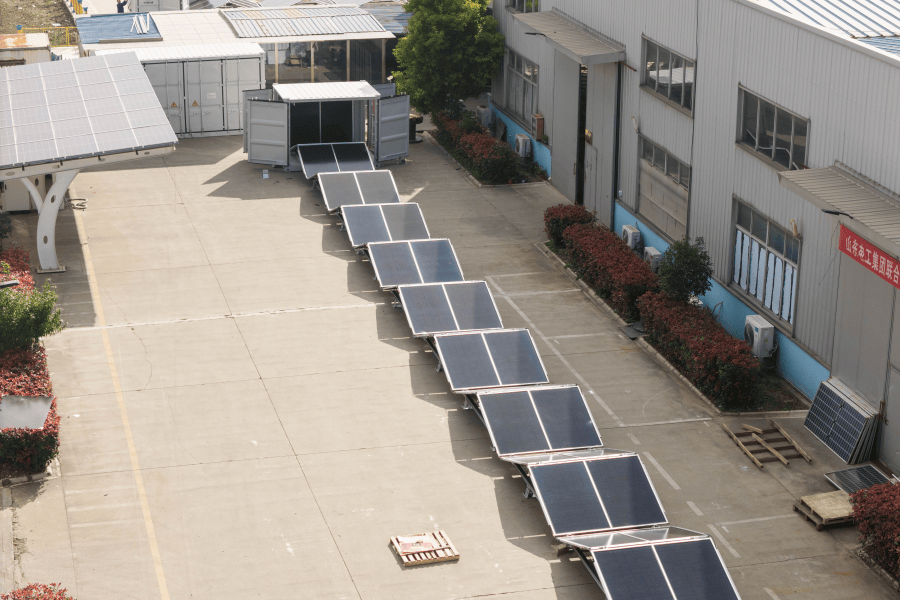
So, what's the solution? It's moving from thinking about a "container" to specifying a fully integrated, environmentally-hardened platform. At Highjoule, when we talk about a scalable modular solar container for these environments, we're engineering a system with layered defense:
- Material Science: Using aluminum alloys and stainless-steel fasteners with specific protective coatings. It's not just paint; it's a chemical bond.
- Pressurized & Filtered Climate Control: Maintaining a positive internal pressure with HEPA and salt-filtered air intake is crucial. This keeps the corrosive atmosphere out and manages the thermal management for the battery racks, which directly impacts cycle life and C-rate capability. A stable, cool, dry interior is non-negotiable.
- True Modularity: Scalability shouldn't mean just lining up more boxes. It means a plug-and-play architecture where power conversion, battery racks, and controls are in independent, serviceable modules. This allows for easier maintenance and future capacity upgrades without taking the whole system offline.
Case in Point: A North Sea Wind Farm's Backup Power
Let me give you a real example. We deployed a 1.5 MW/3 MWh modular system for a remote wind farm operations base in Germany. The challenge was providing black-start and critical backup power in a location with relentless salt-laden winds and no daily maintenance crew.
The solution was a two-container system with a NEMA 4X / IP66 equivalent salt-spray rating. The key was the independent, redundant air-handling units with corrosion-resistant coils and automatic moisture control. We also used specially sealed cable entry ports and all external conduits were stainless steel. Honestly, the wholesale price per kWh of storage was higher than a standard unit. But the client's TCO calculation included: zero unscheduled maintenance visits in 3 years, full power availability during several grid outages, and the confidence that the system would meet its 15-year design life. That's where the value manifested.
Key Considerations for Your Procurement
When you're reviewing quotes, don't just compare the bottom-line wholesale price. Dig into these specs:
| Specification | Standard Industrial | Coastal Salt-Spray Ready |
|---|---|---|
| Enclosure Rating | IP54 / Type 3R | IP55 / Type 4X (or higher) with specific salt-spray certification |
| Cooling System | Basic HVAC | Pressurized, with corrosion-resistant coils & chemical filtration |
| External Materials | Painted Carbon Steel | Aluminum Alloy / Hot-Dip Galvanized Steel with specialized coating |
| Electrical Components | Commercial/Industrial Grade | Marine-grade or with conformal coating on PCBs |
| Compliance | UL 9540, IEC 62619 | All of the above, PLUS UL 50E (Enclosures), IEC 60068-2-52 (Salt Mist Test) |
Making the Right Choice for Your Site
The conversation about Wholesale Price of Scalable Modular Solar Container for Coastal Salt-spray Environments is ultimately about risk management. Are you buying a commodity, or are you investing in resilient, predictable energy infrastructure? Our approach at Highjoule is to partner on the front-end design, ensuring the system is right for your specific site conditions from day one. That includes localizing compliance documentation for AHJs and providing a service model that focuses on remote monitoring and predictive maintenance, because sending a technician to a remote, corrosive site is something we want to minimize as much as you do.
What's the one corrosion-related failure you absolutely can't afford on your next coastal project? Let's design the system to prevent it.
Tags: UL Standard BESS LCOE Energy Storage Solar Container Salt-Spray Protection Modular Design
Author
James Zhang
20+ years agricultural energy storage engineer / Highjoule CTO