
Smart BESS Container for Remote Islands: Cost, Safety & ROI Explained
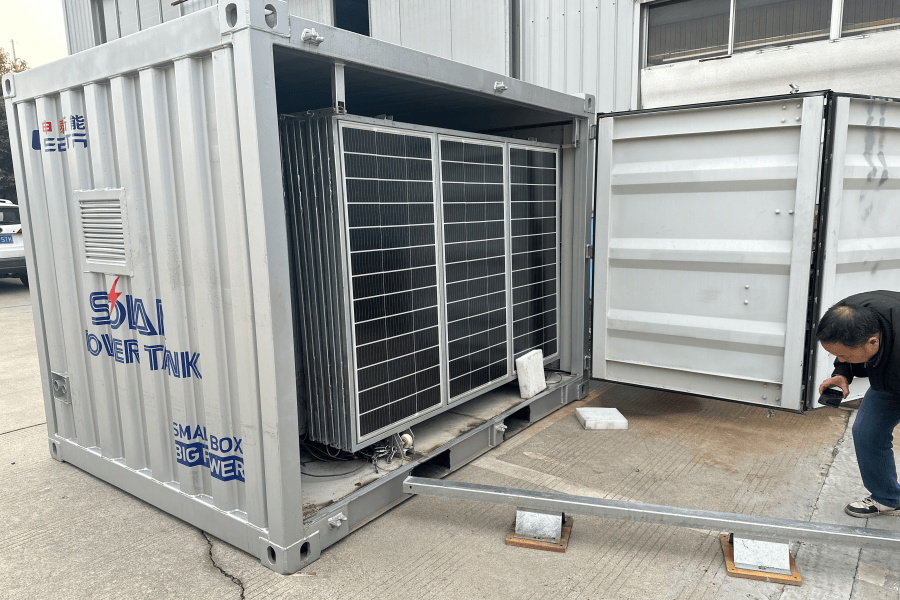
Table of Contents
- The Real Problem Isn't Just Upfront Cost
- The Hidden Costs That Keep You Awake at Night
- A Better Approach: The "All-in-One" Container Mindset
- Breaking Down the "Wholesale Price" C What You're Actually Paying For
- The Game Changer: A Smart BMS That's Actually Working for You
- A Quick Case from the Field
- What This Means for Your Bottom Line
The Real Problem Isn't Just Upfront Cost
Let's be honest. When you're looking at deploying energy storage for a remote island community or an off-grid industrial site, the first thing that grabs your attention is that big number C the wholesale price of the containerized system. I've sat across the table from dozens of project developers, and the initial sticker shock is real. But here's what 20 years of being on-site, from the Scottish Isles to the Caribbean, has taught me: focusing solely on that initial purchase order is the single biggest mistake you can make. The real challenge isn't buying a battery box; it's buying predictable, safe, and low-cost energy for the next 15-20 years.
The Hidden Costs That Keep You Awake at Night
Think about a typical remote microgrid project. You've got your solar PV, your battery container, power conversion, controls, and all the balance-of-plant stuff. The procurement and integration alone is a headache. But the real costs start creeping in after commissioning.
I've seen this firsthand: a system with a weak Battery Management System (BMS) that can't properly balance cells in high humidity. Degradation accelerates, and suddenly your 10-year warranty claim gets denied because the operating parameters were "exceeded." Or worse, a thermal runaway event in a poorly ventilated container. The National Renewable Energy Lab (NREL) has done great work showing how thermal management is the linchpin for safety and longevity. When you're on an island, a fire isn't just an asset loss; it's a potential catastrophe for the entire community's energy supply.
Then there's efficiency. A system might claim a 95% round-trip efficiency on the data sheet, but without a smart BMS actively managing the C-rate (basically, how fast you charge/discharge the battery) and the internal temperature, you're losing several percentage points in real life. Over 20 years, that's a mountain of wasted solar energy you paid for but never got to use.

A Better Approach: The "All-in-One" Container Mindset
This is where the conversation around the Wholesale Price of Smart BMS Monitored Solar Container for Remote Island Microgrids needs to shift. You're not buying components. You're buying an outcome: levelized cost of energy (LCOE). The goal is to drive that LCOE down as low as possible over the system's life.
So, the right question isn't "What's the cheapest container?", it's "Which integrated solution delivers the lowest lifetime cost and highest reliability?" That's the commercial mindset we adopt with every Highjoule system. It forces you to look at the wholesale price as a bundle of value, not just a cost.
Breaking Down the "Wholesale Price" C What You're Actually Paying For
When we quote a pre-integrated solar-ready container, that price is built on non-negotiable pillars for the EU and US markets:
- Safety as a Core Feature, Not an Add-on: The entire unit - from cell selection to enclosure - is designed to meet and exceed UL 9540 and IEC 62933 standards. This isn't paperwork. This means specific materials, spacing, ventilation, and fire suppression systems that we know will pass inspection with local authorities. This upfront engineering saves months of delays.
- The Intelligence Layer: This is the "Smart" in Smart BMS. It goes beyond voltage monitoring. We're talking about a system that predicts cell-level anomalies, adjusts cooling dynamically (saving auxiliary power), and provides you with a clear dashboard on system health. Honestly, this is what prevents those hidden costs I mentioned earlier.
- Deployment-Ready Design: It includes the structural modifications for harsh coastal environments (salt spray corrosion is a real killer), pre-installed AC/DC wiring looms, and grid-forming capabilities right out of the box. The price includes the engineering hours that save you massive on-site labor costs.
The Game Changer: A Smart BMS That's Actually Working for You
Let me geek out for a second on the BMS, because it's the brain of the operation. A top-tier smart BMS does two critical things for your ROI:
First, it maximizes usable capacity. By keeping every cell in the optimal voltage and temperature window, you minimize degradation. According to IRENA, proper battery management can extend cycle life by up to 30% in some applications. That directly improves your LCOE.
Second, it enables predictive maintenance. Instead of sending a specialist to the island every quarter for checks, the BMS flags potential issues weeks in advance. We can often do remote diagnostics and plan a service visit as part of routine logistics. This slashes O&M budgets, which are astronomically high for remote sites.
A Quick Case from the Field
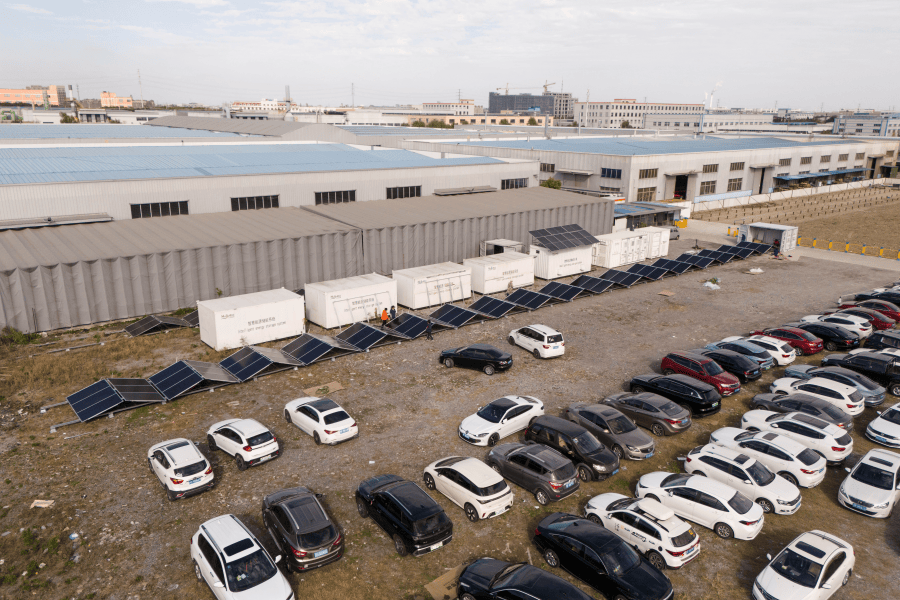
We deployed a 2 MWh container for a microgrid powering a fisheries research station in a remote Nordic location. The challenge wasn't just the cold; it was the huge load spikes from their laboratory equipment and the limited space for service visits.
The smart BMS was configured with a adaptive C-rate control. When the load spiked, it allowed a higher discharge rate but within strict thermal limits. When the system was idle, it ran deep-cycle diagnostics and cell balancing. The local operator gets a simple "green/yellow/red" health status. The wholesale price for that container was higher than the cheapest alternative bid. But in three years of operation, they've had zero unscheduled downtime, and their effective energy storage capacity has degraded less than projected. The project manager told me last year that looking at total cost of ownership, they were already ahead.
What This Means for Your Bottom Line
So, when you evaluate the Wholesale Price of Smart BMS Monitored Solar Container for Remote Island Microgrids, you're really evaluating a financial model. A slightly higher initial investment that eliminates integration risk, drastically reduces the chance of a catastrophic failure, and gives you granular control over your asset's aging process is almost always the cheaper path over a decade.
The technology isn't the bottleneck anymore. The mindset is. Are you procuring a commodity, or are you procuring guaranteed, low-cost, resilient power for your island community or off-grid business? The math becomes very clear when you look at it that way. What's the one operational risk in your current plan that keeps you up at night? Maybe it's time we talked about how to engineer it out from the very beginning.
Tags: UL Standard BESS LCOE Solar Container Smart BMS Remote Microgrid
Author
James Zhang
20+ years agricultural energy storage engineer / Highjoule CTO