
Wholesale Price of Tier 1 Battery Cell 1MWh Solar Storage for Telecom Base Stations
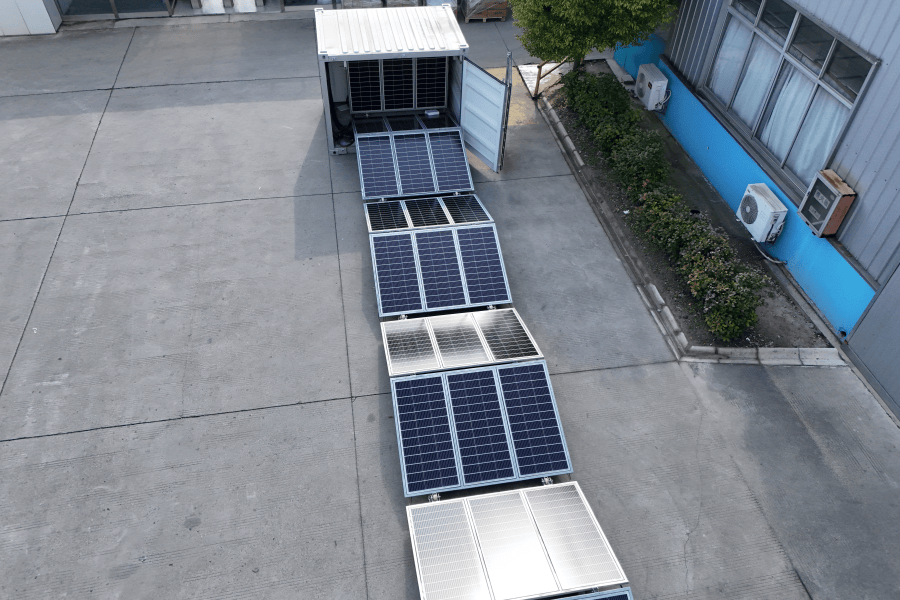
Table of Contents
- The Real Problem Isn't Just the Price Tag
- The Hidden Cost Pitfalls in Telecom BESS
- The Solution Starts with the Right Foundation: Tier 1 Cells
- Looking Beyond the Cell: What Makes a 1MWh System Truly Cost-Effective
- A Case in Point: Reliability Under the Texas Sun
- Your Next Move: Sourcing with Confidence
The Real Problem Isn't Just the Price Tag
Let's be honest. When you're sourcing a 1MWh Solar Storage system for telecom base stations, the first thing you look at is the Wholesale Price of Tier 1 Battery Cell. It's a huge line item, and getting that number right feels like winning half the battle. I've been in enough procurement meetings to see the relief when a low quote comes in. But here's the hard truth I've learned from 20 years on site: focusing solely on that cell price per kWh is the fastest way to bleed money over the 15-year life of your system.
The real problem we face in the US and European markets isn't just acquiring cheap cells; it's acquiring predictable, safe, and bankable performance. A telecom base station isn't a lab. It's on a remote hilltop in Scotland battling constant humidity, or in a California valley facing 45C heatwaves. The "cost" of your storage is the total capital outlay plus the operational headaches, degradation surprises, and safety risks you inherit.
The Hidden Cost Pitfalls in Telecom BESS
Let's agitate that pain point a bit. What happens when the core battery cells aren't up to the task?
- Thermal Runaway Costs are Catastrophic: A poorly managed cell can fail, and in a dense 1MWh pack, that failure can cascade. The cost isn't just replacing a module; it's the potential total loss of the asset, liability, and unimaginable reputational damage. Standards like UL 9540A aren't just paperwork - they're your financial firewall.
- The Degradation Siphon: You budget for, say, 20% capacity loss over 10 years. But with inconsistent, non-Tier 1 cells? I've seen systems hit 30%+ loss in 7 years. Suddenly, your effective Levelized Cost of Energy (LCOE) - the true measure of your storage's cost - skyrockets. You're dispatching diesel gensets more often, defeating the solar storage's purpose.
- Integration Nightmares: A battery is more than cells. It's a system. Cells with uneven performance (variable C-rate, impedance) strain the Battery Management System (BMS), leading to premature shutdowns or, worse, undetected failures. Your O&M crew becomes a permanent fixture on site.
According to a National Renewable Energy Laboratory (NREL) analysis, balance-of-system costs and long-term performance can account for over 40% of the lifetime cost of a BESS. The cell is the heart, but you're buying the health of the entire body.
The Solution Starts with the Right Foundation: Tier 1 Cells
This is where the conversation about Wholesale Price of Tier 1 Battery Cell 1MWh Solar Storage for Telecom Base Stations gets meaningful. Tier 1 isn't a marketing fluff term. It refers to cells manufactured by companies with proven, scalable capacity, long-term financial stability, and most critically, publicly available data proving cycle life and safety under rigorous tests.
When Highjoule Technologies sources cells for our telecom BESS solutions, we're not just buying a commodity. We're investing in a long-term performance guarantee. These cells come with documented traceability, consistent electrochemical properties, and are designed from the ground up to work in harmony within a large-scale system. Honestly, this upfront investment is the single biggest lever to pull for lowering your system's LCOE.

Looking Beyond the Cell: What Makes a 1MWh System Truly Cost-Effective
So you've secured good cells. Now what? The wholesale price is just the entry ticket. Here's what we focus on to lock in total cost-effectiveness:
- Thermal Management Design: This is non-negotiable. Passive cooling often isn't enough for telecom duty cycles. We design active liquid or advanced air-cooling systems that keep every cell in its optimal temperature window. This alone can double the cycle life compared to a poorly thermal-managed pack.
- Grid-Forming Capabilities (for Microgrids): More telecom sites are becoming resilient microgrids. Your BESS needs to "form" a stable grid for the site if the main grid fails, not just follow it. This requires sophisticated inverter and controls integration - a feature that turns a cost center into a reliability asset.
- Compliance as a Feature, Not a Hurdle: From the start, our containerized 1MWh systems are engineered to meet UL 9540, IEC 62443 (cybersecurity), and local fire codes. Getting through permitting quickly is a massive cost saver. I've seen projects delayed 6 months over compliance issues, erasing any savings from cheaper hardware.
A Case in Point: Reliability Under the Texas Sun
Let me give you a real example. We deployed a 1.2MWh system for a major telecom provider in West Texas. Their challenge was brutal: ensure 99.99% uptime for a critical hub site, offset peak demand charges, and provide backup through grid outages and... hail storms.
The initial bids varied widely on cell price. We went with a premium Tier 1 NMC chemistry. The key was the integration: a NEMA 3R-rated enclosure with an IP67-rated battery sub-system, an active cooling loop independent of site HVAC, and a grid-forming inverter. During a recent 8-hour grid failure, the site ran seamlessly on solar+storage. The O&M dashboard showed cell temperature deviation of less than 2C across the entire pack - that's thermal management doing its job. The slightly higher initial wholesale price of the Tier 1 battery cell was absorbed within the first 18 months through demand charge savings and zero unplanned maintenance.
Your Next Move: Sourcing with Confidence
When you're evaluating quotes for your 1MWh system, shift the conversation. Ask your provider:
- "Can you provide the cell manufacturer's published cycle life data at 100% DoD and at my site's average temperature?"
- "How does your thermal design ensure less than 5C delta across all cells in the pack at continuous C-rate?"
- "Show me the UL 9540A test report for the exact system configuration you're proposing."
At Highjoule, we build these answers into our designs from day one. Because our job isn't just to sell you a container full of batteries. It's to deliver a predictable, safe, and ultimately lower-cost energy asset for your critical telecom infrastructure. The right wholesale price is the one that delivers the lowest total cost of ownership, not just the lowest initial invoice.
What's the one performance guarantee you wish more BESS vendors would stand behind?
Tags: UL Standard BESS LCOE Telecom Energy Storage Wholesale Price Tier 1 Battery Cell
Author
James Zhang
20+ years agricultural energy storage engineer / Highjoule CTO