
20ft Solar Container BESS for Mining: Benefits, Drawbacks & Real-World Insights
Beyond the Spec Sheet: The Real Story on Solar Containers for Remote Mining
Honestly, when a mining operator in a place like Mauritania first looks at a 20ft High Cube Solar Container C a pre-integrated battery energy storage system (BESS) C it seems like the perfect fix. Plug-and-play power for a remote site, right? But having spent two decades on sites from the Australian outback to the Chilean highlands, I can tell you the decision is more nuanced. The "benefits" on the brochure are real, but so are the on-the-ground challenges you only discover through experience. Let's talk about what this technology truly means for your operation, beyond the marketing hype.
Quick Navigation
- The Core Problem: Powering Remote Mines Isn't Getting Easier
- The 20ft Container Solution: A Closer Look
- The Real Benefits (It's More Than Just Portability)
- The Honest Drawbacks & How to Mitigate Them
- A Case in Point: Learning from a Nevada Lithium Mine
- Making the Call: Is It Right for Your Site?
The Core Problem: Powering Remote Mines Isn't Getting Easier
Here's the universal pain point I've seen firsthand: remote mining operations are caught between a rock and a hard place. Diesel gensets are a logistical and financial nightmare - fuel costs are volatile, supply chains are fragile, and the carbon footprint is a growing liability. Grid connection? Often non-existent or prohibitively expensive to build. According to the International Energy Agency (IEA), the mining sector accounts for about 11% of global energy use. That's a massive cost center screaming for optimization.
The agitation comes when you try to integrate renewables. Solar is abundant in places like Mauritania, but it's intermittent. Your processing plant can't stop at sunset. This mismatch between solar generation and 24/7 load creates a massive integration headache. You end up with a solar farm that's underutilized and a diesel genset that's still running inefficiently. The real cost isn't just in fuel; it's in operational uncertainty and missed ESG targets.
The 20ft Container Solution: A Closer Look
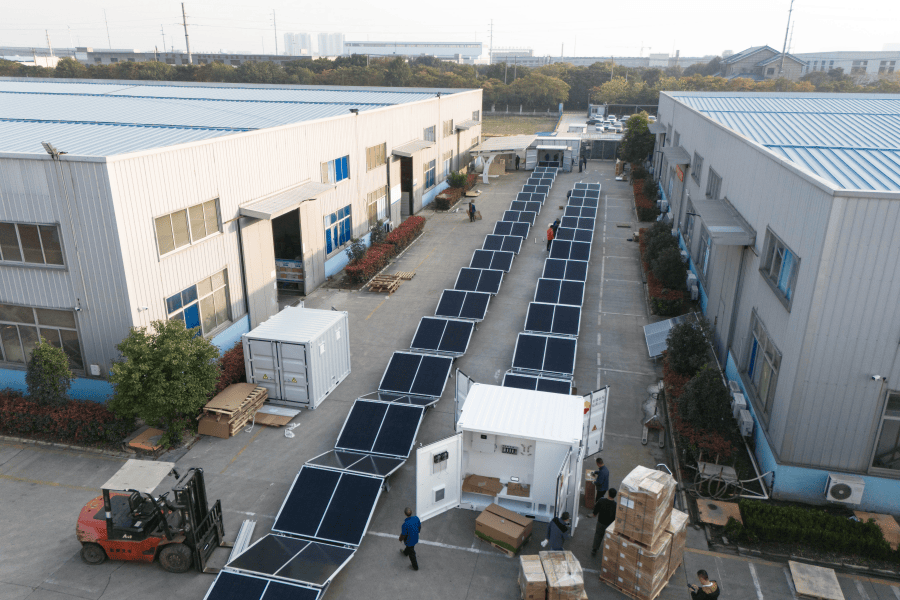
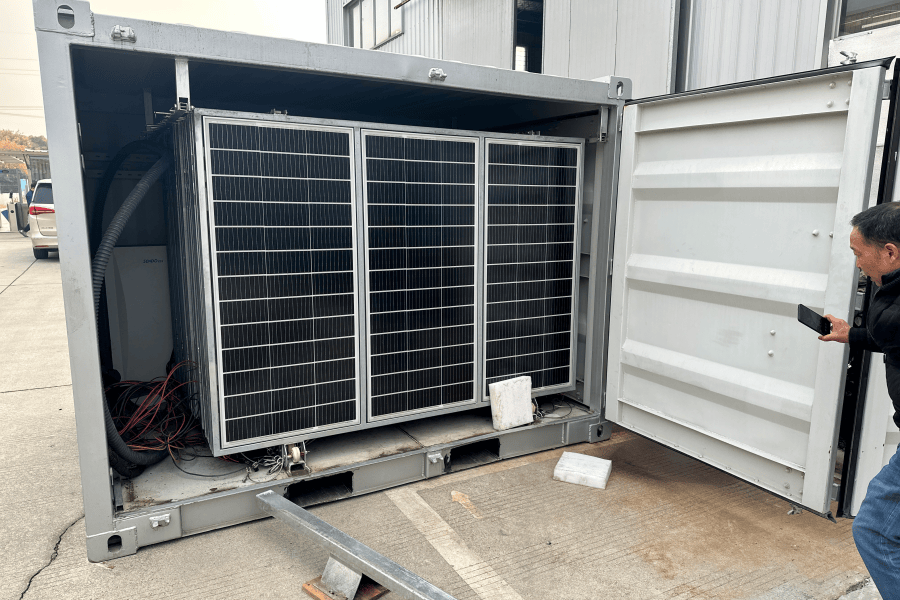
This is where the pre-fabricated, 20ft High Cube BESS container enters the chat. It's not a magic bullet, but it's a profoundly practical tool. Think of it as a power bank for your entire mine. It houses the battery racks, thermal management system, power conversion systems (PCS), and safety controls - all pre-wired, tested, and shipped in a standard ISO container. The solution it offers is grid-forming capability. It can stabilize a microgrid, store excess solar from midday, and dispatch it at night, allowing you to significantly reduce - or even eliminate - diesel runtime.
The Real Benefits (It's More Than Just Portability)
Let's dig into the true advantages, the ones that matter on a Tuesday afternoon when the temperature hits 50C (122F).
- Speed & Simplicity of Deployment: This is the big one. A containerized BESS can be deployed in weeks, not years. It arrives on a truck, is craned into place, and the major electrical interconnections are relatively straightforward. I've seen sites cut 6-8 months off their power infrastructure timeline.
- Inherent Scalability: Need more storage? You don't re-engineer the whole system. You add another container in parallel. This modularity future-proofs your investment.
- Robustness & Environmental Protection: A well-built container is a fortress. It protects the sensitive battery cells from Mauritania's sand, dust, and extreme temperature swings. The integrated thermal management (think advanced HVAC and liquid cooling) is critical here - it's what maintains battery health and safety, directly impacting the system's lifetime and Levelized Cost of Energy (LCOE).
- Regulatory Compliance Built-In: For our European and North American clients, this is non-negotiable. A unit designed to UL 9540 and IEC 62933 standards has undergone rigorous safety testing. It gives peace of mind to insurers and local authorities, smoothing the permitting process. At Highjoule, we don't just meet these standards; we design with the fire marshal's worst-case scenario in mind.

The Honest Drawbacks & How to Mitigate Them
Now, let's have that coffee-chat honesty. Here are the challenges you must plan for:
- Site Preparation is Not Trivial: You need a level, stable foundation. You need proper cable trenches for grid interconnection. The container may be "plug-and-play," but the site work isn't. Budget and time for this civil work.
- Thermal Management is Your #1 Job: In extreme heat, the container's cooling system works overtime. This consumes power (parasitic load), which slightly reduces the net energy available to your mine. The key is specifying a system with a high-efficiency, redundant cooling design. Don't cheap out here.
- Limited On-Site Serviceability: Major repairs often require specialized technicians. If you're 500km from Nouakchott, this means planning. The mitigation? Choose a provider with a strong global service network and remote monitoring. We equip our containers with 24/7 telemetry, so often we know about a performance anomaly before the site crew does, and can guide them or dispatch parts proactively.
- Upfront Capital Cost Perception: Yes, the CAPEX is visible. The trick is to shift the conversation to Total Cost of Ownership (TCO). When you factor in diesel savings, reduced maintenance on gensets, and the avoided cost of grid extension, the LCOE of a solar+storage microgrid often wins convincingly over a 10-year horizon.
A Case in Point: Learning from a Nevada Lithium Mine
Let's make this tangible. We deployed a dual-container system for a lithium mine in Nevada, USA - an environment with similar thermal stress to Mauritania, just with cold winters instead of constant heat.
Challenge: The mine needed to expand processing capacity, but the local utility substation was at its limit. A traditional grid upgrade was a 2-year, multi-million dollar project.
Solution: We installed two 20ft High Cube BESS containers coupled with a new solar array. The system performs "peak shaving" - it discharges during the mine's highest power demand periods, reducing the load on the grid connection. It also stores excess solar.
The Insight: The real win wasn't just in deferred grid costs. It was in grid services revenue. The mine's BESS participates in the utility's demand response program, getting paid for being a grid resource. This created a new revenue stream that improved the project's ROI. This kind of dual-purpose use case is something we always explore with clients now.
Expert Insight: C-Rate and Battery Longevity
You'll hear the term "C-rate." Simply put, it's how fast you charge or discharge the battery. A 1C rate means discharging the full capacity in one hour. For mining, you might need high power (a high C-rate) for heavy machinery startups. But here's the field truth: consistently operating at a very high C-rate increases stress and shortens battery life. The art is in right-sizing the battery capacity (kWh) to the power need (kW), so you're using a moderate, sustainable C-rate. It's about balancing the daily duty cycle for maximum system life.
Making the Call: Is It Right for Your Site?
So, for a mining operation in Mauritania, the 20ft High Cube Solar Container is a compelling solution, but it's not a no-brainer. Its benefits in speed, scalability, and protection are massive. The drawbacks around site prep and thermal management are manageable with careful planning and the right technology partner.
The final question isn't just about the container. It's about the company behind it. Do they have the field experience to model your specific load profiles and weather data? Do their designs prioritize safety and longevity over just hitting a low price? Can they support you locally, or are they just a factory on the other side of the world?
What's the one operational constraint in your power system that keeps you up at night?
Tags: Energy Storage Container UL Standard BESS LCOE Off-grid Power Renewable Energy Mauritania Mining
Author
James Zhang
20+ years agricultural energy storage engineer / Highjoule CTO