
The Ultimate Guide to Smart BMS Monitored Lithium Battery Storage Container for Agricultural Irrigation
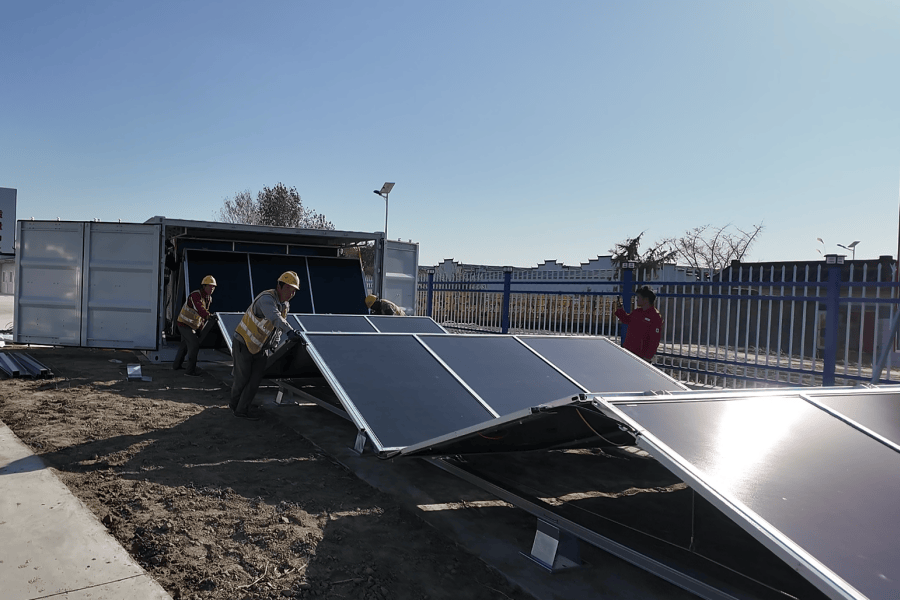
Table of Contents
- The Quiet Crisis in the Field: Powering Irrigation in the 21st Century
- Why Diesel Generators and Grid Reliance Are Failing Modern Farms
- The Smart Container Solution: More Than Just a Battery Box
- The BMS: The Unsung Hero Inside the Box
- A Case in Point: From Theory to Muddy Boots Reality
- Making the Decision: What to Look For Beyond the Brochure
The Quiet Crisis in the Field: Powering Irrigation in the 21st Century
Honestly, after two decades on sites from California's Central Valley to the wheat fields of Nebraska, I've seen a pattern. The most critical piece of farm equipment isn't always the newest tractor or the most efficient pivot. It's the reliable, affordable, and clean power to run them. You're managing thousands of acres, weather volatility, and tight margins. The last thing you need is a power-related headache during a critical irrigation window. The traditional model - relying on a distant, sometimes fragile grid or the constant chug and cost of diesel gensets - is showing its age. It's a quiet crisis that hits the bottom line directly.
Why Diesel Generators and Grid Reliance Are Failing Modern Farms
Let's agitate that pain point a bit, based on what I've seen firsthand. Diesel? It's a known beast, but it's becoming a liability. Fuel costs are a rollercoaster. The noise and emissions are increasingly at odds with sustainability goals, and let's not forget the logistics and theft risk of storing fuel on remote plots. The grid? When it's there, it's great. But in many agricultural regions, it's either non-existent at the point of need, or it's so strained during peak summer months that reliability suffers. A single fault on a miles-away line can halt your entire irrigation schedule.
The data backs this up. The National Renewable Energy Laboratory (NREL) has highlighted the increasing strain on rural grids from agricultural electrification. Furthermore, the International Energy Agency (IEA) notes the global push for decarbonizing agriculture, where diesel dependency is a major hurdle. The real cost isn't just the fuel bill or the electricity tariff; it's the risk of crop loss and operational downtime. That's the aggravation.

The Smart Container Solution: More Than Just a Battery Box
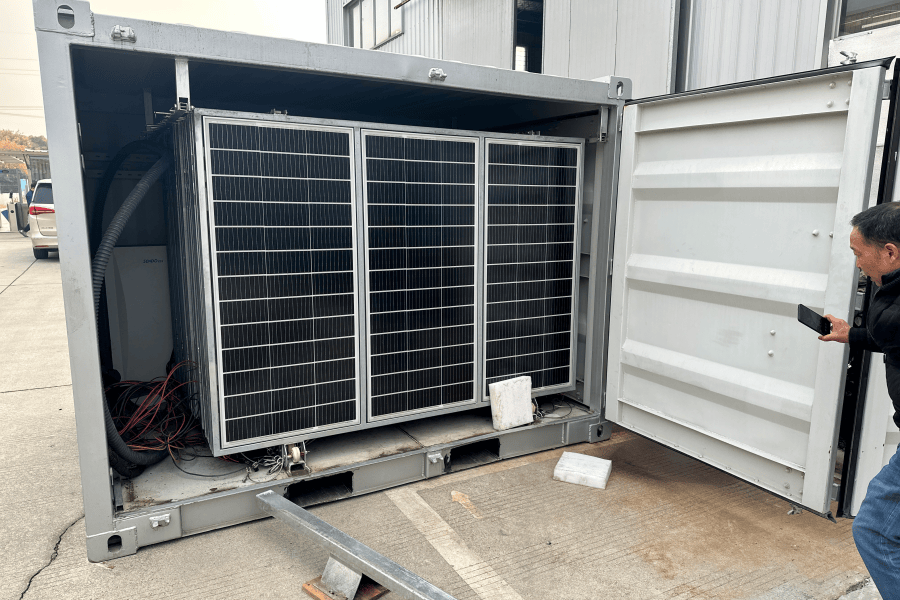
This is where the modern, smart BMS-monitored lithium battery storage container enters the scene. It's not a magic bullet, but it's the closest thing we have to a fundamental shift. Think of it not as a "battery" but as a self-contained, intelligent power station for your field. The solution integrates solar (or wind), a large-capacity lithium-ion battery bank, power conversion systems, and - most crucially - a sophisticated Battery Management System (BMS), all pre-assembled in a rugged, secure shipping container. It's delivered to your site, connected, and it just works.
The value is in the Levelized Cost of Energy (LCOE) - a fancy term for your total cost of power over the system's life. While the upfront investment is real, the operational costs are stunningly low. You're locking in your "fuel" cost (sunlight) for decades, eliminating diesel deliveries, and massively reducing maintenance compared to generators. For grid-tied farms, it flattens your demand charges and provides backup during outages. The economics are now firmly tipping in its favor.
The BMS: The Unsung Hero Inside the Box
Here's the insider bit most brochures gloss over. Anyone can put lithium cells in a box. The real differentiator, the thing that determines safety, longevity, and peace of mind, is the Smart BMS. This is the brain of the entire operation.
On a technical level, a top-tier BMS does three things relentlessly:
- Cell-Level Monitoring & Balancing: It doesn't just see the whole battery; it monitors the voltage and temperature of every single cell. This prevents any one weak cell from degrading the whole pack's performance or safety - a critical factor for long life in harsh field conditions.
- Advanced Thermal Management: Lithium batteries don't like extremes. A smart BMS actively manages a liquid or air cooling/heating system to keep the entire bank in its Goldilocks zone (typically 15-25C). I've seen systems in Texas and Spain where this feature alone prevented thermal runaway scenarios during heatwaves.
- State of Health (SOH) & C-Rate Management: The BMS gives you a real-time "health report" (SOH) of your asset. It also intelligently manages the C-rate - that's the speed at which you charge or discharge the battery. Pulling too much power too fast (a high C-rate) stresses the cells. A smart system optimizes this for both performance and battery life.
This is where standards like UL 9540 (energy storage system safety) and UL 1973 (battery standards) become non-negotiable. They're not just stickers; they're proof that the system's design, including its BMS, has been torture-tested for safety. At Highjoule, for instance, our containerized systems are built around this BMS-first philosophy. We design the thermal management and safety protocols from the cell up, not as an afterthought, because we know what a thermal event can mean in a remote location. Our focus is on delivering a low LCOE through durability, not just a low upfront price.
A Case in Point: From Theory to Muddy Boots Reality
Let me give you a real-world example from a project we were involved with in Central California. A 500-acre almond orchard relied on deep-well pumps and a long, unreliable grid feeder line. Power quality issues were constant, and peak demand charges were crippling. The challenge was to ensure 24/7 pump operation during the critical irrigation and frost protection seasons without relying on diesel.
The solution was a 1 MWh lithium iron phosphate (LFP) battery storage container, paired with a 500kW solar canopy over a parking area. The smart BMS was key. It allowed the system to perform multiple jobs: storing solar energy, discharging to shave peak grid demand, and providing seamless backup during grid dips. The remote monitoring capability meant the farm manager could see the state of charge and system health from his phone. The outcome? They eliminated demand charge spikes, achieved over 90% grid independence during the summer, and secured their water supply. The containerized format meant deployment was done in weeks, not months, with minimal on-site construction.
Making the Decision: What to Look For Beyond the Brochure
So, if you're evaluating a smart battery storage container for irrigation, look past the basic kWh capacity. Ask your provider these questions:
- "Can you show me the BMS interface and explain the cell-level monitoring?"
- "How does the thermal management system work, and how is it tested?"
- "What are the key UL/IEC certifications for the entire container system?"
- "What does the remote monitoring platform look like, and who has access?"
- "What's the projected LCOE over 10 years, including degradation?"
The right partner will have clear, experience-based answers. They'll talk about service and support logistics - because if something does need attention, you need someone who can respond, not just an 800 number.
The future of resilient, cost-effective farm power is decentralized and intelligent. It's about taking control. What's the one irrigation pump or cooling fan whose failure would keep you up at night? Maybe it's time to have a different conversation about how to power it.
Tags: Energy Storage Container UL Standard BESS Agricultural Irrigation Smart BMS Lithium Battery Remote Power
Author
James Zhang
20+ years agricultural energy storage engineer / Highjoule CTO