
Environmental Impact of 215kWh Cabinet PV Storage for EV Charging
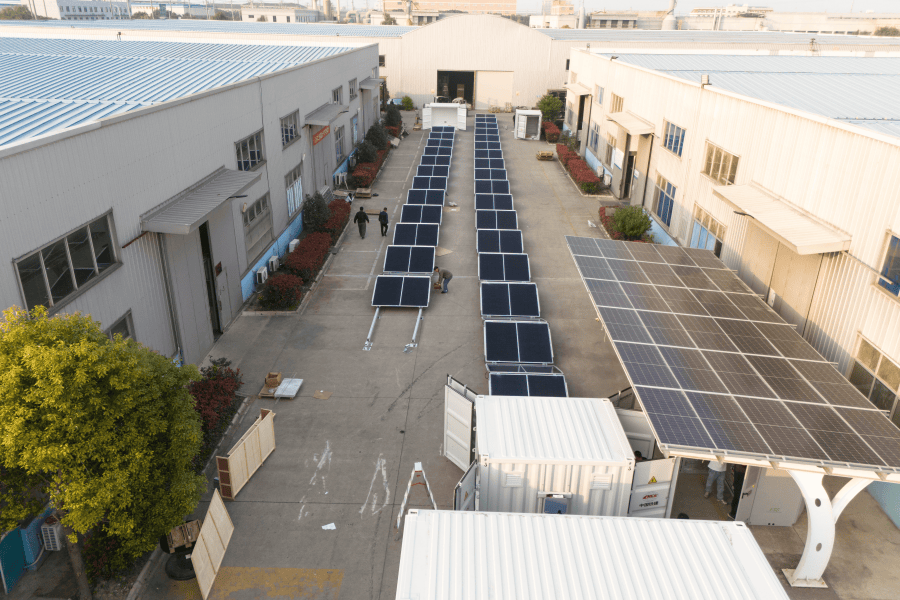
The Real Environmental Math: How a 215kWh Cabinet Storage System Transforms EV Charging
Honestly, when I'm on site with clients looking to pair solar with their new EV charging hubs, the conversation quickly moves beyond just "going green." It's about hard numbers, real footprint reduction, and frankly, avoiding some costly pitfalls I've seen in early deployments. The promise is clear: use solar to power your EVs. But the reality on the ground, especially in commercial and fleet settings, is a bit more complex. That's where the environmental impact of a precisely sized, integrated system like a 215kWh cabinet photovoltaic storage system becomes the game-changer. Let's talk about why.
Quick Navigation
- The Hidden Environmental Cost of "Green" EV Charging
- The Numbers Don't Lie: Grid Strain and Missed Solar
- The 215kWh Cabinet: More Than Just a Battery Box
- Seen on Site: A California Logistics Park Case Study
- Under the Hood: Thermal Management, C-rate, and Real LCOE
- Your Project, Our Blueprint
The Hidden Environmental Cost of "Green" EV Charging
Here's the first-hand truth. Many businesses install a solar canopy and a row of DC fast chargers, expecting a perfect, carbon-free loop. The sun powers the cars, right? Well, fleet vehicles often charge during early morning or late afternoon peaks - times when solar generation might be low or nonexistent. Without storage, you're pulling massive, instantaneous load from the grid. In many regions, especially during peak hours, that grid power comes from fossil-fuel peaker plants. So, ironically, your "green" EV station could be indirectly responsible for higher carbon emissions at the very times the grid is most stressed. You're also missing out on maximizing the environmental benefit of your own solar investment.
The Numbers Don't Lie: Grid Strain and Missed Solar
Let's look at some data. The National Renewable Energy Laboratory (NREL) has highlighted that uncontrolled high-power EV charging can significantly increase peak demand on local distribution networks, potentially necessitating costly grid upgrades. Furthermore, the International Energy Agency (IEA) notes that the full decarbonization of transport hinges on aligning EV charging with renewable generation. A system without storage often leads to solar curtailment - where you produce more solar energy at noon than you can use, and it simply goes to waste. That's clean, free energy you paid for, literally vanishing.
The 215kWh Cabinet: More Than Just a Battery Box
This is where a containerized, right-sized storage solution changes the equation. A 215kWh cabinet system isn't a random number. It's engineered to act as a critical buffer and energy manager for typical commercial EV charging arrays. Its core environmental job is threefold:
- Time-Shift Solar Energy: Soak up excess midday solar production and release it during the evening or morning charging rushes, ensuring EVs are truly powered by the sun.
- Peak Shaving: Prevent massive, sudden draws from the grid, protecting local infrastructure and avoiding the use of the dirtiest grid power.
- Maximizing Self-Consumption: Push your on-site renewable usage toward 90% or higher, which is where you see dramatic reductions in your operational carbon footprint.
At Highjoule, when we design these systems, compliance with UL 9540 for energy storage systems and UL 1973 for battery safety is non-negotiable. It's not just about meeting a standard; it's about ensuring the system that reduces your environmental impact is itself safe, reliable, and has a long, productive lifecycle - which is sustainability in its truest sense.
Seen on Site: A California Logistics Park Case Study
Let me tell you about a project we completed last year for a logistics company in the Inland Empire, California. They had a 500kW rooftop solar array and were installing 10 dual-port fast chargers for their electric delivery vans. The challenge? The vans all returned between 3-5 PM, right as solar output was dropping, creating a huge synchronized demand spike.
We deployed two of our 215kWh cabinet systems (totaling 430kWh) integrated with their solar and charge management software. The system was programmed to prioritize charging the cabinets during the solar peak from 10 AM to 2 PM. Then, during the evening peak, the cabinets seamlessly supplied power to the chargers, cutting the site's grid draw during those critical hours by over 80%.

The result? They're now avoiding an estimated 85 tons of CO2 annually that would have been emitted from grid peaker plants. They also avoided a $250,000 demand charge-based grid upgrade fee from the utility. That's a tangible environmental and economic impact.
Under the Hood: Thermal Management, C-rate, and Real LCOE
Okay, let's get a bit technical, but I'll keep it in plain English. The environmental durability of a battery system hinges on two things: how you use it and how you keep it cool.
C-rate is basically the "speed" of charging and discharging. For EV charging support, you need a system that can handle high C-rates (delivering lots of power quickly) without degrading quickly. Our cabinet systems are engineered with cells and a DC bus design that supports the necessary C-rate for fast charging while maintaining a long cycle life - meaning the hardware lasts longer, reducing waste and the need for premature replacement.
Thermal management is everything. I've seen systems with poor cooling lose 20-30% of their capacity in a few years in hot climates. Our cabinets use an active liquid cooling system that maintains an optimal, uniform temperature. This not only ensures safety but also guarantees the 215kWh capacity is there day after day, year after year, maximizing your return and minimizing lifecycle environmental impact.
This all rolls up into the Levelized Cost of Energy (LCOE) for your EV charging. A cheaper, poorly managed battery might have a lower upfront cost but a much higher LCOE because it degrades fast. A robust, well-managed 215kWh system lowers the LCOE by lasting longer and performing reliably. The most sustainable product is the one you don't have to replace prematurely.
Your Project, Our Blueprint
Thinking about your own EV charging project? The key is to start with an integrated design - solar, storage, and chargers speaking the same language. Don't treat the storage cabinet as an afterthought. Based on our two decades of deployment from Germany to Texas, the right storage size is critical. A 215kWh cabinet often hits the sweet spot for 4-8 fast chargers, but it always starts with your specific load profiles and solar generation.
What's the biggest grid constraint you're facing at your planned site? And how much of your midday solar are you currently prepared to use versus send back to the grid? Those are the questions that will define your real environmental and economic payoff.
Tags: UL Standard BESS LCOE Photovoltaic Storage Renewable Energy EV Charging Carbon Footprint
Author
James Zhang
20+ years agricultural energy storage engineer / Highjoule CTO