
Why Manufacturing Standards for All-in-one Integrated Energy Storage Container for Eco-resorts Matter for Your Project's Success
Contents
- The Hidden Cost of "Good Enough"
- Beyond the Brochure: What Standards Really Guard Against
- The Eco-Resort Case: More Than Just Green Marketing
- Decoding the Standards for Non-Engineers
- A Real-World Lens: Seeing Standards in Action
The Hidden Cost of "Good Enough"
Let's be honest. When you're planning an energy storage project for an eco-resort - whether it's in the California hills or on a Greek island - the initial price tag of the battery container unit often gets the most attention. I've sat in those meetings. The pressure to cut upfront costs is real. But here's what I've seen firsthand on site, time and again: the true cost isn't in the purchase order; it's hidden in the manufacturing standards, or the lack of them.
You're not just buying a box of batteries. You're buying the resilience of your power supply, the safety of your guests and staff, and the long-term financial viability of your entire energy investment. A study by the National Renewable Energy Laboratory (NREL) highlights that system failures and underperformance in early BESS deployments were frequently traced back to integration and quality control issues at the manufacturing stage - issues that proper standards are designed to prevent.
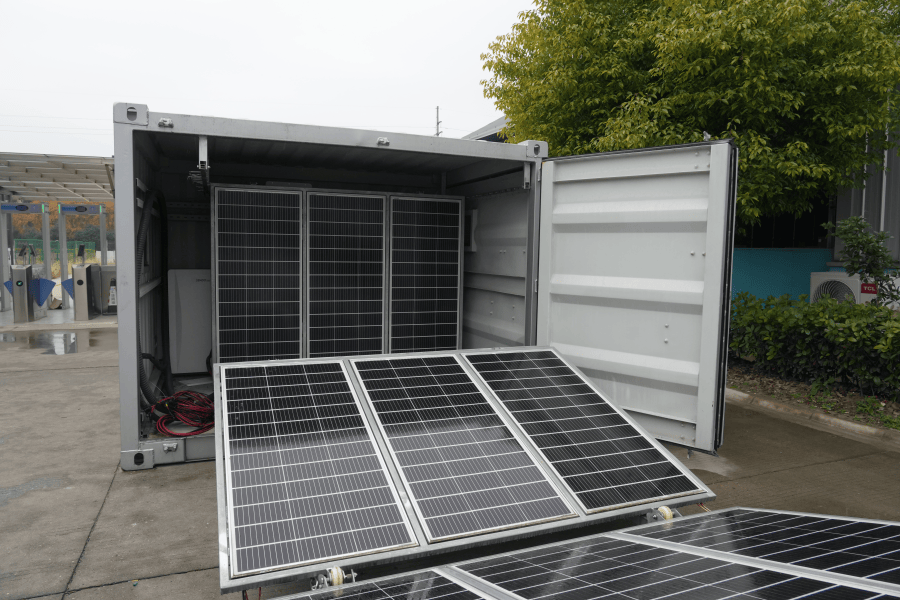
So, when we talk about Manufacturing Standards for All-in-one Integrated Energy Storage Container for Eco-resorts, we're not discussing bureaucratic paperwork. We're talking about the blueprint for a system that works, sleeps quietly in the background for decades, and doesn't become a liability.
Beyond the Brochure: What Standards Really Guard Against
Anyone can bolt batteries into a shipping container. The magic - and the necessity - lies in how it's done. Without rigorous standards, you're exposed to risks that brochures don't advertise.
- Thermal Runaway in Paradise: An eco-resort is a sensitive environment. A poorly managed thermal event isn't just an equipment failure; it's an environmental and reputational disaster. Proper standards mandate multi-layer protection - from cell-level fusing to advanced gas detection and suppression systems - all integrated at the factory.
- The Integration Headache: I've flown to sites where the container arrived, but the HVAC, fire system, and power conversion systems were from different suppliers, speaking different languages. The commissioning dragged on for weeks. An all-in-one container built to a unified standard arrives as a single, tested organism. It plugs in. It works.
- The Lifetime Cost Surprise: Let's get technical for a second in a simple way: LCOE (Levelized Cost of Energy). This is your total cost of ownership divided by the energy produced. A cheaper, non-standardized unit might have a higher failure rate, need more cooling (using its own power!), and degrade faster. That skyrockets your LCOE. A standardized unit is optimized for this from day one in the factory.
The Eco-Resort Case: More Than Just Green Marketing
Why are standards especially critical for eco-resorts? Your value proposition is authenticity and sustainability. A power outage isn't just an inconvenience; it breaks the guest experience. Your system often operates in harsh, remote conditions - salt air, desert heat, mountain cold. Off-grid or weak-grid sites have no backup.
At Highjoule, when we developed our "EcoGrid" all-in-one container line, we didn't just look at UL 9540 and IEC 62933. We thought about the bear that might sniff around the vents in Colorado, or the 95% humidity in Costa Rica. The standard becomes the foundation, but the real-world application - that's where two decades of field experience gets baked in. It's about designing a product that meets the letter of the standard and the spirit of your location.
Decoding the Standards for Non-Engineers
Don't get lost in the acronyms. Here's what you, as a decision-maker, need to know they deliver:
| Standard / Aspect | What It Means for Your Resort |
|---|---|
| UL 9540 / IEC 62933 | The system's safety certification. It means the entire container - batteries, HVAC, wiring - has been tested as a single unit for fire and electrical safety. It's your insurance policy. |
| IEEE 1547 | The "rulebook" for connecting to the grid (or microgrid). Ensures your system plays nice with diesel generators, solar inverters, and the local utility if applicable, preventing instability. |
| Thermal Management | Not just air conditioning. It's a precise climate control system that keeps every battery cell in its happy zone, maximizing lifespan (think 15+ years, not 10). This is a huge part of LCOE. |
| C-rate (Charge/Discharge Rate) | Simply put, how fast the system can drink up solar power or power your resort. A well-designed system matches the C-rate to your solar profile and load demands, so you don't overpay for speed you don't need. |
A Real-World Lens: Seeing Standards in Action
Let me tell you about a project we completed last year in Northern Norway. A stunning fjord-side resort wanted to go 90% renewable, using hydro and solar, but needed rock-solid storage for the dark winter months. The challenge? Extreme cold, remote access (helicopter-only for initial delivery), and zero tolerance for downtime.
The client's initial shortlist had cheaper options. But we walked them through the manufacturing process: how our containers are built in a climate-controlled facility to UL/IEC standards, with seismic bracing, IP55 ingress protection, and a thermal system designed for -40C. We showed them the factory test reports - every unit is fully cycled before it ships. That meant no surprises on the mountainside.
The result? The container was flown in, placed on the prepared pad, and connected. Commissioning took three days, not three weeks. It's been running autonomously since, managing the resort's delicate energy mix seamlessly. The peace of mind for the owners? Priceless. That's the value of starting with the right standards.
So, my advice after all these years? When evaluating your all-in-one integrated energy storage container, dig deeper than the spec sheet. Ask for the certification files. Understand the manufacturing philosophy. Your due diligence on the front end is the single biggest factor in avoiding those hidden costs later.
What's the one site condition at your property that keeps you up at night regarding energy resilience? Is it fire risk, extreme weather, or perhaps grid instability? Let's think about how the right foundation can address that.
Tags: UL Standard Renewable Energy Integration BESS Energy Storage Manufacturing IEEE 1547 IEC Standard Eco-resort Microgrid
Author
James Zhang
20+ years agricultural energy storage engineer / Highjoule CTO