
Beyond Greenwashing: The Real Environmental Impact of 1MWh All-in-One Solar Storage for Eco-Resorts
The Unspoken Truth About "Green" Energy: A Deep Dive into the Environmental Impact of 1MWh All-in-One Solar Storage for Eco-Resorts
Honestly, over a coffee, this is what I'd tell you: the conversation around energy storage for eco-resorts has been a bit one-sided. We talk about the solar panels, the off-grid independence, the marketing appeal. But what about the big, boxy unit sitting quietly on the side? The 1-megawatt-hour (MWh) all-in-one integrated storage system. It's the heart of the operation, but we rarely ask about its own environmental heartbeat - from the minerals in its cells to its final retirement. Having spent two decades on sites from the California desert to Alpine retreats, I've seen the good, the bad, and the ugly of "green" deployments. Let's talk frankly about the full picture.
Quick Navigation
- The Hidden Cost of "Zero-Emission" Power
- Beyond Carbon: A Holistic Impact Framework
- The All-in-One Design Advantage
- A Real-World Test: The Bavarian Alpine Lodge Project
- Making an Informed Choice for Your Resort
The Hidden Cost of "Zero-Emission" Power
Here's the uncomfortable reality every eco-resort developer needs to grapple with: there is no such thing as a zero-impact energy system. The moment we manufacture something, we incur an environmental debt. For a large-scale battery storage system, this "embodied carbon" is significant. According to a comprehensive study by the National Renewable Energy Laboratory (NREL), the global warming potential of manufacturing a lithium-ion battery system can range from 50 to 200 kg CO2-eq per kWh of capacity. For a 1MWh system, that's a potential upfront carbon footprint of 50 to 200 metric tons before it even generates its first clean electron.
I've been on sites where the focus was solely on the operational savings (which are real and important!), but the procurement team had no visibility into the supply chain ethics or the manufacturing energy mix of the BESS they were buying. If that battery was made in a region heavily reliant on coal power, you're essentially front-loading decades of carbon emissions. For a brand built on sustainability, that's a tangible reputational risk.
Beyond Carbon: A Holistic Impact Framework
So, we must look beyond just carbon. The true Environmental Impact of All-in-one Integrated 1MWh Solar Storage for Eco-resorts is a multi-variable equation. Let's break it down:
- Resource Intensity: Lithium, cobalt, nickel, graphite. Mining these materials has profound land-use, water, and social impacts. A responsible choice considers the supplier's due diligence on these issues.
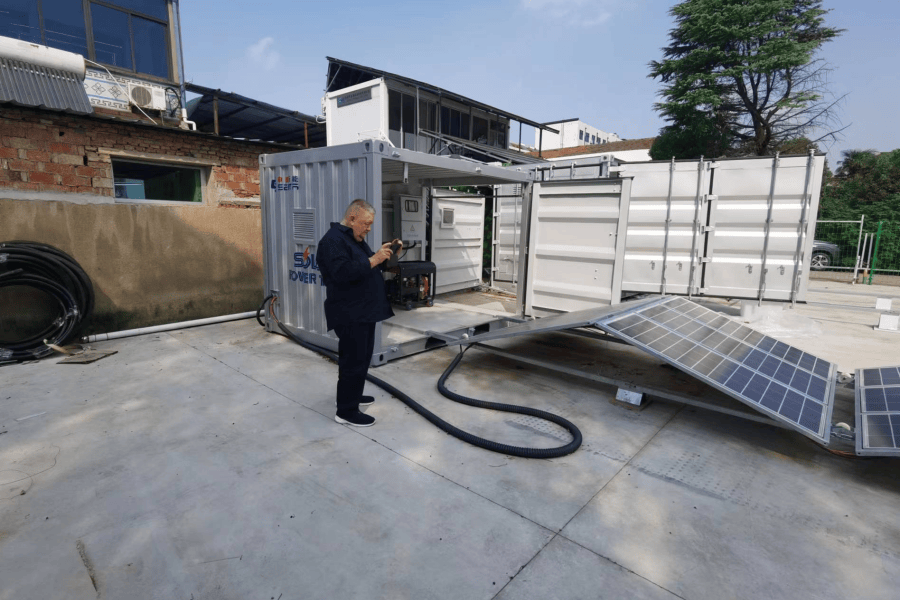
- Transportation & Logistics: Moving a 20-40 foot container-sized system from factory to a remote mountain or island resort involves ships, trucks, and sometimes even helicopters. An integrated, pre-assembled unit minimizes this footprint compared to a site-built solution requiring dozens of individual shipments.
- Land Use & Ecosystem: Every square meter matters in pristine locations. A compact, containerized system with a small footprint preserves more of the natural environment your guests pay to experience.
- Efficiency & Thermal Management: This is a big one from my on-site experience. An inefficient system wastes solar energy as heat, requiring more panels and more land. Advanced liquid cooling or precision air management isn't just about safety and longevity - it directly boosts round-trip efficiency, meaning you need less resource input for the same output. A few percentage points here massively compound over a 20-year lifespan.
- End-of-Life & Recyclability: What happens in 15-20 years? Without a clear, certified recycling pathway, you're creating a future waste liability. The industry is moving fast here, with new standards emerging.
The All-in-One Design: Why Integration is an Environmental Strategy
This is where the "all-in-one integrated" design shifts from a convenience feature to a core sustainability feature. Let me explain from an engineer's perspective.
A traditional, disaggregated system - separate inverters, transformers, HVAC, and battery racks - requires more copper, more steel, more everything. It's assembled on-site over weeks, with workers commuting daily, generators running for tools, and a higher chance of errors and waste. An integrated system like the platforms we engineer at Highjoule is factory-built. In a controlled environment, we can optimize material use, rigorously test for efficiency (nailing that LCOE, or Levelized Cost of Energy, from day one), and ensure every weld and wire is perfect. This precision manufacturing cuts down on embodied carbon and physical waste dramatically.
Furthermore, an integrated unit is designed as a single ecosystem. The thermal management system is calibrated for the specific cells and power electronics. The power conversion is optimized for minimal loss. This holistic engineering, certified to UL 9540 and IEC 62485 safety standards, ensures the system operates at its peak efficiency for its entire life, maximizing the environmental return on the resources invested in it.

A Real-World Test: The Bavarian Alpine Lodge Project
Let me give you a concrete example. We worked with a high-end lodge in the German Alps that was completely diesel-dependent for winter power. Their goal was 95% renewable reliability, but they had extreme space constraints and a strict "no visual or noise pollution" mandate.
The challenge wasn't just technical; it was environmental logistics. We deployed a single 1MWh all-in-one unit with a low-profile design. Because it arrived pre-commissioned, we used a single specialized truck and a small crane over two days, not two months. We avoided cutting new roads. The system's high C-rate capability (meaning it can charge/discharge quickly) perfectly captures short winter sun peaks, and its superior thermal management allows it to sit unobtrusively without noisy, inefficient fans that would disturb the wildlife (and the guests).
The resort now saves over 150,000 liters of diesel annually. But just as crucially, their lifecycle analysis showed that the reduced transportation, installation disruption, and superior long-term efficiency of the integrated system would offset its embodied carbon in under 4 years - a figure that a patchwork system couldn't touch.
Making an Informed Choice for Your Resort
So, what should you, as a decision-maker, ask your storage provider? Move beyond price-per-kWh. Dig into their environmental governance.
- "Can you provide a detailed Life Cycle Assessment (LCA) report for this specific system?"
- "What is your cell sourcing policy, and do you adhere to recognized due-diligence standards?"
- "What is the projected round-trip efficiency at my site's average ambient temperature?" (This tells you about real-world waste).
- "What is your take-back and recycling partnership at end-of-life?"
At Highjoule, we've made these questions easy to answer because we've built them into our product DNA. Our local deployment teams in both Europe and North America aren't just installers; they're trained to ensure the system delivers on its promised environmental and performance metrics for the long haul.
The bottom line? The most sustainable battery is the one you never have to replace prematurely, the one that squeezes every possible watt-hour from your solar investment, and the one that comes with a responsible plan for its entire life cycle. That's the real impact to invest in.
What's the single biggest environmental concern keeping you up at night as you plan your resort's energy transition?
Tags: UL Standard BESS Solar Plus Storage Renewable Energy Eco-Resorts Life Cycle Assessment Sustainable Development
Author
James Zhang
20+ years agricultural energy storage engineer / Highjoule CTO