
20ft High Cube BESS for Coastal Sites: A Guide to Salt-Spray Resilience
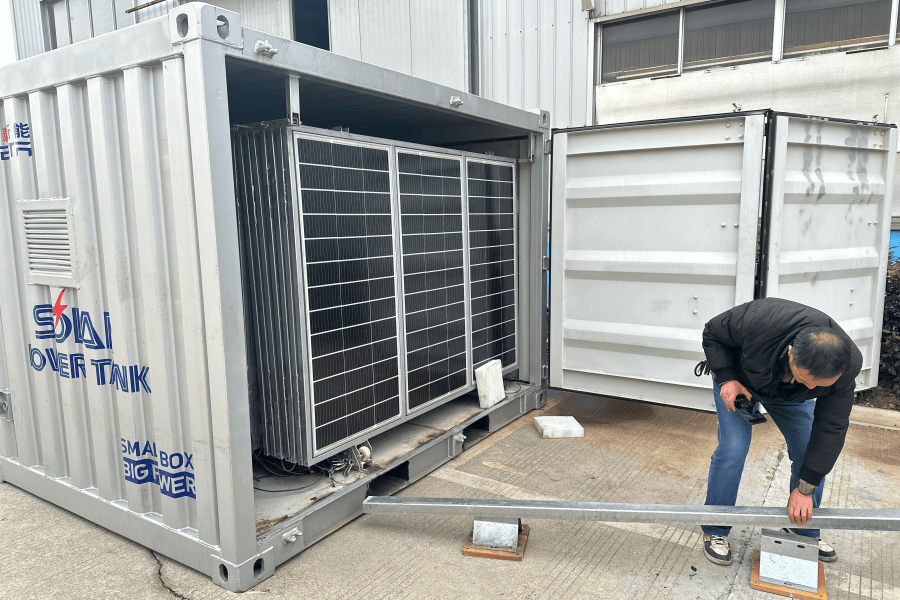
Table of Contents
- The Hidden Cost of Coastal Salt Air
- Why Standard Containers Fail by the Sea
- The 20ft High Cube Solution: Built for the Coast
- A Case Study in Resilience: Florida's Microgrid
- Key Technical Considerations (Made Simple)
- Beyond the Box: What to Look For in a Partner
The Hidden Cost of Coastal Salt Air
Let's be honest, if you're looking at deploying a Battery Energy Storage System (BESS) near the coast - for a seaside resort, a port facility, or an offshore wind support site - you already know the value proposition. The wind and solar resources are often fantastic. But I've been on enough site visits from the Gulf Coast to the North Sea to tell you this: the biggest threat to your project's ROI isn't the technology inside the box. It's the air outside of it.
Salt-spray corrosion is a silent budget killer. It doesn't cause a dramatic failure on day one. It's a slow, insidious process that accelerates wear on electrical connections, compromises structural integrity, and can lead to catastrophic thermal events if it reaches critical components. The International Energy Agency (IEA) has highlighted corrosion as a major operational risk for infrastructure in coastal regions, significantly driving up operational and maintenance costs over the system's life.
Why Standard Containers Fail by the Sea
Here's the agitating part. Many first-generation or "standard" containerized BESS solutions were designed with a generic "outdoor" rating. They might handle rain and sun just fine, but coastal salt-spray is a different beast altogether. The tiny, chloride-rich particles are highly conductive and corrosive. They creep into every seam, settle on busbars, and attack protective coatings.
I've seen this firsthand on a project in Southern California. A standard container unit deployed just a few miles inland was performing perfectly. Its sister unit, near a coastal bluff, showed significant corrosion on its HVAC condenser fins and external electrical cabinets within 18 months. The downtime and specialized cleaning/repair costs wiped out the energy arbitrage profits for that quarter. The lesson? A generic container is a financial liability in these environments.
The 20ft High Cube Solution: Built for the Coast
This is where a purpose-engineered 20ft High Cube Photovoltaic Storage System changes the game. It's not just a box with batteries; it's a fully integrated fortress designed specifically for harsh environments. The "High Cube" aspect is crucial - it provides the extra vertical space not just for more battery racks, but for superior thermal management system layout, which is a key defense against humidity.
At Highjoule, when we build a system for a coastal site, we start with the shell. We use marine-grade aluminum alloys and steels with hot-dip galvanization, following the strictest IEC 60068-2-52 and ASTM B117 salt fog test standards. All gaskets are rated for continuous salt exposure. Honestly, the sealing process is something we obsess over - it's the first and most critical line of defense.

A Case Study in Resilience: Florida's Microgrid
Let me give you a real example. We partnered with a developer on a critical microgrid project for a water treatment plant in Florida, right in the path of hurricane season and constant salt air. The challenge was twofold: provide backup power for essential services and withstand the corrosive environment.
We deployed a 20ft High Cube system with a C5-M corrosion protection rating (as per ISO 12944). Key adaptations included:
- Corrosion-Resistant HVAC: An oversized, positively pressurized air-handling unit with coated coils and filters designed to capture salt particulates before they enter the battery space.
- Sealed Conduit Entry: All penetrations used double-gland seals filled with inert gel to block moisture and salt ingress.
- Internal Climate Control: Maintaining a steady, low-dew-point environment inside to prevent condensation on any surface, a common issue when salty, humid air meets cooler metal.
Two years on, with several major storms weathered, the system's performance has been flawless, and our remote monitoring shows zero corrosion-related alarms. The client's peace of mind? Priceless.
Key Technical Considerations (Made Simple)
When evaluating a coastal BESS, don't get lost in jargon. Focus on these three things, and ask your provider to explain them in plain English:
| Term | What It Means | Why It Matters for the Coast |
|---|---|---|
| C-Rate | How fast you can charge or discharge the battery relative to its total capacity. | In coastal microgrids, you might need high power (a high C-rate) quickly for grid support during storms. A robust thermal system (see below) is needed to handle that without overheating in a hot, salty environment. |
| Thermal Management | The system that keeps batteries at their ideal temperature. | This is the heart of longevity. Salt-clogged cooling fins are a recipe for failure. Look for liquid cooling or sealed, indirect air-cooling systems that isolate the internal air from the corrosive external air. |
| LCOE (Levelized Cost of Energy) | The total lifetime cost of the system divided by the energy it produces. | A cheaper, non-hardened container will have a much higher real LCOE due to frequent maintenance, early component replacement, and downtime. The higher upfront cost of a marine-grade system pays for itself by minimizing these costs. |
All of this must be backed by the right certifications. In the US market, UL 9540 and UL 9540A are non-negotiable for safety. For the container itself, look for evidence of testing against UL or IEC standards for salt mist corrosion. It's your tangible proof of resilience.
Beyond the Box: What to Look For in a Partner
The final piece isn't technical, it's experiential. Deploying in these environments requires a partner who thinks beyond the factory floor. At Highjoule, our field engineers work with local contractors during installation to ensure best practices for grounding, external cable routing, and creating a maintenance buffer zone around the unit - simple things that make a huge difference over 15+ years of operation.
Our service model includes remote monitoring specifically for environmental sensors (humidity, corrosion probes) within the container, giving you and us a heads-up long before a small issue becomes a big problem. Because in the end, your success on the coast isn't just about surviving the environment, it's about thriving in it for the long haul.
So, what's the one corrosion risk in your upcoming project that keeps you up at night? Maybe it's time we talked.
Tags: Energy Storage Container UL Standard BESS Salt-Spray Protection Coastal Renewable Energy
Author
James Zhang
20+ years agricultural energy storage engineer / Highjoule CTO