
Liquid-Cooled PV Containers: The Sustainable Powerhouse for Eco-Conscious Industrial Parks
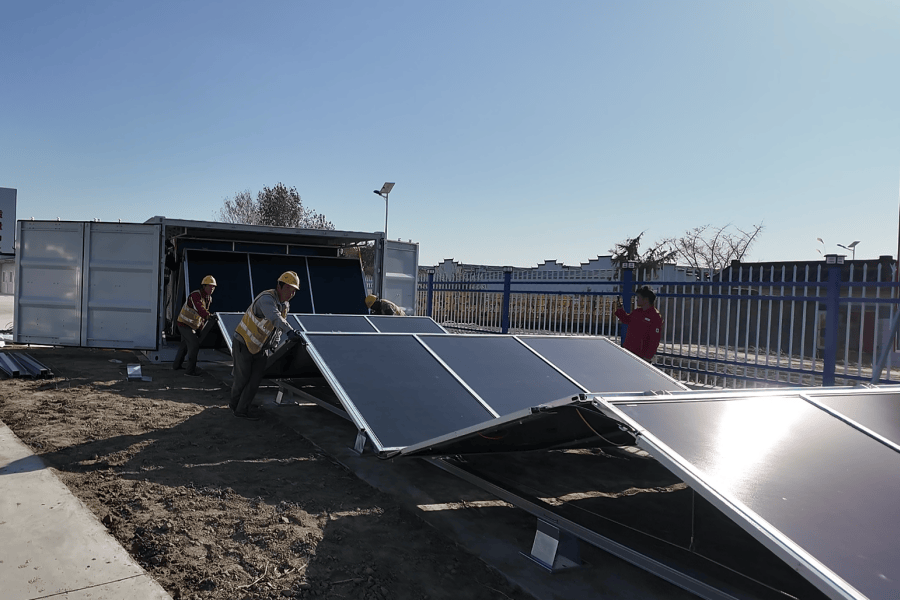
Beyond the Megawatt: Why Your Industrial Park's Energy Storage Choice is an Environmental Statement
Honestly, after two decades on sites from California to North Rhine-Westphalia, the conversation around industrial-scale energy storage has shifted. It's no longer just about kilowatt-hours and demand charge management. Today, when I sit down with facility managers and sustainability officers, the first question is often, "What's the real environmental cost?" They're looking beyond the green energy their solar panels produce, right at the footprint of the battery system storing it. This is where the choice between a traditional air-cooled setup and a modern liquid-cooled pre-integrated PV container becomes critical. Let me walk you through what I've seen firsthand.
What We'll Cover
- The Hidden Environmental Cost of "Standard" Storage
- Data Doesn't Lie: Land, Lifespan, and Efficiency
- The Liquid-Cooled Advantage: A Systems-Level View
- A Case in Point: Lessons from a German Automotive Park
- Making the Sustainable Choice: What to Look For
The Hidden Environmental Cost of "Standard" Storage
Here's the problem we often face: an industrial park invests heavily in rooftop or ground-mount PV, rightly proud of its clean generation. Then, to maximize self-consumption, they bolt on a large-scale Battery Energy Storage System (BESS). The focus? Price per kWh and basic safety certs. The hidden impact? Significant. Traditional air-cooled systems need vast amounts of space for airflow and safety buffers - land that could be re-wilded or used for other purposes. Their less precise thermal management leads to faster battery degradation, meaning you're physically mining, manufacturing, shipping, and recycling battery cells more often over the project's lifetime. That's a massive embedded carbon footprint we rarely talk about at the proposal stage.
Data Doesn't Lie: Land, Lifespan, and Efficiency
Let's look at some numbers. A 2023 NREL study highlighted that thermal management can influence battery degradation rates by up to 50% over a system's life. Think about that. A poorly managed system might need a partial repower in 10 years, while a well-managed one runs strong for 15+.
Then there's efficiency. Every percentage point lost in conversion and cooling is more generation you need from your PV array to compensate. The International Renewable Energy Agency (IRENA) consistently points to system-level efficiency as a key driver for Levelized Cost of Storage (LCOS) and overall sustainability. Air-cooling, with its large, constantly running fans, is a parasitic load monster. On a 2 MWh container, I've measured auxiliary loads from air-conditioning units that can chew up enough power annually to run several homes. That's energy literally wasted on keeping the system itself alive.
The Liquid-Cooled Advantage: A Systems-Level View
This is where the environmental argument for a liquid-cooled pre-integrated container gets compelling. It's a holistic design philosophy.
First, thermal management. Liquid cooling directly contacts cells or modules, pulling heat away 2-3 times more efficiently than air. This isn't just a tech spec - it means the batteries operate in a tight, optimal temperature band. The result? Slower chemical degradation, longer lifespan (directly reducing the environmental burden of manufacturing replacements), and the ability to safely support higher C-rate discharges without stress. You get more usable energy out of the same physical battery over its life.
Second, density and land use. Pre-integration in a factory-controlled environment isn't just about faster deployment. It allows for a denser, more optimized layout. We're talking about a 40% smaller physical footprint for the same capacity in some of our Highjoule designs. For an industrial park, that's land reclaimed. It also means less on-site construction disturbance, less concrete, and a cleaner, faster install.
Third, total energy efficiency. The liquid cooling loop's pump uses a fraction of the energy that massive HVAC units do. This higher round-trip efficiency, often north of 95% from DC to AC, means more of your solar harvest ends up powering your processes, not your battery's cooling system. This directly lowers your system's LCOS and improves the overall carbon payback of your entire solar-plus-storage investment.

A Case in Point: Lessons from a German Automotive Park
Let me give you a real example. We worked with a major automotive supplier park in Germany. Their sustainability mandate was aggressive: increase renewable usage, cut grid dependency, and achieve a net-positive biodiversity impact on their property. A standard container would have eaten into a planned green buffer zone.
We deployed a pre-integrated, liquid-cooled Highjoule PowerCube. The compact footprint let them place it on a hardened existing service area, preserving the green zone. The superior thermal management was key - their operational profile required short, high-power bursts (simulating high C-rate demands) for paint shop operations. Air-cooling would have struggled, causing throttling or excessive wear. The liquid system handled it seamlessly, ensuring performance and longevity. Their sustainability team was particularly pleased that the system's own energy consumption was so low, making their "green kWh" even greener. It wasn't just a battery; it was an asset aligned with their core corporate environmental goals.
Making the Sustainable Choice: What to Look For
So, when evaluating the environmental impact of a liquid-cooled pre-integrated PV container for your park, move beyond the brochure. Ask your provider tough questions:
- Lifetime vs. Warranty: What is the projected end-of-life capacity, and what degradation curve do they model? A longer functional life is the single biggest sustainability win.
- Full System Efficiency: Don't just look at the battery module efficiency. Ask for the system-level AC-AC or DC-AC efficiency, including thermal management overhead.
- Compliance as a Baseline: UL 9540 and IEC 62933 are non-negotiables for safety. But look for design that exceeds them - like IP67-rated battery modules within the container for an extra layer of protection against environmental ingress.
- Localized Support: A system's environmental footprint includes the trucks rolling for service. Choose a partner with local technical support to minimize travel for routine checks and software updates.
The bottom line is this: the most sustainable kilowatt-hour is the one you don't have to waste, and the battery you don't have to replace prematurely. By choosing a system engineered from the ground up for precision, density, and efficiency, your industrial park's energy storage becomes a true extension of its sustainability vision, not a compromise. It's a powerful statement that operational excellence and environmental responsibility are one and the same.
What's the one sustainability metric for your energy storage project that keeps you up at night? Is it total lifecycle carbon, land use, or something else? Let's start the conversation.
Tags: UL Standard LCOE Industrial Energy Storage Liquid-cooled BESS Pre-integrated PV Container Environmental Impact Sustainable Manufacturing
Author
James Zhang
20+ years agricultural energy storage engineer / Highjoule CTO