
ROI Analysis of 215kWh Cabinet Pre-integrated PV Container for Data Center Backup Power
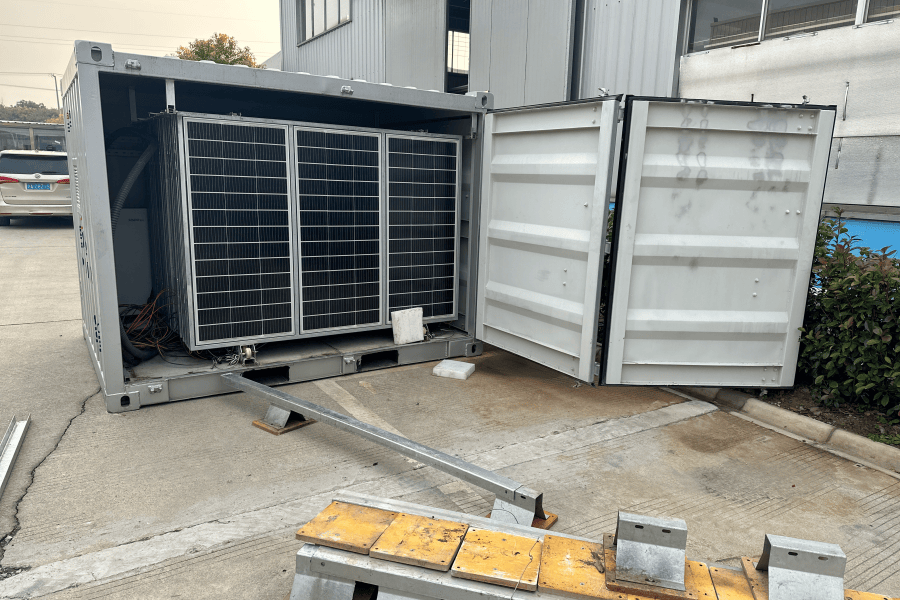
Table of Contents
- The Real Problem: It's Not Just About Backup
- When Costs Spiral: The Hidden Agitation
- The Pre-Integrated Container: A Smarter Solution
- A Real-World Case: From California Sun to Server Uptime
- Expert Breakdown: C-Rate, Thermal Management & LCOE Made Simple
- Making It Work for You: Beyond the Box
The Real Problem: It's Not Just About Backup
Let's be honest. When we talk about data center backup power, the first image that comes to mind is rows of humming diesel generators. They're the old reliable, right? But here's the thing I've seen firsthand on site after site across Europe and the US: that model is becoming a financial and operational albatross. The real pain point isn't just having backup; it's the staggering total cost of ownership (TCO) of that backup system when it sits idle 99% of the time, and the missed opportunity to turn a pure cost center into a revenue-generating or cost-saving asset.
You're dealing with rising grid instability, stringent carbon reduction targets from corporate boards, and frankly, diesel fuel price volatility that can blow any OPEX budget. The traditional approach - oversized generators for N+1 redundancy - creates a massive, depreciating asset. It provides zero value until the very moment it's needed. In today's climate, that's a tough capital allocation to justify to the CFO.
When Costs Spiral: The Hidden Agitation
Let's agitate that pain point a bit. I was on a project in Texas where the data center's backup system, while technically compliant, was a nightmare of complexity. Separate PV arrays, a battery room that needed its own HVAC, complex switchgear integration... the soft costs - engineering, permitting, interconnections - were almost as high as the hardware. According to the National Renewable Energy Laboratory (NREL), balance-of-system (BOS) and soft costs can account for up to 50% of a standalone storage project's price tag. That's money that doesn't improve your performance or safety one bit.
Then there's the space. Urban and suburban data centers are space-constrained. Adding a solar farm and a separate battery storage facility just isn't feasible. You end up with a patchwork system that's inefficient to manage and a headache for maintenance crews. Every minute your team spends coordinating between different vendors for the PV, the BESS, and the controls is a minute not spent on core operations.
The Pre-Integrated Container: A Smarter Solution
This is where the concept of a pre-integrated, cabinet-based 215kWh PV container shifts the paradigm. Think of it not as a backup system, but as a dual-purpose energy asset. The core solution is elegantly simple: a standardized, plug-and-play container that marries solar generation and battery storage into a single, controllable unit specifically sized for the incremental power needs of a data center's backup and load-shaving strategy.
Honestly, the beauty is in the pre-integration. At Highjoule, when we design a system like this, we're not just bolting parts together. The power conversion, battery management (BMS), thermal management, and fire suppression are all engineered as one system from the start in a UL 9540/9540A listed enclosure. This drastically reduces on-site commissioning time from weeks to days. It turns a complex construction project into a delivery and connection operation. The ROI story starts improving the day the container arrives on the flatbed truck.
Key Value Drivers for the ROI
- Capital Efficiency: One procurement, one delivery, one interconnection agreement. It consolidates spend.
- Operational Revenue: During normal operation, the solar PV charges the battery. That stored energy can be used for peak shaving, avoiding demand charges from the utility - a direct, calculable savings. In some markets, you can even participate in grid services.
- Assured Compliance: Built to UL/IEC/IEEE standards from the factory, it removes guesswork for local AHJs (Authorities Having Jurisdiction).
A Real-World Case: From California Sun to Server Uptime
Let me give you a concrete example from a colocation data center we worked with in Silicon Valley. Their challenge was twofold: meet a local clean energy mandate and add backup runtime without expanding their diesel footprint. A 215kWh pre-integrated container was the perfect fit.

We deployed two units on their existing parking lot canopy. The scenario was peak shaving during the high-cost 2-6 PM window. The challenge was a tight interconnection timeline and a need for flawless automatic transfer during grid dips. The landing was smooth because the container's controller was pre-programmed for these use cases. The system now offsets their peak demand by ~150kW daily, providing a payback on those units in under 5 years, while also adding 4+ hours of critical backup for their HVAC and lighting loads. The diesel gensets now only need to cover the IT load, extending their fuel runtime significantly.
Expert Breakdown: C-Rate, Thermal Management & LCOE Made Simple
I know these terms get thrown around. Let me demystify them in the context of your ROI.
C-Rate: Simply put, it's how fast you can charge or discharge the battery. A 1C rate means you can use the full 215kWh in one hour. For data center backup, you don't always need a super high C-rate (which stresses the battery). You need a right-sized C-rate that matches your critical load profile. Our containers are optimized for a sustainable discharge rate that maximizes cycle life - because a battery that lasts twice as long halves its effective cost per cycle.
Thermal Management: This is the unsung hero. Batteries degrade fast if they're too hot or too cold. I've opened up poorly designed systems where thermal runaway was a real risk. Our container uses an independent, liquid-cooled system that keeps cells within a 2C range. This isn't just a safety must-have (think UL 9540A fire test compliance); it's an ROI must-have. Stable temperature can extend battery life by 30-40%, a huge factor in your Levelized Cost of Energy (LCOE).
LCOE (Levelized Cost of Energy): This is your ultimate metric. It's the total cost of owning and operating the asset over its life, divided by the total energy it dispatches. A pre-integrated container improves LCOE by: 1) Lowering installation costs (hard and soft), 2) Increasing system efficiency (good thermal management), and 3) Enabling revenue (peak shaving). When solar is charging the batteries, your marginal cost of that stored kWh is nearly zero.
Making It Work for You: Beyond the Box
The technology is proven, but success hinges on deployment. At Highjoule, our focus isn't just selling a container. It's about providing a localized energy asset. That means our team works with your engineers and local utilities on the interconnection study from day one. We provide the O&M manual and training specific to your site, and our remote monitoring platform gives you a dashboard view of both performance and ROI metrics in real-time - savings generated, carbon avoided, backup readiness status.
The question for any data center operator or manager in the US or Europe isn't really "Can I use solar and storage for backup?" The technology answers that with a resounding yes. The real question is, "How do I structure this project to maximize my financial and operational return while guaranteeing reliability?"
That's the conversation worth having over a coffee. What's the single biggest hurdle your team sees when evaluating a move beyond traditional backup?
Tags: UL Standard BESS Solar Plus Storage Data Center Backup Microgrid ROI Analysis
Author
James Zhang
20+ years agricultural energy storage engineer / Highjoule CTO