
Smart BESS Environmental Impact: A Real-World View for Rural & Off-Grid Projects
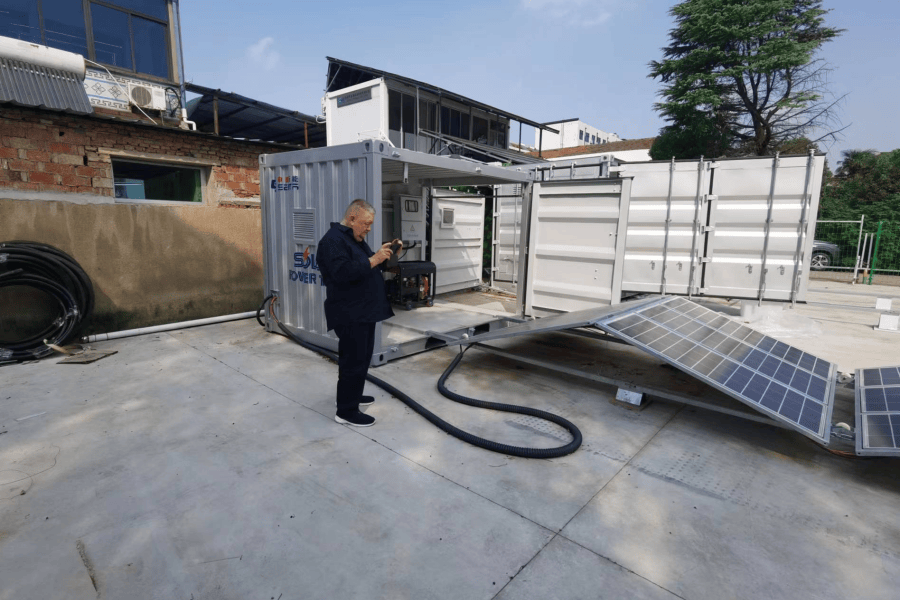
Let's Talk About the Real Environmental Footprint of Your BESS
Hey there. If you're reading this, you're probably evaluating battery storage, maybe for a microgrid, a remote industrial site, or a community electrification project. You've heard all about the "green" benefits of pairing storage with solar or wind. Honestly, that's true. But over my two decades crawling around BESS containers from Texas to Tanzania, I've learned the real environmental story isn't just about the clean energy going in. It's about the entire lifecycle of the system itself - how it's built, how it runs for 15+ years, and what happens after. This is especially critical for sensitive, off-grid applications where every kilowatt-hour and every maintenance trip counts.
In This Article:
- The Hidden Cost of "Set-and-Forget" Storage
- Data Doesn't Lie: The Efficiency & Longevity Gap
- The Smart BMS Difference: More Than Just Monitoring
- Case in Point: A Lesson from a Philippine Island Microgrid
- Key Considerations for Your Next Project
The Hidden Cost of "Set-and-Forget" Storage
Here's the core problem many developers face: they focus solely on upfront CAPEX. They buy a containerized lithium-ion BESS, hook it up, and hope it runs. But without a truly intelligent Brain - a Smart Battery Management System (BMS) - you're flying blind. I've seen this firsthand on site: a system slowly degrading, cells drifting out of balance, running hotter than it should. The result? You're leaving 10-20% of your potential capacity on the table. For a rural electrification project, that could mean running diesel gensets more often than planned, which completely undermines the environmental goal. It also means replacing the entire system years earlier than expected, creating a huge waste footprint.
Data Doesn't Lie: The Efficiency & Longevity Gap
Let's look at some numbers. The National Renewable Energy Lab (NREL) has shown that advanced thermal management and cell balancing can extend battery life by up to 30%. Think about that. Instead of a 15-year system, you're looking at 20+ years. The International Energy Agency (IEA) also highlights that system-level efficiency is a major lever for reducing the Levelized Cost of Storage (LCOS). Every percentage point of round-trip efficiency loss translates directly to more energy you have to generate - often from fossil fuels in off-grid settings - to meet the same demand.
The Smart BMS Difference: More Than Just Monitoring
So, what makes a BMS "smart"? It's not just reading voltages. A Smart BMS, like the ones we design into Highjoule containers, is a predictive health guardian. It continuously analyzes data from every cell cluster - temperature, voltage, current (C-rate). It uses algorithms to predict cell failure before it happens and actively manages the thermal management system to keep the entire pack in its ideal temperature window. This precise control is what maximizes lifespan and safety.
From an environmental lens, this is huge. It means:
- Less Waste: Maximizing cycle life delays the massive environmental cost of manufacturing a replacement system.
- Lower Carbon Footprint: Higher efficiency means less energy is wasted as heat, so you need fewer solar panels or less generator fuel to achieve the same outcome.
- Inherent Safety: Preventing thermal runaway isn't just a safety standard (like UL 9540 and IEC 62619); it's an environmental imperative. A single fire event is a total environmental and financial loss.

Case in Point: A Lesson from a Philippine Island Microgrid
Let me share a relevant experience. We weren't the primary vendor on this project, but we were brought in to consult on a struggling solar-plus-storage microgrid on a remote Philippine island. The community relied on it to reduce diesel consumption. The existing BESS containers had a basic BMS. Within 18 months, capacity had dropped sharply, and the operators were constantly fighting overheating alarms during peak afternoon loads.
The challenge? The tropical heat and highly variable load from the village were pushing the batteries beyond their designed operating parameters. The basic BMS couldn't adapt. Our solution involved retrofitting a more advanced, predictive Smart BMS platform and optimizing the cooling strategy. The result wasn't just fixing the alarms. We extended the projected system life by an estimated 7 years and improved round-trip efficiency by 3.2%. For that community, it meant hundreds of less hours of diesel generation per year and a much better return on their investment. It cemented for me that the environmental impact of a smart BMS monitored lithium battery storage container for rural electrification in Philippines and similar regions is measured in real, tangible reductions in fossil fuel use and electronic waste.
Key Considerations for Your Next Project
When you're specifying a BESS for a demanding, off-grid, or environmentally sensitive application, look beyond the spec sheet. Ask these questions:
- Is the BMS truly predictive, or just reactive? Can it provide actionable insights on cell health and degradation trends?
- How is thermal management integrated with the BMS data? Is it a smart, variable system, or just a simple on/off fan?
- What are the long-term LCOE/LCOS projections? A slightly higher upfront cost for a smarter system almost always wins on total lifecycle cost and environmental impact.
- Does the container design and BMS logic comply with the strictest safety standards (UL, IEC) for your target market? This is non-negotiable for insurance, financing, and frankly, for sleep at night.
At Highjoule, this philosophy is baked into our containerized solutions from day one. We build the intelligence in, so you get a system that protects itself, maximizes its own lifespan, and delivers on the full environmental promise of renewable energy. It's not just a battery box; it's a long-term partner for your project's sustainability goals.
What's the biggest operational headache you've faced with storage in remote locations? Is it monitoring, maintenance, or something else entirely?
Tags: UL Standard BESS LCOE Thermal Management Rural Electrification Smart BMS Environmental Impact
Author
James Zhang
20+ years agricultural energy storage engineer / Highjoule CTO