
How to Optimize Rapid Deployment of 1MWh Solar Storage for Agricultural Irrigation
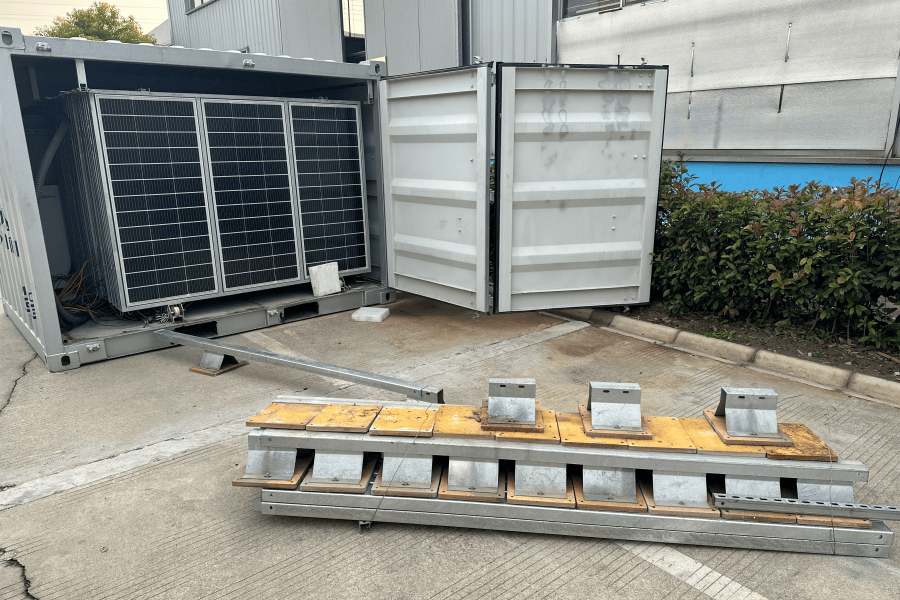
Table of Contents
- The Water and Power Problem
- Why Traditional Setups Fall Short
- The Modern Approach: What "Rapid Deployment" Really Means
- The 1MWh Sweet Spot for Modern Farms
- A Real-World Case: From California Drought to Reliable Water
- Key Optimization Levers for Your Project
- Beyond the Battery: Making It Work Long-Term
The Water and Power Problem
Let's be honest, if you're managing a large-scale agricultural operation in the US or Europe, you're juggling two volatile resources: water and electricity. I've been on farms in California's Central Valley and across Southern Europe where the story is the same. Peak irrigation needs hit right when grid demand (and prices) are highest, often on the hottest, sunniest afternoons. You're at the mercy of time-of-use rates, demand charges that can wreck a monthly budget, and, increasingly, grid reliability issues. The promise of solar is a no-brainer, but the sun doesn't set your irrigation schedule. That mismatch is the core problem.
Why Traditional Setups Fall Short
For years, the solution was oversizing solar or relying on the grid. But here's the agitation: that's becoming a costly and risky band-aid. Oversizing a solar array to cover early morning or evening pumping means massive overproduction midday, often sold back to the grid at low rates. Meanwhile, according to the National Renewable Energy Laboratory (NREL), agricultural irrigation can account for over 30% of a farm's total energy costs in some regions. A sudden cloud bank or a heatwave-induced grid strain can literally stop water flow. I've seen firsthand on site the stress this causes - it's not just about cost, it's about crop survival.
The Hidden Deployment Headache
And then there's the deployment itself. The old way? A months-long saga of custom engineering, poured concrete pads, complex electrical room builds, and a maze of local code interpretations. It's slow, expensive, and unpredictable. This is where the concept of How to Optimize Rapid Deployment 1MWh Solar Storage for Agricultural Irrigation transitions from a nice idea to an operational necessity.
The Modern Approach: What "Rapid Deployment" Really Means
So, what's the solution? It's shifting from a "construction project" to a "power delivery" mindset. An optimized rapid deployment for a 1MWh system means pre-engineered, containerized Battery Energy Storage Systems (BESS). Think of it like a power plant in a shipping container, but smarter. At Highjoule, we've focused on making these units arrive on a flatbed truck, sit on a simple pre-cast slab or gravel bed, and be connected and operational in weeks, not months. The optimization happens long before the truck rolls onto your property.

The 1MWh Sweet Spot for Modern Farms
Why 1MWh? It's a practical, scalable benchmark. For a large pivot or a block of high-value crops, 1MWh represents a meaningful shift. It can typically store enough solar excess from a mid-sized array to run several large irrigation pumps for 2-4 hours, covering critical morning/evening windows. This size balances capability with the rapid deployment model - it's large enough to have real economic impact but standardized enough to be pre-configured for compliance with key standards like UL 9540 and IEC 62933. This standardization is the unsung hero of speed and safety.
A Real-World Case: From California Drought to Reliable Water
Let me give you a concrete example from a project we completed in Fresno County, California. A 500-acre almond orchard had a 800kW solar canopy but was still hitting brutal demand charges and couldn't irrigate effectively during a critical late-afternoon heat period. The challenge was to deploy storage before the next irrigation season - a tight 3-month window.
We delivered a 1.2MWh Highjoule GridTie? container. Because it was pre-certified to UL standards, the local utility and permitting process was streamlined. The unit was placed on a prepared base in a single day. The core optimization was in the system's C-rate - a technical term for charge/discharge speed. We configured it for a moderate C-rate (around 0.5C), which is perfect for irrigation's multi-hour cycles. This is gentler on the batteries than a fast, grid-stabilization duty cycle, which directly translates to longer system life and a lower Levelized Cost of Energy (LCOE) - that's your true cost per kWh over the system's lifetime. The result? They shifted over 90% of their irrigation load off-grid during peak periods, slashing their power bill by an estimated 40% annually, and secured water independence for their most critical trees.
Key Optimization Levers for Your Project
Optimizing isn't just about speed to turn on. It's about designing for total lifetime value. Here are the levers we focus on:
- Thermal Management: This is huge. A farm environment is dusty and can be hot. A passive cooling system might not cut it. An active, liquid-cooled thermal management system, like in our units, keeps battery cells at an ideal temperature uniformly. Honestly, this is the single biggest factor for battery longevity and safety, especially in a remote agricultural setting.
- Grid Interface & Standards Compliance: Your system must speak the local grid's language (IEEE 1547 in the US) and be safety-certified (UL/IEC). Using a pre-certified solution eliminates years of testing and validation from your timeline.
- Energy Density & Footprint: A optimized 1MWh system should have a small physical footprint. More energy in less space means more flexible siting - closer to your irrigation pumps and solar inverter, reducing costly copper wire runs.

Beyond the Battery: Making It Work Long-Term
The final piece of optimization is often overlooked: ongoing performance. A system deployed in a week is useless if it's a black box for the next 15 years. Our approach includes integrated monitoring that gives you, the operator, a clear view of state of charge, solar self-consumption, and projected cycles. This isn't just data; it's the insight you need to make informed decisions about irrigation scheduling and future expansion.
So, when you're evaluating how to optimize rapid deployment of a 1MWh solar storage system for your irrigation needs, look beyond the brochure's headline capacity. Ask about the thermal system, the standard certifications, the real-world footprint, and the clarity of the operational software. The goal is a solution that starts saving you money and securing your water quickly, and keeps doing it reliably for its entire life. What's the one operational constraint in your irrigation schedule that keeps you up at night?
Tags: UL Standard BESS Rapid Deployment Europe US Market Agricultural Irrigation Solar Storage
Author
James Zhang
20+ years agricultural energy storage engineer / Highjoule CTO