
How to Optimize Smart BMS Monitored 1MWh Solar Storage for Telecom Base Stations
The Anchor Point
- The Silent Power Drain on Your Network
- Why Your Current BESS Might Be Bleeding Money
- The 1MWh Sweet Spot, Monitored Intelligently
- A Real Case from the Desert
- The Smart BMS: Your 24/7 PhD in Battery Science
- Beyond the Battery: The System That Delivers Peace of Mind
The Silent Power Drain on Your Network
Let's be honest. When you think about telecom network reliability, the battery storage system out back is probably not the first thing that comes to mind. It's the silent partner, the unsung hero that kicks in during a grid outage to keep those critical cells online. But here's the thing I've seen firsthand on site after site, from rural Texas to the Scottish Highlands: that silent partner can quickly become your loudest cost center if it's not optimized. We're not just talking about backup power anymore; we're talking about a core asset for energy cost management and operational resilience, especially with solar integration. The game has changed.
Why Your Current BESS Might Be Bleeding Money
The traditional approach for off-grid or weak-grid base stations has been, frankly, brute force. Oversized diesel generators running too often, or simple battery banks that are replaced far too frequently because they're cooked - literally and figuratively. The pain points are universal:
- Sky-High Levelized Cost of Energy (LCOE): This is the big one. When you factor in capital costs, replacement cycles, fuel, and maintenance over 10+ years, the cost per kWh for a poorly managed system is staggering. The National Renewable Energy Lab (NREL) has shown that poor thermal management alone can slash battery cycle life by 60% or more, directly doubling your effective LCOE.
- The Black Box of Battery Health: Most systems tell you voltage and maybe current. But what about the state of health (SOH) of each cell block? What's the internal resistance trend? Is one cell cluster running 10C hotter than the others, signaling a future failure? Without this data, you're flying blind on maintenance, risking catastrophic failure during the next storm.
- Solar Integration Headaches: A 1MWh solar-storage system isn't just panels plus a battery. It's a complex dance of energy. Without intelligent monitoring and control, you're either dumping precious solar energy because the battery is "full" (but is it, really?), or you're not discharging optimally to shave peak demand charges. It's leaving money on the table.
I've walked into sites where the O&M team had no idea one of their three battery strings was already dead. They only found out when the grid failed and the whole site went dark. That's not an equipment failure; it's a monitoring and optimization failure.

The 1MWh Sweet Spot, Monitored Intelligently
So, where do we start? For a typical remote or critical telecom base station, a 1MWh battery energy storage system (BESS) has emerged as a real sweet spot. It's large enough to provide meaningful backup duration and solar time-shifting, yet modular enough for scalable deployment. But size is just the container. The magic - and the optimization - is in how you monitor and manage every single kilowatt-hour inside it.
The core solution isn't a bigger battery. It's a smarter brain for the battery. This is where the concept of a Smart BMS-Monitored 1MWh Solar Storage System becomes non-negotiable. We're moving from a simple battery to a fully instrumented, grid-interactive asset.
A Real Case from the Desert
Let me give you a concrete example. We worked with a towerco in Arizona managing a cluster of sites far from the main grid. They had old lead-acid banks, diesel bills were eating their budget, and solar curtailment was over 30% in the summer. The challenge was clear: cut LCOE, guarantee 99.99% uptime, and do it within strict UL and IEEE 1547 standards for grid interconnection.
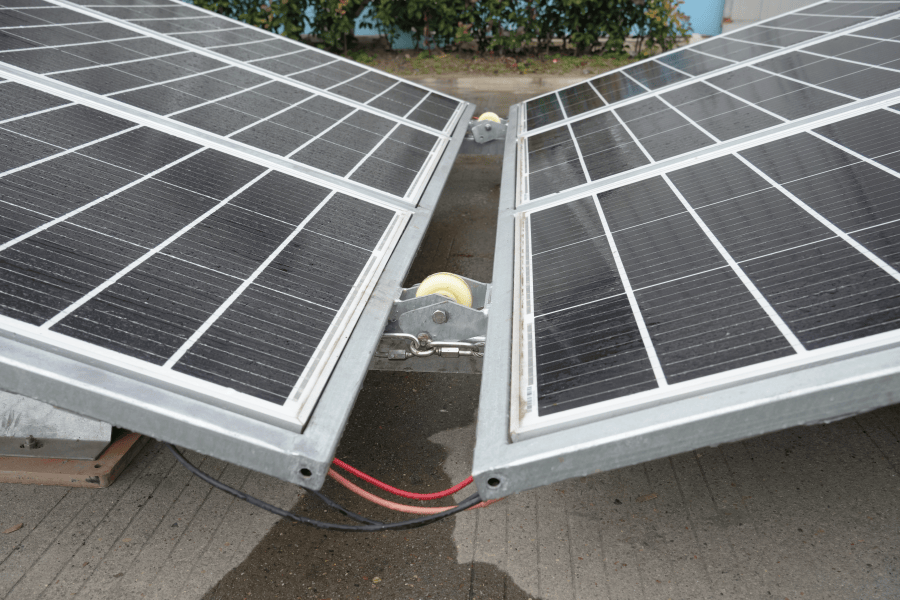
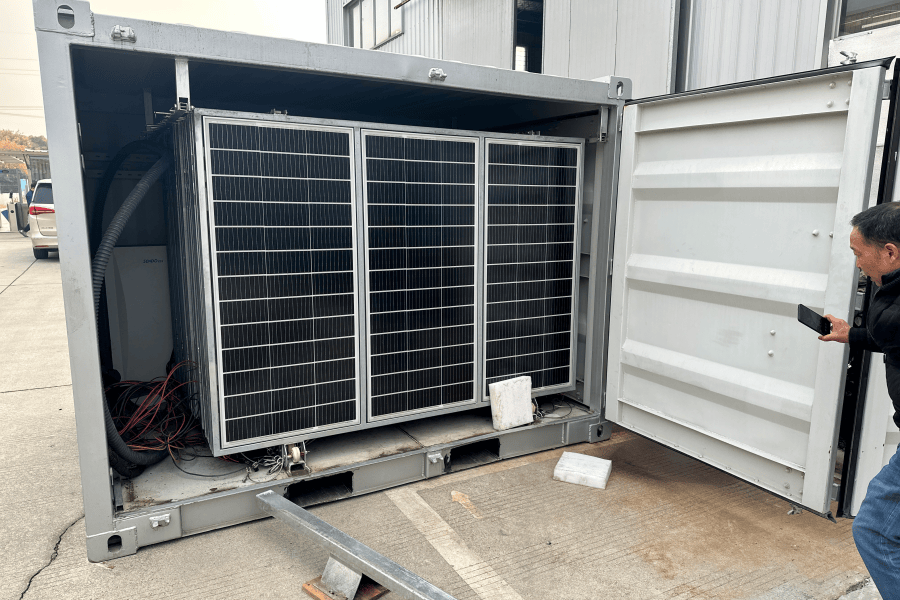
The solution was a phased rollout of containerized 1MWh lithium-ion BESS units, each with a high-precision Smart BMS and integrated solar controllers. The BMS didn't just protect the cells; it provided a constant stream of performance data. We could see, in real-time, the impact of the 45C ambient heat on different parts of the battery rack and adjust active cooling only where needed, cutting auxiliary power use by 40%. The system was programmed to autonomously decide when to store solar, when to discharge to avoid a predicted peak grid tariff, and when to conserve energy for backup.
The result? Diesel runtime dropped by over 90% in the first year. They're now planning their diesel generator removal for those sites. The solar curtailment dropped to near zero. And crucially, their NOC (Network Operations Center) now gets predictive alerts on battery health, not just failure alarms. They schedule maintenance, not emergency truck rolls.
The Smart BMS: Your 24/7 PhD in Battery Science
This is the heart of the optimization. A true Smart BMS goes far beyond basic voltage limits. Think of it as having a PhD in electrochemistry living inside your battery rack, constantly running experiments and calculations. Here's what it enables:
- True State of Health (SOH) & State of Charge (SOC) Estimation: It uses advanced algorithms (like Kalman filtering) to know the exact available energy, not just a voltage guess. This prevents over-discharge and allows you to safely use more of the battery's rated capacity.
- Active Thermal Management & C-Rate Optimization: The "C-rate" is basically how fast you charge or discharge the battery. A 1C rate means charging/discharging the full 1MWh in one hour. A Smart BMS, coupled with good system design, manages this dynamically. On a hot day, it might gently lower the charge rate to reduce heat and stress, prolonging life. During a critical peak shaving event, it can safely deliver a higher discharge rate if the cell temperatures allow. This balance is where you win on both performance and longevity.
- Cell-Level Prognostics and Health Management (PHM): This is the future, and it's here. The BMS tracks trends for every parallel cell group - capacity fade, resistance growth. It can flag a potential weak cell string months before it causes an outage, allowing for planned, lower-cost remediation. This transforms CapEx planning.
At Highjoule, when we build a system, this granular BMS data is not locked away. It's fed into our site controller and can be integrated into your SCADA or network management platform. You get a dashboard that shows you the LCOE of that site's power in real-time, the ROI of the solar input, and the remaining useful life of the storage asset. It turns a cost center into a managed, value-generating investment.
Beyond the Battery: The System That Delivers Peace of Mind
Optimization doesn't stop at the BMS. The battery lives inside an ecosystem. For a telecom operator, especially in the US and Europe, this is where standards and safety are paramount. A 1MWh system is a significant energy reservoir. Our design philosophy wraps that core with layers of assurance:
- Safety by Design, Certified by Default: Every cell, module, rack, and container-level safety circuit is designed to meet and exceed UL 9540, UL 1973, and IEC 62619. This isn't a checkbox; it's the foundation. It includes passive fire suppression, thermal runaway propagation prevention between modules, and seismic bracing for relevant zones.
- Grid-Friendly Intelligence: The inverter and system controller are IEEE 1547-2018 compliant for seamless, safe interaction with the local grid (where applicable). They provide voltage and frequency support, making your site a good grid citizen, not just a load.
- Deployment & Support That Feels Local: Honestly, the best technology can stumble on poor execution. We've built our project teams around regional knowledge - understanding the permitting nuances in California versus Germany, having local service engineers who can be on site quickly. The optimization begins long before the container arrives on the pad.
So, the next time you look at the power budget for your network expansion or green transition, don't just think "1MWh battery." Think about the intelligence that will govern it, the data it will provide, and the total cost of energy it will deliver over its lifetime. The right question to ask your vendor isn't just about the price per kWh. It's: "Show me the dashboard. How will you help me optimize it?"
What's the one data point from your remote sites you wish you had right now to make a better energy decision?
Tags: UL Standard BESS LCOE Smart BMS Solar Storage Telecom Energy
Author
James Zhang
20+ years agricultural energy storage engineer / Highjoule CTO