
Optimizing Smart BMS Monitored Pre-Integrated PV Containers for Reliable EV Charging
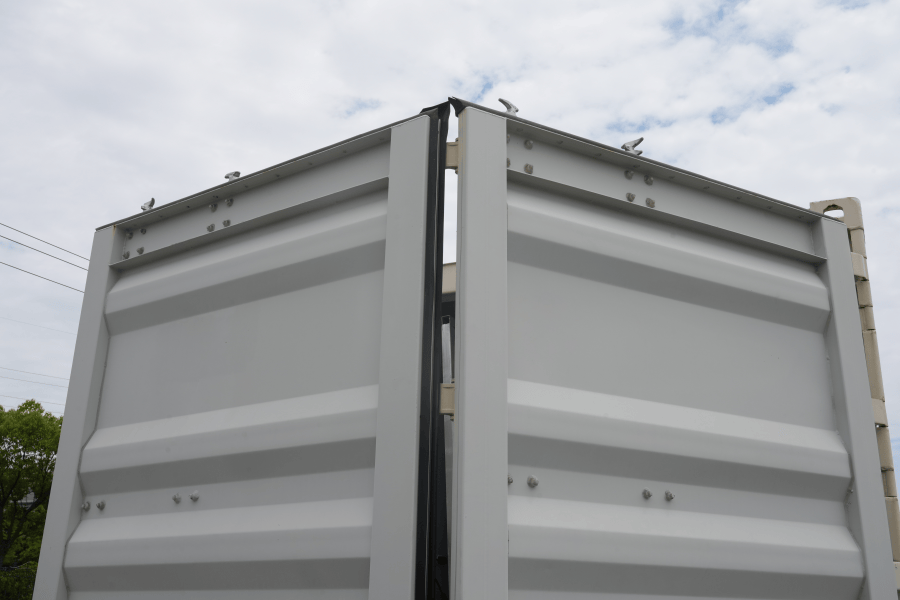
Table of Contents
- The EV Grid Dilemma: More Cars, More Strain
- Why Piecemeal, Modular Solutions Often Fall Short
- The Integrated Answer: PV Container with a Smart Brain
- The Smart BMS Difference: It's Not Just Monitoring
- Real-World Proof: A California Case Study
- Key Optimization Levers for Your Project
- Making the Right Choice for Your Site
The EV Grid Dilemma: More Cars, More Strain
Honestly, if I had a dollar for every time a commercial property manager or a fleet operator told me their excitement about installing EV chargers was quickly dampened by the utility's interconnection study... well, let's just say I wouldn't be writing this blog. I've seen this firsthand on site. The dream of a row of fast chargers is often met with a harsh reality: grid capacity is limited, and upgrading it is eye-wateringly expensive and slow. The International Energy Agency (IEA) projects global EV stock to reach over 350 million by 2030. That's a lot of concentrated, unpredictable demand waiting to hit local transformers.
The problem isn't just power draw; it's timing. When five fleet vehicles plug in at 4 PM, right as your facility's general load peaks and solar generation tails off, you create a demand spike that utilities hate. This leads to punitive demand charges that can obliterate any fuel savings from going electric. The core pain point? EV charging infrastructure, without intelligent energy management, turns a sustainability initiative into a costly grid dependency problem.
Why Piecemeal, Modular Solutions Often Fall Short
So, the logical thought is: "Let's add solar and a battery." I get it. But here's where the second layer of pain comes in. Many first attempts involve a modular approach - sourcing PV panels from vendor A, a battery rack from vendor B, an inverter from vendor C, and a basic BMS from yet another. You end up with a "Frankenstein's monster" of a system in a yard.
The integration is a nightmare. Communication protocols don't talk to each other seamlessly. The thermal management of the battery isn't harmonized with the PV input. Safety certifications become a labyrinth - you might have UL 9540 for the battery, but the overall containerized system needs UL 9540A evaluation, which is a whole different beast. I've spent weeks on site with a multimeter and a laptop, just trying to get the data streams aligned, while the project clock is ticking. This complexity kills your ROI through extended commissioning, higher soft costs, and operational headaches down the line.

The Integrated Answer: PV Container with a Smart Brain
This is exactly why the concept of a pre-integrated PV container is such a game-changer, especially for EV charging. Think of it not as a box of parts, but as a single, optimized appliance for energy resilience. At Highjoule, we build these units with one goal: to make the entire system - solar canopy, battery bank, power conversion, and climate control - behave as one intelligent organism from day one.
The "pre-integrated" part is crucial. It means the system is assembled, wired, and tested in a controlled factory environment against rigorous standards like UL 9540 and IEC 62933. By the time it arrives on your site - whether it's a truck depot in Texas or a shopping center in Munich - it's literally a "plug-and-play" energy asset. This slashes weeks off your commissioning timeline and gives you a single point of accountability for performance and safety. No more finger-pointing between component suppliers.
The Smart BMS Difference: It's Not Just Monitoring
Now, let's talk about the "smart BMS monitored" part, because this is the true brain of the operation. A basic Battery Management System (BMS) does the minimum: it monitors cell voltages and temperatures. A smart BMS, like the one we embed, is the core optimizer.
It doesn't just see data; it predicts and prescribes. For an EV charging station, it dynamically balances three energy flows: real-time PV generation, the battery's state of charge, and the charging demand of the vehicles. If a cloud passes over, the smart BMS seamlessly discharges the battery to prevent a grid spike. At night, it strategically charges the battery from the grid during off-peak, low-cost hours to prepare for the morning charging rush. It's continuously calculating the most cost-effective way to meet power demand, a concept we call minimizing the Levelized Cost of Energy (LCOE) for your charging operation.
Honestly, the thermal management piece is where you see real engineering quality. A smart BMS doesn't just kick on fans at a set temperature. It uses subtle, proactive strategies based on charge/discharge rates (what we call C-rate) and ambient conditions to keep every cell in its ideal temperature window. This extends battery life by years, protecting your capital investment.
Real-World Proof: A California Case Study
Let me give you a real example. We deployed a 500 kWh pre-integrated PV container for a logistics company in the Inland Empire, California. Their challenge was classic: they needed to power ten new fleet EV chargers, but the utility upgrade quote was $250,000 with an 18-month lead time. The demand charges from uncontrolled charging would have made their business case untenable.
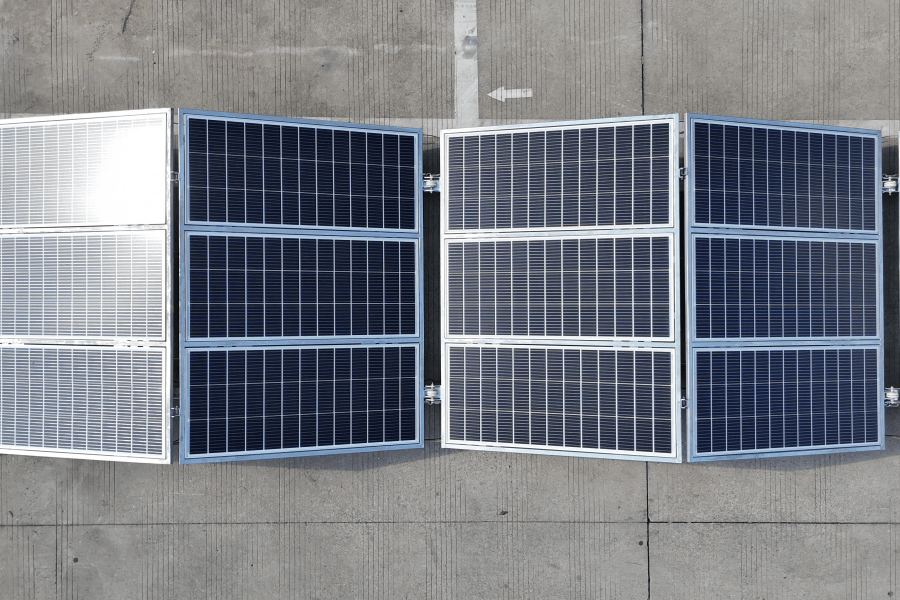
Our solution was a single 40-foot container with a rooftop solar canopy and a smart BMS at its core. The system was designed to:
- Shave Peak Demand: The smart BMS guarantees the site's grid draw never exceeds a pre-set threshold, eliminating 90% of demand charges.
- Maximize Solar Self-Consumption: Over 95% of the solar energy produced is used directly for charging or stored, not exported for a meager feed-in tariff.
- Provide Backup: During a brief grid outage, the system kept the critical admin office and security lights online.
The unit passed local inspection on the first try because it arrived with full UL 9540/9540A documentation. The client's ROI timeline? Cut by nearly 40% compared to the modular approach they initially considered.
Key Optimization Levers for Your Project
So, how do you ensure you're optimizing such a system? Based on my two decades in the field, focus on these three levers during your planning:
1. Right-Sizing with Intelligence: It's not just about total kWh. Work with a provider who models your specific charging profiles, solar irradiance, and tariff structure. The smart BMS software should allow you to set business-priority rules (e.g., "cost minimization" vs. "carbon minimization").
2. Insist on Safety-First Certification: In the US and EU, this is non-negotiable. Your container should have a recognized safety evaluation like UL 9540A for fire propagation. This isn't paperwork - it's about community and asset safety. Highjoule units are designed with this from the ground up, with passive fire suppression and compartmentalization.
3. Plan for Operational Simplicity: Ask about the monitoring portal. Your facility manager should be able to see system health, energy savings, and carbon avoidance in a simple dashboard. The complex analytics should run in the background, managed by the provider's support team. We offer this as part of our long-term service, providing peace of mind.
Making the Right Choice for Your Site
The transition to electric fleets and customer-facing EV charging is inevitable. The question is whether it becomes a strategic asset or a financial burden. An optimized, smart BMS monitored, pre-integrated PV container flips the script. It transforms a grid-capacity problem into an opportunity for energy independence, cost control, and resilience.
My advice? When you talk to potential providers, don't just ask for a spec sheet. Ask them to walk you through the logic of their BMS during a simulated cloud event. Ask to see the UL 9540A report for the complete system. Ask about their local service network for maintenance. The right partner will have those answers at the ready, because they've been on site, coffee in hand, solving these exact problems. What's the one grid constraint keeping you up at night for your next EV project?
Tags: UL Standard BESS Solar Plus Storage Smart BMS EV Charging
Author
James Zhang
20+ years agricultural energy storage engineer / Highjoule CTO