
Grid-Forming Solar Container Installation: A Step-by-Step Guide for Rural Electrification
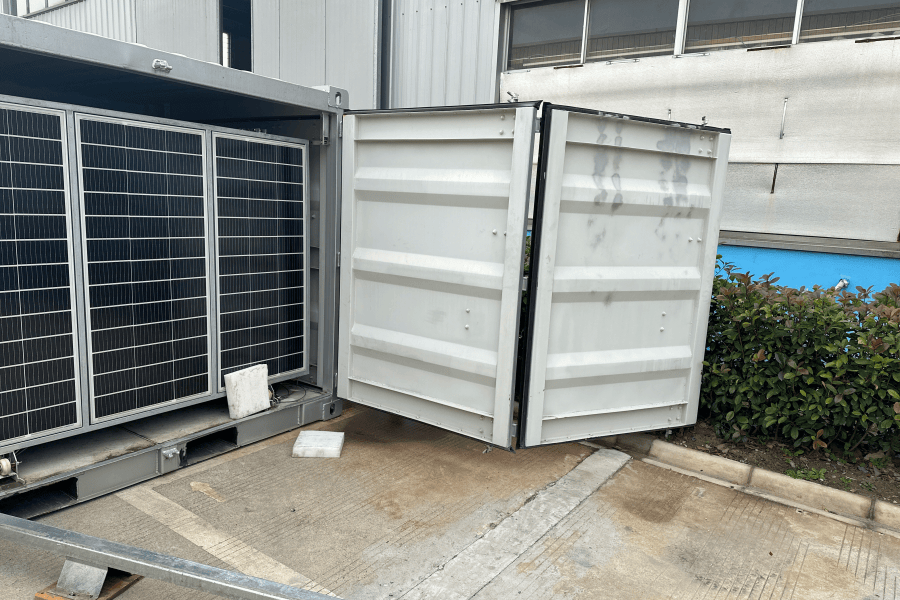
From Blueprint to Power: The Real-World Guide to Deploying a Grid-Forming Solar Container
Honestly, when we talk about energy storage in boardrooms from San Francisco to Frankfurt, the conversation often centers on megawatt-scale projects and complex grid services. But having spent over two decades on sites from remote villages to industrial parks, I've learned the most transformative deployments are often the ones that bring light where there was none. The principles we refine in challenging environments C like a step-by-step installation of a grid-forming solar container for rural electrification in the Philippines C are the same that solve the core, gritty problems we face in commercial and industrial deployments back home. It's about resilience, simplicity, and getting it right the first time.
Table of Contents
- The Real Problem: It's More Than Just "Power"
- Why a Remote Installation Exposes Every Flaw
- The Solution, Unpacked: A Containerized Mindset
- Step-by-Step: What the Field Manual Doesn't Tell You
- The Tech Behind the Container: C-Rate, Thermal Runaway, and LCOE Made Simple
- Bringing It Home: Lessons for Your Next Project
The Real Problem: It's More Than Just "Power"
Here's the thing. The core challenge in off-grid or weak-grid areas isn't just generation. It's about creating a stable, reliable mini-grid from scratch. I've seen projects where they shipped over standard, grid-following inverters, only to find they can't boot up without an existing grid signal C a classic "cart before the horse" scenario. The real pain points are universal:
- System Black Start: How do you energize a dead network?
- Frequency & Voltage Stability: With no giant grid to lean on, every load switch matters.
- Logistical Nightmares: Coordinating concrete, cabling, and commissioning in areas with limited skilled labor.
- Long-Term Opex Surprises: Poor thermal management leading to rapid degradation, spiking the Levelized Cost of Energy (LCOE).
Why a Remote Installation Exposes Every Flaw
Agitating this further, a rural site is the ultimate stress test. According to the IEA, achieving universal electricity access by 2030 requires connecting over 100 million people a year, largely via decentralized solutions. Every day of downtime means a community is back in the dark. The cost of a failed component isn't just a line item; it's a weeks-long wait for a specialist and a loss of community trust. This mirrors the growing pain in the US and EU with edge-of-grid and microgrid projects C the tolerance for error is shrinking, and the demand for plug-and-play resilience is skyrocketing.
The Solution, Unpacked: A Containerized Mindset
This is where the philosophy behind a pre-integrated, grid-forming solar container becomes a game-changer. It's not just a product; it's a deployment methodology. The goal is to shift 80% of the complexity from the field to the factory floor. At Highjoule, we design our containerized BESS to meet not just the environmental specs, but the installation reality. Think UL 9540 and IEC 62933 compliance as a baseline, but also pre-drilled conduit entries, clearly labeled DC and AC busbars, and a commissioning checklist that a trained local team can execute. It's about reducing variables.
Step-by-Step: What the Field Manual Doesn't Tell You
Based on our deployments, here's the essence of that step-by-step process, refined for reliability:
- Site Prep & Foundation: This is 90% of success. It's not just a level slab. We factor in drainage, access for future crane lifts for battery swaps, and local seismic or wind loads. I've seen a project in Texas where proper anchoring prevented major damage during a storm.
- Container Placement & Mechanical Hookup: The moment the container is set, we verify its integrity. Then, it's about the first critical connections: grounding. A robust, low-impedance ground field is non-negotiable for safety and IEEE 1547 compliance.

- Electrical Integration: DC from the solar array comes in. Here, the C-rate of the battery matters immensely. A lower C-rate means gentler, more efficient charging from variable solar, extending cycle life. We size the solar input to match the battery's sweet spot.
- Grid-Forming Inverter Commissioning: This is the heart. Unlike grid-followers, these inverters create a stable voltage and frequency waveform. We set parameters for voltage (e.g., 480VAC) and frequency (60Hz/50Hz) and then carefully bring up load, simulating the grid's inertia. It's a delicate dance.
- Load Staggering & System Testing: You don't just throw the main switch. We sequence critical vs. non-critical loads, test fault responses, and simulate a total black start. This is where you validate the system's brain.
- Handover & Local Training: The final step is often overlooked. We leave behind not just a system, but simple visual guides for daily operations and basic troubleshooting.
The Tech Behind the Container: C-Rate, Thermal Runaway, and LCOE Made Simple
Let's demystify some jargon. C-rate is basically how fast you charge or discharge the battery. A 1C rate means emptying a full battery in one hour. For solar smoothing in a rural setting, you rarely need a high C-rate; you need endurance. A 0.5C system is often more than enough and is much kinder to the cells.
Thermal management is the unsung hero. In the Philippines' heat or Arizona's desert, ambient temperature kills batteries. Our containers use active liquid cooling to maintain an even, optimal temperature. This isn't just for safety (preventing thermal runaway); it directly slashes LCOE by ensuring the battery lasts for its full 6,000+ cycle design life.
Speaking of LCOE, in these projects, it's the ultimate metric. Every design choice - from battery chemistry to inverter efficiency - boils down to lowering the cost per kWh over the system's lifetime. A robust, well-cooled, properly commissioned container might have a higher CapEx but a significantly lower LCOE than a cheaper, degraded system in 5 years.
A Case in Point: Microgrid Resilience in California
We applied these exact principles for a community microgrid in Northern California, prone to PSPS (Public Safety Power Shutoff) events. The challenge was similar: black-start capability, managing peak loads from well pumps, and needing UL 9540 certification for fire safety. By using a grid-forming containerized BESS as the core, we reduced on-site commissioning time by 40% versus a stick-built system. The pre-integrated, factory-tested power conversion system passed interconnect studies on the first try, a rarity in complex microgrids. The lesson? The "containerized" approach isn't about geography; it's about predictability.
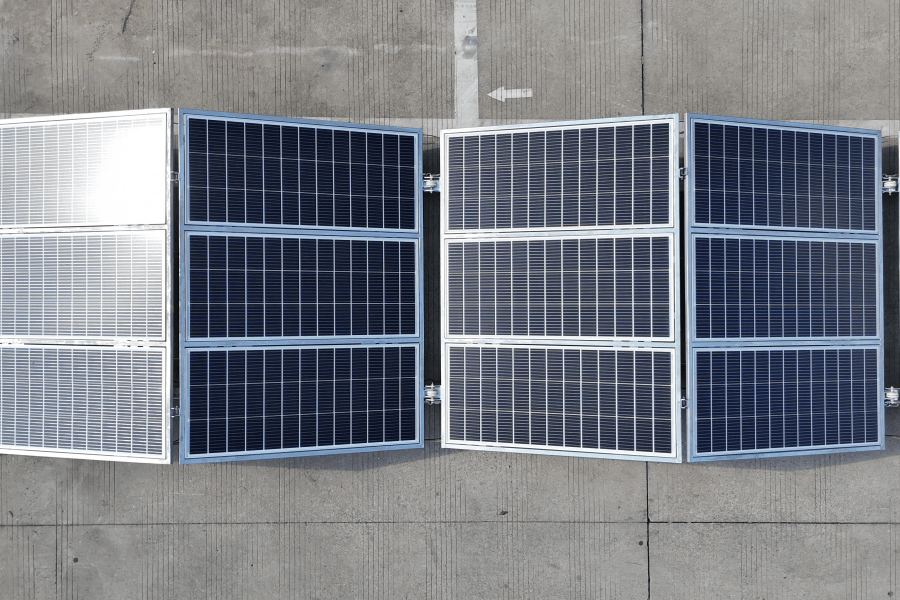
Bringing It Home: Lessons for Your Next Project
So, what does a rural electrification project in the Philippines teach a project manager in Germany or the US? It reinforces that fundamentals are everything. A successful deployment hinges on:
- Design for Deployment: Can it be installed quickly and correctly with minimal on-site genius?
- Engineer for the Environment: Thermal management isn't a luxury.
- Choose the Right Brain: Grid-forming capability is essential for any islanded or resilient application.
- Plan for the Full Lifecycle: Design choices today dictate LCOE tomorrow.
At Highjoule, we've baked these lessons into our product DNA. It's why we obsess over factory integration and standardized, yet flexible, designs. The next time you're evaluating a BESS for a remote site, a critical facility, or an edge-of-grid application, ask your provider: "Walk me through your step-by-step installation. How do you ensure my team can reliably black-start this system?" The answer will tell you everything. What's the biggest logistical hurdle you're anticipating in your next storage deployment?
Tags: UL Standard BESS Energy Storage Solar Container Rural Electrification IEEE 1547 Grid-forming
Author
James Zhang
20+ years agricultural energy storage engineer / Highjoule CTO